


Can words really capture the essence of truth, or do they simply dance around it, teasing our understanding? Toni Morrison, a literary giant known for her profound insights into human nature and the power of language, challenges us to think deeply about how language molds reality and reveals hidden truths. Here are 10 thought-provoking quotes from Toni Morrison that delve into the relationship between language and truth—each inviting us to reflect, question, and maybe even play with the very words we use every day.
We Die—That May Be the Meaning of Life
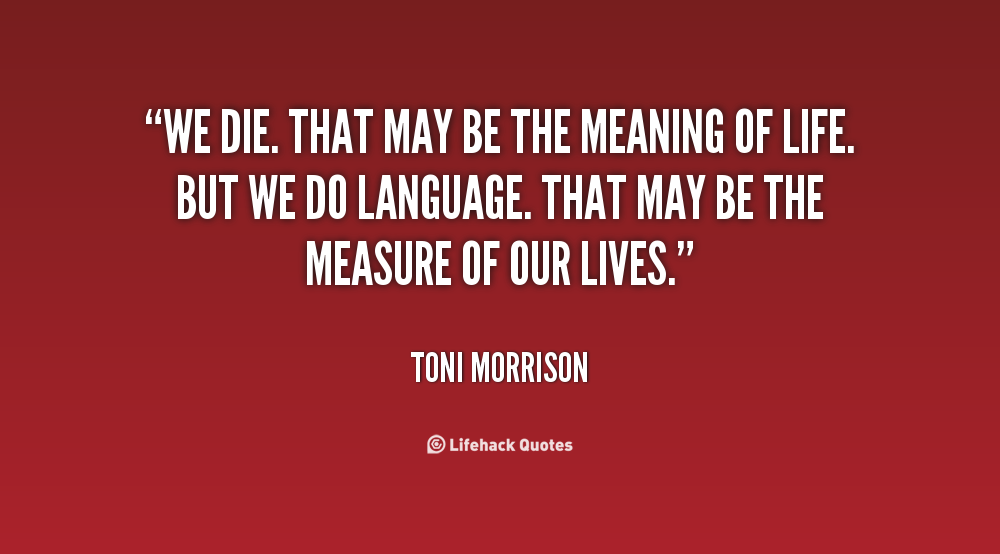
“We die. That may be the meaning of life. But we do language. That may be the measure of our lives.” Morrison reminds us that while mortality is a certainty, it’s our use of language that defines our existence. Language shapes how we interpret life, create meaning, and connect with others. What if the stories we tell about ourselves are the real immortality?
Language as a Living Force

Morrison suggests that language isn’t static; it breathes and evolves with us. It can liberate or imprison, heal or harm. How often do we stop to consider the elasticity of our words—how a single phrase can shift meaning and power depending on its speaker and its moment?
Speaking Truth, Even When it’s Difficult

“If there’s a book that you want to read, but it hasn’t been written yet, then you must write it.” Here, Morrison highlights the courage involved in claiming your own voice and truth. What truths about ourselves or society have we left unspoken simply because we lack the words—or the bravery—to express them?
The Power to Name and Define

Naming something is an act of power because it defines how it will be understood. Morrison’s work often explores how marginalized voices struggle to name their realities under dominant narratives. How does reclaiming our language become an act of truth-telling and resistance?
Language as a Tool for Healing
Words can wound, but they can also heal. Morrison’s perspective encourages us to think about the way language shapes wounds and recovery. Can we find ways to reconstruct language so it mends instead of scars? Perhaps language itself is a form of therapy for individuals and communities alike.
The Challenge of Unveiling Hidden Truths
Morrison often confronts the challenge of revealing uncomfortable truths hidden beneath layers of silence and euphemism. Language, in this sense, becomes a double-edged sword—one that can both conceal and expose. Are we ready to face the truths our words might unlock?
Truth’s Resistance to Simple Expression
True truths, Morrison suggests, are complex and slippery. They resist being pinned down by language’s limitations. This raises an intriguing challenge: Can truth ever be fully communicated, or does it inevitably fragment in translation from mind to mouth?
Language as a Reflection of Identity
Language shapes who we are by framing how we perceive ourselves and others. Morrison’s insights push us to question how much of our authentic self is contained or constrained by the words we have at our disposal. What happens when those words fail us?
The Ethical Weight of Words
Morrison’s quotes prompt us to reflect on the ethical responsibility embedded in language use. Each word carries consequence, influencing perceptions and actions. How mindful are we of this power, and how can greater awareness transform conversations into acts of justice?
Inviting Us to Play with Language
Ultimately, Morrison’s engagement with language is not only serious but playful—encouraging experimentation, questioning, and renewal. She seems to ask: What new words will you create? What old meanings will you unmake? Language and truth invite our ongoing curiosity and courage.
