


Jean Piaget, a pioneering figure in developmental psychology, shed light on the intricate process of cognitive development in children. His insights continue to captivate educators, parents, and psychologists alike, providing a window into the evolving intelligence that unfolds during early childhood and beyond. The following ten quotes encapsulate key aspects of Piaget’s theories, offering reflections that reveal why understanding the cognitive growth of children is both an art and a science.
The Journey of Learning Through Discovery


Piaget believed learning is fundamentally an active process. A child does not simply absorb knowledge passively; instead, learning happens through exploration and discovery. This perspective sheds light on why children often learn best when they are allowed to experiment and interact with their environment.
Understanding Early Childhood Cognitive Development

Early childhood is a critical window where children begin to understand the world around them not just by seeing but by reasoning. Piaget’s observations hint at the deep cognitive abilities that emerge even in very young children, encouraging us to nurture this formative stage with patience and attentiveness.
The Complexity Behind Cognitive Structures

Piaget emphasized that cognitive development involves the gradual building of increasingly complex mental structures. Each stage of development provides a foundation for the next, suggesting that what appears simple on the surface often has complex cognitive underpinnings.
Constructivism: Learning as Building Knowledge
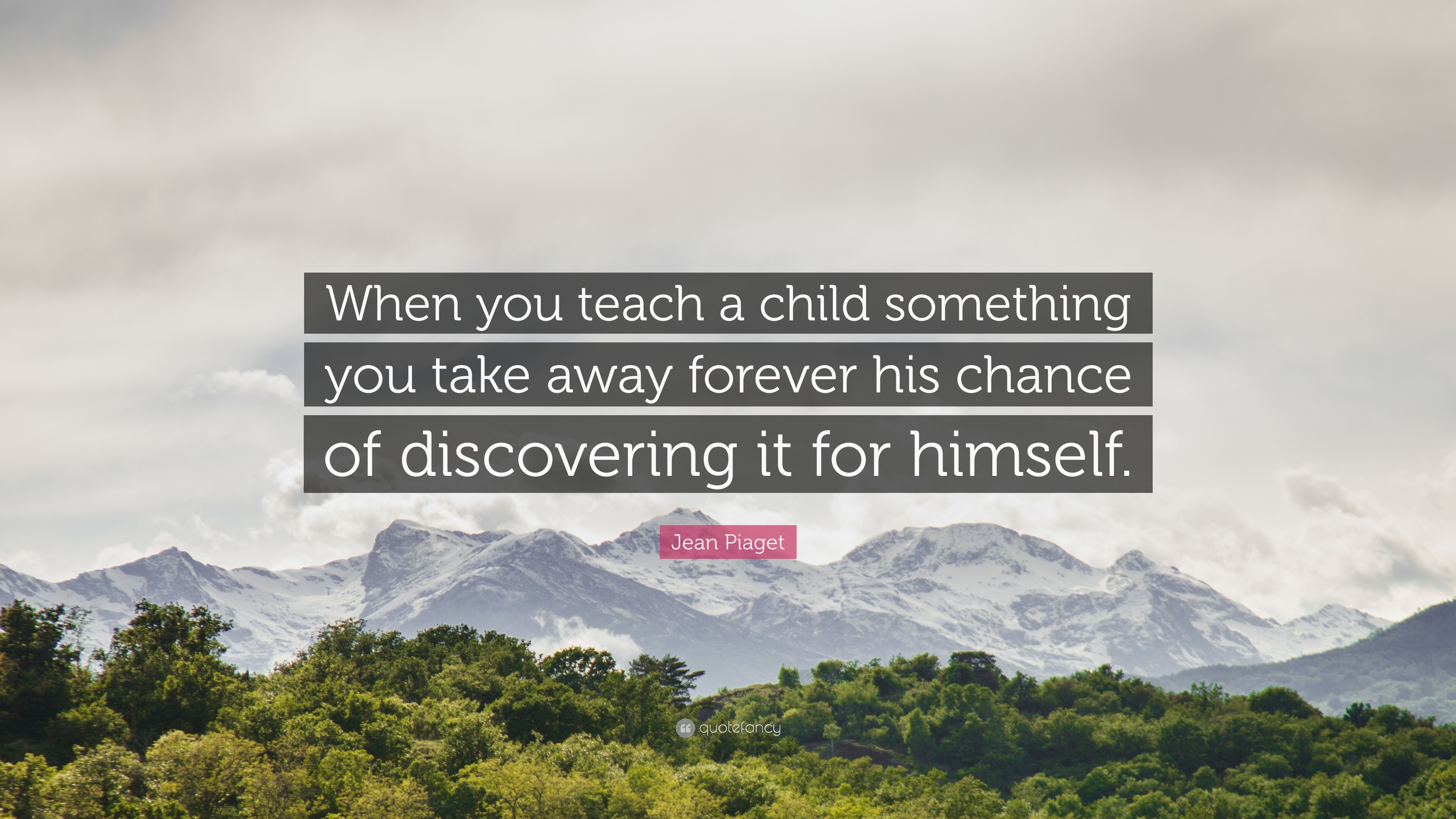
One of Piaget’s most profound contributions is the idea of constructivism—the notion that children build knowledge through experience rather than simply receiving it. This reminds us that teaching is not merely transferring facts, but supporting a child’s active construction of understanding.
The Child’s View of the World as a Learner

According to Piaget, children possess an innate curiosity about their surroundings. Their view of the world is shaped by their developmental stage, which teaches us why tailoring education to cognitive readiness is essential.
Encouraging Curiosity to Foster Development
“The principal goal of education is to create men who are capable of doing new things, not simply repeating what other generations have done.” This quote highlights the importance Piaget placed on nurturing creativity and innovation through cognitive growth.
Stages of Cognitive Growth and Their Meaning
Piaget’s identification of developmental stages like sensorimotor, preoperational, concrete operational, and formal operational reveals a roadmap of cognitive evolution. Each phase is essential, offering a new way for the child to interpret their experiences.
The Role of Mistakes in Learning
“Mistakes are valuable signs of development.” Through this idea, Piaget encourages us to see errors not as failures but as steps towards deeper understanding—a perspective that fosters resilience and intellectual maturity.
The Interaction Between Maturation and Experience
Piaget’s theory suggests that cognitive development results from an ongoing interaction between biological maturation and environmental experience, provoking reflection on how education systems can balance these influences effectively.
Active Engagement as the Heart of Learning
“Knowledge is a consequence of experience.” This closing reflection by Piaget captures why active learning—engaging directly with the material world—is so powerful in shaping the mind’s growth and transformation.
