George Orwell’s 1984 remains one of the most chilling explorations of control and freedom ever written. Published in 1949, the novel’s dystopian vision of a totalitarian regime where every aspect of life is surveilled and manipulated continues to resonate in an era of digital surveillance, algorithmic governance, and eroding privacy. The book’s enduring relevance lies in its unflinching portrayal of how power operates—not just through brute force, but through language, thought, and the very fabric of reality. Below, we delve into ten of Orwell’s most powerful quotes from 1984 that dissect the mechanisms of control and the fragility of freedom.
The Power of Language in Shaping Thought

“Don’t you see that the whole aim of Newspeak is to narrow the range of thought? In the end we shall make thoughtcrime literally impossible, because there will be no words in which to express it.” This quote from 1984 underscores how language isn’t just a tool for communication—it’s a weapon for thought control. By systematically eliminating words and redefining meanings, the Party in 1984 ensures that dissent becomes unthinkable. Today, we see echoes of this in the way social media algorithms curate language, reinforcing echo chambers and suppressing alternative viewpoints under the guise of “community guidelines.” The erasure of words isn’t just about censorship; it’s about erasing the possibility of rebellion before it even begins.
Surveillance as the Ultimate Tool of Control

“Big Brother is Watching You.” Few phrases in literature are as instantly recognizable as this one. Orwell’s vision of omnipresent surveillance—where even the most private moments are monitored—has become a blueprint for modern anxieties about privacy. From facial recognition cameras to data harvesting by corporations and governments, the idea that our every move is observed is no longer fiction. The chilling effect of surveillance isn’t just about punishment; it’s about preemptive compliance. When people believe they’re being watched, they police their own behavior, internalizing the rules of the regime without ever needing a direct order.
The Illusion of Free Will in a Controlled World
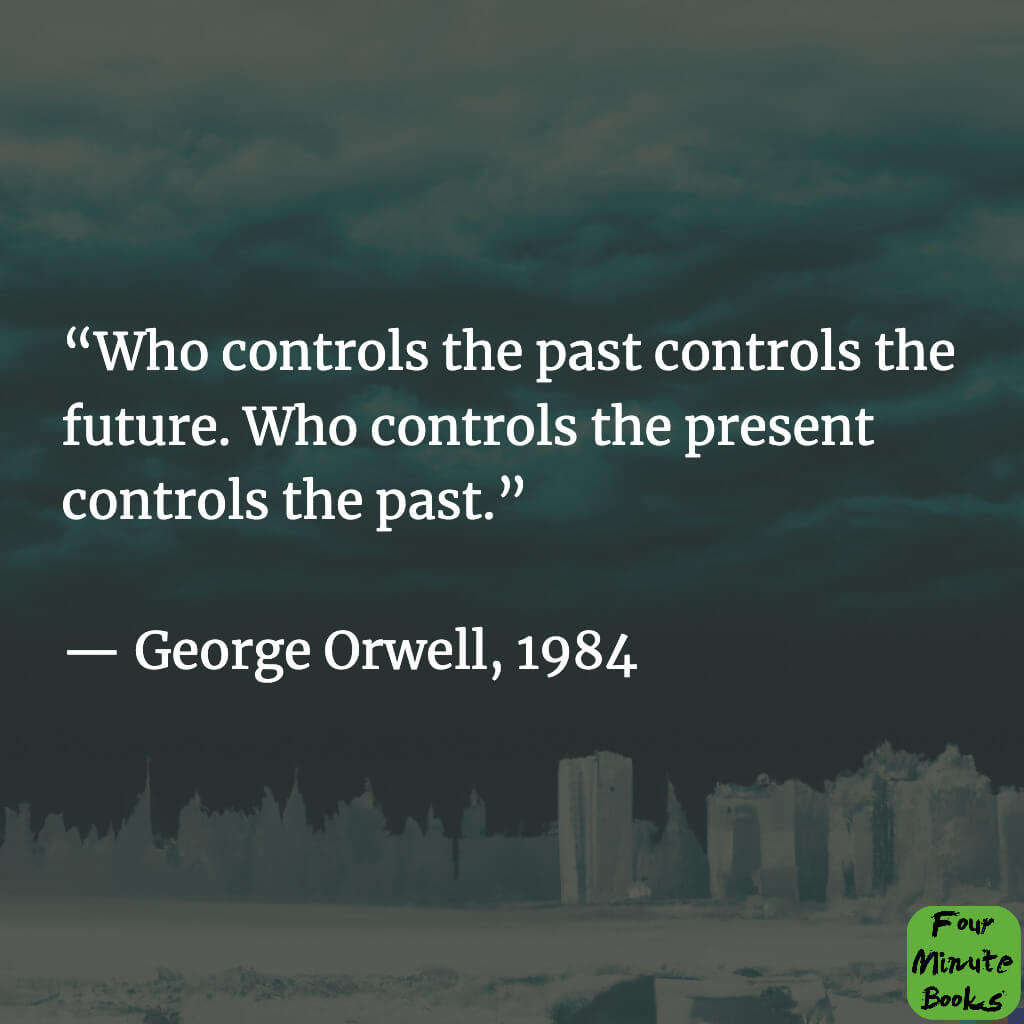
“Nothing was your own except the few cubic centimetres inside your skull.” This line from 1984 strips away the illusion of autonomy in a controlled society. Even the most intimate spaces of the mind are not safe from the Party’s reach. In today’s world, this resonates with the way digital platforms mine our thoughts through search histories, social media interactions, and even biometric data. The idea that our inner lives are sacrosanct is increasingly outdated. Orwell’s warning is clear: when power extends its grasp into the mind, resistance becomes nearly impossible because the very act of thinking differently is policed.
The Distortion of Truth as a Means of Control

“The Party told you to reject the evidence of your eyes and ears. It was their final, most essential command.” In 1984, truth is not something to be discovered but something to be dictated. The Party’s ability to rewrite history and gaslight its citizens into doubting their own perceptions is one of the novel’s most terrifying concepts. Today, we see this in the rise of “alternative facts,” deepfake technology, and the weaponization of misinformation. When reality itself becomes negotiable, control isn’t just about suppressing dissent—it’s about making people doubt their own existence.
The Role of Fear in Maintaining Power

“Power is not a means; it is an end.” Orwell’s novel reveals that the pursuit of power is not about achieving stability or prosperity but about the sheer thrill of domination. Fear is the currency of control, and the Party in 1984 ensures its citizens are perpetually afraid—not just of external enemies, but of each other. The telescreens that monitor citizens also broadcast propaganda designed to keep them in a state of paranoia. In modern politics, we see this tactic in the cultivation of perpetual crises, from manufactured threats to the demonization of marginalized groups. Fear keeps populations docile and compliant, willing to surrender freedoms in exchange for the illusion of security.
The Paradox of Freedom Under Oppression
“Freedom is the freedom to say that two plus two make four.” This deceptively simple quote encapsulates the novel’s central paradox: in a world where truth is malleable, the act of asserting objective reality becomes an act of rebellion. Orwell suggests that freedom isn’t about grand gestures or revolutions—it’s about the quiet insistence on facts, even when they’re inconvenient. Today, this resonates in the pushback against misinformation and the defense of objective journalism. The moment we accept that truth is subjective, we surrender the very foundation of freedom.
The Erosion of Individuality
“Nothing exists except through human consciousness.” Orwell’s dystopia thrives on the erasure of individuality, where people are reduced to cogs in a machine. The Party’s slogan—”We are the dead”—highlights how it strips away personal identity, reducing citizens to hollow shells. In a world where social media algorithms reward conformity and punish uniqueness, the pressure to conform is stronger than ever. The loss of individuality isn’t just a loss of self; it’s a loss of the capacity to imagine a different world.
The Doublethink of Modern Society
“Doublethink means the power of holding two contradictory beliefs in one’s mind simultaneously, and accepting both of them.” Orwell’s concept of doublethink is a masterstroke in illustrating how control operates through cognitive dissonance. In 1984, citizens are expected to believe both that the Party is infallible and that it is constantly under threat. Today, we see doublethink in the way people simultaneously demand transparency from institutions while consuming propaganda that denies reality. The ability to hold contradictory beliefs without cognitive dissonance is a hallmark of a society that has surrendered its critical thinking.
The Illusion of Choice in a Controlled System
“The choice for mankind lies between freedom and happiness, and for the great bulk of mankind, happiness is better.” This quote reveals the Party’s cynical bargain: it offers comfort and security in exchange for freedom. In 1984, the citizens of Oceania are not starving or oppressed in the traditional sense; they are kept complacent through bread and circuses. Today, this trade-off is visible in the way consumerism and entertainment distract us from political disengagement. The Party’s logic is simple: if people are happy, they won’t question the system. The question we must ask ourselves is whether happiness under oppression is truly freedom.
The Ultimate Act of Rebellion
“If you want to keep a secret, you must also hide it from yourself.” Orwell’s novel suggests that the most powerful form of resistance is the preservation of one’s own mind. In a world where even thoughts are policed, the act of remembering, questioning, and refusing to internalize the Party’s narrative is rebellion. Today, this takes the form of digital privacy, encrypted communication, and the cultivation of independent thought. The ultimate act of defiance isn’t taking to the streets—it’s refusing to let the system dictate what you believe, even when no one is watching.