Ray Bradbury’s words have a way of lingering in the mind long after they’re read. A master of both caution and inspiration, he crafted prose that warned of dystopian futures while igniting the spark of human creativity. His quotes are more than just sentences—they’re mirrors reflecting our own fears, dreams, and the delicate balance between progress and destruction. Whether you’re a writer, a dreamer, or someone navigating the complexities of modern life, Bradbury’s insights offer a compass for both reflection and action. Below, we explore ten of his most powerful quotes, each paired with imagery that brings his timeless wisdom to life.
The Danger of Forgetting the Past
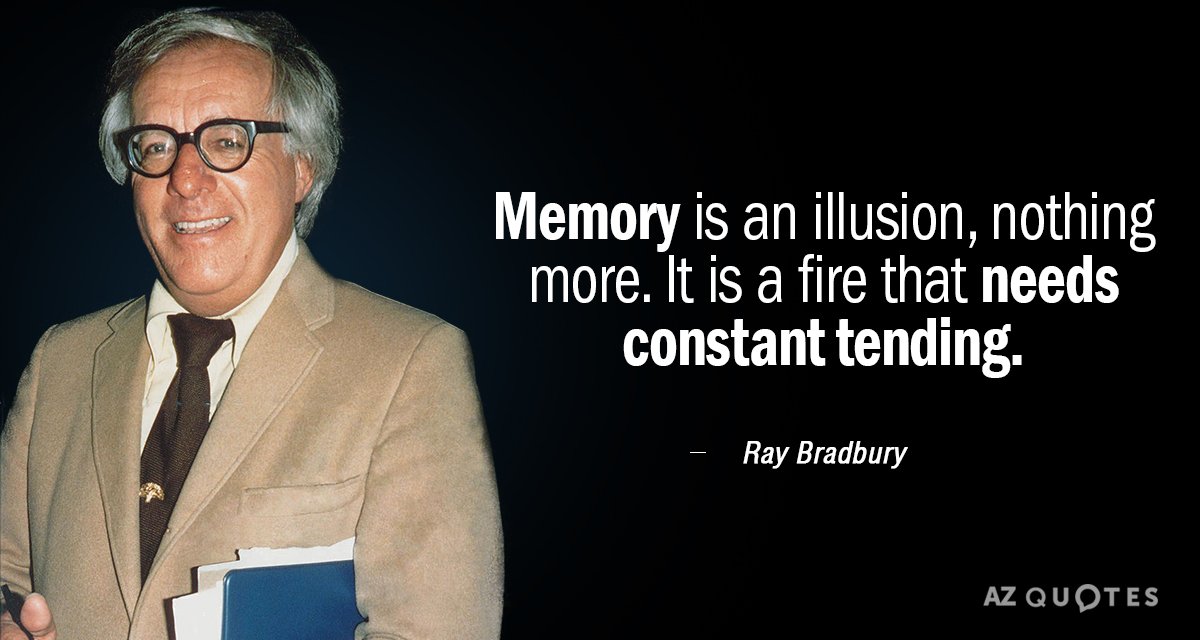
Memory is not just a record of what was—it’s a living force that shapes who we are. Bradbury warns that when we let go of the past, we risk losing the very essence of our humanity. “Memory is an illusion, nothing more. It is a fire that burns us with desire to return to the impossible.” This quote reminds us that nostalgia isn’t just sentimentality; it’s a warning against erasing the lessons and legacies that define us. In a world obsessed with the future, Bradbury urges us to hold onto the embers of history before they fade entirely.
Books as Beacons of Truth
In an era where digital distractions dominate, Bradbury’s love for books feels almost revolutionary. “You don’t have to burn books to destroy a culture. Just get people to stop reading them.” This stark warning underscores the fragility of knowledge and the power of passive consumption. Books are not just vessels of information—they’re the foundation of critical thought. Without them, society risks drifting into a shallow, unquestioning existence. Bradbury’s words are a call to arms for readers and creators alike to defend the sanctity of the written word.
The Fire of Imagination

Creativity isn’t a passive gift—it’s a wildfire that must be nurtured. Bradbury understood this better than most. “I have never listened to anyone who criticized my taste in space travel, sideshows or gorillas. When this occurs, I pack up and leave because that person is a hater of the imagination.” This quote is a rallying cry for those who dare to dream beyond the ordinary. It’s a reminder that imagination is not a luxury; it’s the engine of progress. Whether you’re an artist, an inventor, or simply someone who believes in the impossible, Bradbury’s fire is yours to tend.
Technology’s Double-Edged Sword

Bradbury’s dystopian novel *Fahrenheit 451* wasn’t just fiction—it was a prophecy. “We are an instant-gratification generation, and we’ve become dependent on technology that gives us everything we want, but takes away everything we need.” This quote feels eerily prescient in today’s world of algorithm-driven lives. Technology connects us but also isolates us, offering convenience at the cost of depth. Bradbury’s warning is clear: progress without reflection is a path to ruin. The challenge is to harness innovation without losing our humanity in the process.
The Courage to Be Different
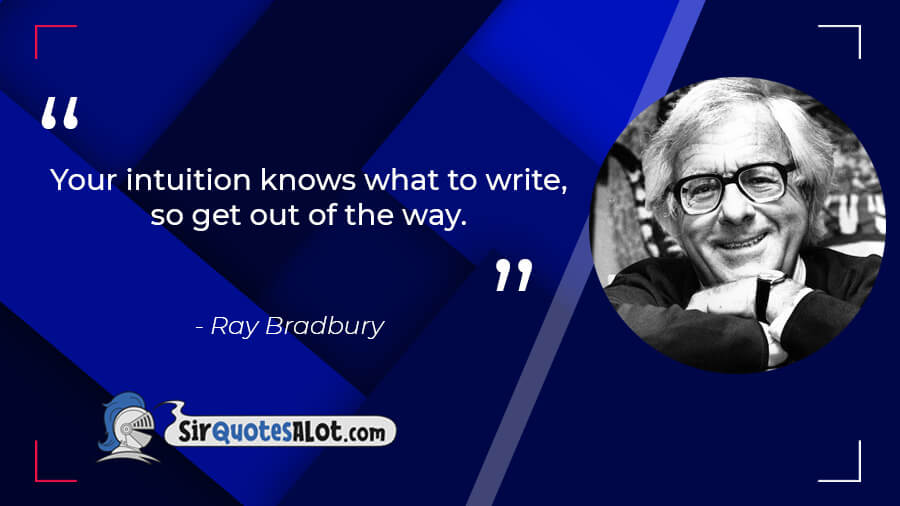
Society often rewards conformity, but Bradbury celebrated the rebels. “Don’t think. Thinking is the enemy of creativity. It’s self-conscious, and anything self-conscious is lousy. You simply must jump off cliffs all the time and build your wings on the way down.” This quote is a manifesto for those who refuse to play by the rules. It’s a celebration of intuition, instinct, and the willingness to fail spectacularly. In a world that demands sameness, Bradbury’s words are a permission slip to embrace the unknown—and to trust that the fall is just the beginning of flight.
The Fragility of Time
Time is both our greatest ally and our most relentless enemy. Bradbury captures this duality with haunting clarity: “The future is a safe, sterile laboratory for trying out ideas in, a means of thinking about reality, a method.” Yet, he also reminds us that the future is not a distant abstraction—it’s built on the choices we make today. “You must stay drunk on writing so reality cannot destroy you.” These words are a call to live fully now, because the future is not a destination but a consequence of our present actions.
The Power of Solitude
In a hyper-connected world, solitude is often seen as a luxury. Bradbury, however, saw it as a necessity. “You need to be alone and quiet to write. To create, you must first retreat.” This quote speaks to the deep well of creativity that thrives in silence. Solitude isn’t loneliness; it’s the space where ideas take root and grow. Without it, we risk drowning in noise—both external and internal. Bradbury’s wisdom is a gentle nudge to carve out moments of stillness, where the mind can wander freely and unencumbered.
Fear as a Catalyst for Change
Fear is often paralyzing, but Bradbury saw it as a compass. “Fear is the enemy of logic. There is no more debilitating, crushing, self-defeating thing than fear. For what it does to your brain, to your heart, to your entire system of belief.” Yet, he also believed that confronting fear could lead to transformation. “You must learn to live with the fear of the unknown, because that fear is what drives you forward.” This duality—fear as both a warning and a motivator—is a reminder that growth often lies on the other side of discomfort.
The Legacy of Words
Words are more than ink on a page—they are the threads that weave the fabric of culture. Bradbury understood this deeply. “A book is a loaded gun in the house next door. Who knows who might be the target of the well-read man?” This provocative statement underscores the power of literature to challenge, inspire, and even incite change. But it’s also a reminder that words carry responsibility. What we write, read, and share shapes the world in ways we can’t always predict. Bradbury’s legacy is a testament to the enduring impact of a single sentence.
The Unstoppable Human Spirit
Despite his warnings about technology and conformity, Bradbury never lost faith in humanity. “We are all, in the final analysis, alone. And this is what makes us free.” This quote is both a lament and a liberation. It acknowledges the isolation that comes with existence but also celebrates the freedom that comes from embracing it. Bradbury’s words are a reminder that while the world may try to box us in, the human spirit is inherently rebellious. It refuses to be tamed, and that refusal is our greatest strength.