


Luis Buñuel, the legendary Spanish filmmaker, was a master of surrealism and provocative storytelling. His words, like his films, challenge conventions, blur reality, and invite deep reflection. Here are 10 quotes from Buñuel that capture his surreal and thought-provoking style, each paired with an image that echoes his enigmatic vision.
The Illusion of Free Will

Buñuel often questioned the very notion of choice, suggesting that our lives are governed by unseen forces. His films, like his words, dismantle the idea of free will, replacing it with a dreamlike inevitability. “Life is a dream for the wise, a game for the fool, a comedy for the rich, and a tragedy for the poor,” he once remarked, highlighting the absurdity of human existence.
The Absurdity of Social Norms

Buñuel’s disdain for societal conventions was legendary. He saw them as chains that stifle individuality and creativity. “The only way to make sense out of change is to plunge into it, move with it, and join the dance,” he said, urging us to embrace the chaos rather than resist it. His words resonate with those who find beauty in the unconventional.
The Surreal Nature of Memory

Memory, for Buñuel, was not a reliable archive but a shifting landscape of half-truths and distortions. “I am still an atheist, thank God,” he quipped, reflecting on how belief systems shape our perceptions. His films, like his words, play with memory’s fragility, turning recollections into surreal puzzles that defy logic.
The Paradox of Desire
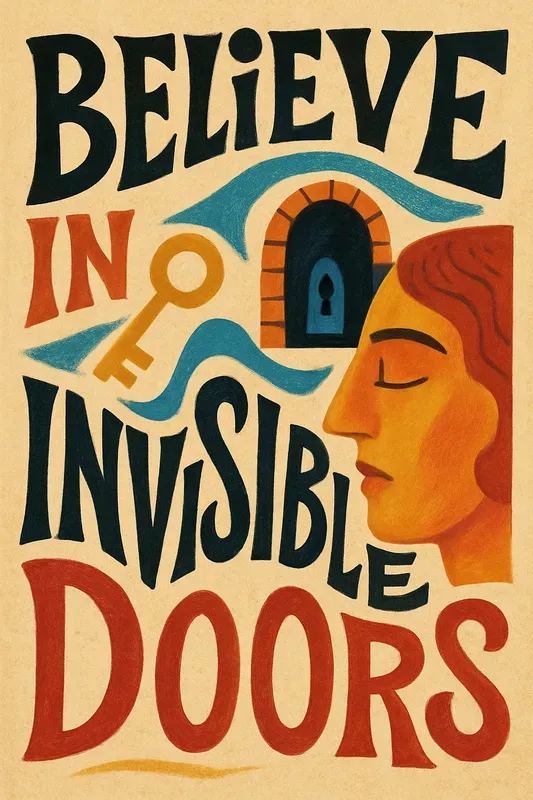
Desire, in Buñuel’s world, is both a driving force and a source of absurdity. “Desire is the very essence of man,” he declared, yet he also saw it as a trap that leads to self-destruction. His films explore this duality, where longing and frustration intertwine in ways that feel both familiar and alien.
The Hypocrisy of Morality

Buñuel’s critique of morality was unrelenting. He saw it as a tool of control, often masking cruelty under the guise of virtue. “Morality is the best of all lies,” he asserted, exposing the contradictions that lie beneath society’s most cherished principles. His words challenge us to question the narratives we accept without scrutiny.
The Uncanny Power of Dreams
“Dreams are the royal road to the unconscious,” Buñuel often said, borrowing from Freud but twisting the idea into something far stranger. His films blur the line between dream and reality, inviting viewers to question what is real. Dreams, in his view, are not just reflections of our desires but portals to a surreal world where logic dissolves.
The Futility of Rebellion
Even rebellion, Buñuel suggested, can become a hollow ritual. “I have always been on the side of the rebels,” he admitted, “but I have never believed in their causes.” His words highlight the irony of resistance—how even defiance can be co-opted by the very systems it seeks to overthrow.
The Beauty of the Grotesque
Buñuel found poetry in the grotesque, the ugly, and the taboo. “Beauty will be CONVULSIVE or it will not be at all,” he declared, embracing the unsettling as a path to truth. His films, like his words, revel in the strange and the unsettling, finding beauty in what others might dismiss as monstrous.
The Silence of God
God, for Buñuel, was a silent observer—or perhaps a silent absence. “I am an atheist, thank God,” he famously said, playing with the paradox of belief and disbelief. His words suggest that the absence of divinity is as profound as its presence, leaving us to grapple with the void.
The Eternal Return of the Absurd
Life, Buñuel implied, is a cycle of absurd repetitions. “The universe is a continuous becoming,” he mused, “and the only thing that changes is our perception of it.” His words remind us that the surreal is not just in dreams but in the mundane, waiting to be seen through fresh eyes.
