In the labyrinthine world of philosophy, few concepts have sparked as much intrigue and redefined intellectual landscapes as the “rhizome” from Deleuze and Guattari’s A Thousand Plateaus. Unlike rigid, hierarchical structures, the rhizome thrives as a decentralized, ever-expanding network—much like the tangled roots of a plant that defy singular origins. These ten quotes peel back layers of this radical idea, revealing how rhizomes promise not just a shift in perspective, but a revolution in how we perceive connection, knowledge, and even existence itself.
The Rhizome as a Map, Not a Tracing
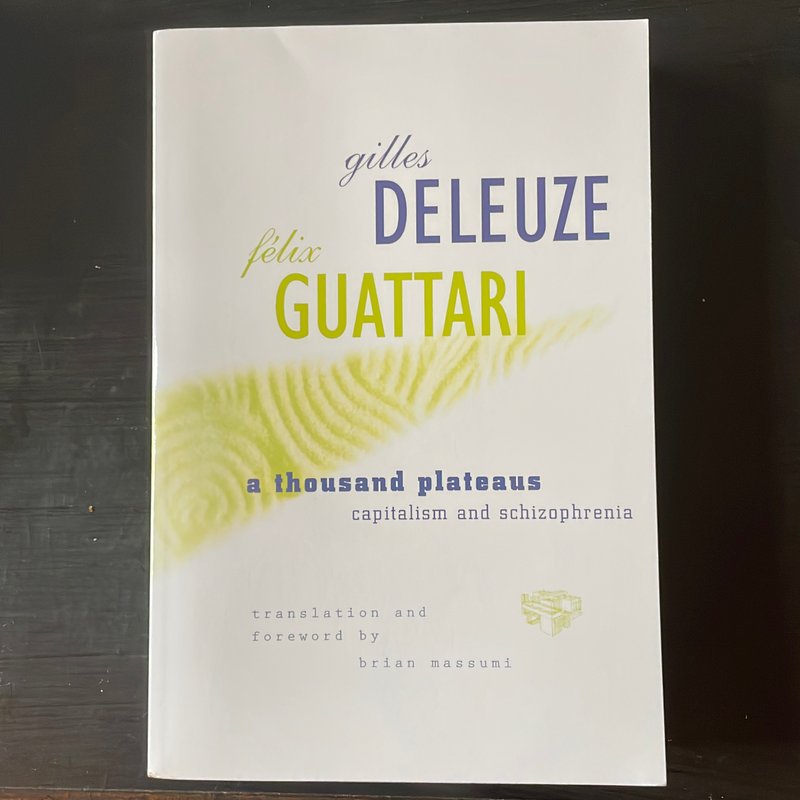
“A map has multiple entryways, as opposed to the tracing, which always comes back ‘to the same.’ The map is open and connectable in all of its dimensions; it is detachable, reversible, and susceptible to constant modification.” This passage dismantles the idea of fixed, linear knowledge. Instead, it invites us to embrace fluidity—where understanding isn’t a destination but a journey through interconnected paths. The rhizome doesn’t just describe the world; it becomes the world, a living, breathing entity that resists reduction.
Breaking Free from Arborescent Thought

“The tree imposes the verb ‘to be’ but the rhizome is made only of conjunctions: ‘and…and…and…'” Here, Deleuze and Guattari target the tyranny of binary logic and fixed identities. The rhizome thrives on “and,” not “is”—it’s a celebration of multiplicity where everything is in flux. This challenges us to reject the seductive simplicity of either/or thinking and instead revel in the messy, beautiful complexity of “more.” Think of a forest: no single tree dictates the entire ecosystem, yet each contributes to its vibrancy.
Decentering the Self

“The self is only a threshold, a door, a becoming between two multiplicities.” Identity isn’t a fortress but a crossroads. The rhizome dismantles the illusion of a stable, singular self, replacing it with a dynamic interplay of forces and flows. This isn’t just philosophical musing—it’s a call to rethink how we engage with others, cultures, and even our own evolving selves. What if we stopped asking, “Who am I?” and started asking, “How do I connect?”
Knowledge as a Decentralized Network

“The rhizome pertains to a map that must be produced, constructed, a map that is always detachable, connectable, reversible, modifiable, and has multiple entryways and exits.” Knowledge isn’t a pyramid with a single peak but a sprawling web where every node is both a starting point and a destination. This flips the script on traditional education, where expertise is often hoarded at the top. Instead, imagine a classroom where learning is a collaborative, ever-unfolding exploration—where the teacher and student are fellow travelers on the same rhizomatic path.
The Power of Nomad Thought

“The nomad distributes himself in a smooth space; he occupies, inhabits, holds that space; that is his manner of being in it.” The rhizome isn’t just a concept—it’s a way of moving through the world. Nomadic thought rejects the seduction of fixed territories, instead favoring movement, adaptation, and surprise. This is the antithesis of the sedentary scholar, rooted in one discipline or ideology. It’s jazz over sheet music, improvisation over rigid composition—a reminder that life, like knowledge, is best when it dances rather than marches.
Assemblages: The Rhizome in Action
“An assemblage is a multiplicity which is made up of heterogeneous terms and which establishes liaisons, relations between them, across ages, sexes, and reigns.” Think of a city: buildings, people, sounds, and smells all collide to create something greater than the sum of its parts. The rhizome doesn’t just describe these assemblages—it is them. It’s the way a protest movement grows organically, the way a viral meme spreads, the way a friendship blossoms unpredictably. These are not chains of command but networks of becoming.
Against the State Apparatus
“The State is a ‘cold monster’ that seeks to appropriate the flow of desire and channel it into fixed forms.” The rhizome is inherently subversive because it resists capture. Where the State demands order, the rhizome thrives in chaos. It’s the difference between a garden meticulously pruned into rows and a wild meadow where every flower finds its own path. This isn’t anarchy for its own sake—it’s a recognition that rigid structures often stifle the very creativity they claim to organize.
The Body Without Organs
“The body without organs is opposed to the organism. It is not lack of organization but a unorganized body that is all the more alive and teeming with potential.” Imagine a body stripped of its predefined roles—no heart to pump, no lungs to breathe, no brain to command. It’s terrifying, but also exhilarating. The rhizome invites us to consider existence beyond the constraints of function and purpose. What if we didn’t have to be “useful”? What if we could just *be*—a swirling mass of possibility?
Becoming-Animal, Becoming-Machine
“The wolf is not the subject of which the pack is the attribute; the pack is the wolf’s constitutive multiplicity.” This isn’t about literal transformation but about dissolving boundaries. The rhizome dissolves the line between human and animal, machine and organism, self and other. It’s the way a dancer becomes one with the music, the way a hacker merges with code, the way a child loses themselves in play. These are moments of pure becoming, where categories blur and new forms emerge.
The Rhizome as a Way of Life
“The rhizome is an anti-genealogy.” It refuses the weight of history, tradition, and legacy. Instead, it asks: What can we create *now*? What connections can we forge that haven’t been tried before? The rhizome isn’t just a theory—it’s an invitation to live differently. To embrace the unexpected, to celebrate the messy, and to find joy in the uncharted. After all, if the world is a rhizome, then every step we take is a new beginning.