Homi K. Bhabha’s “The Location of Culture” remains a seminal work in postcolonial studies, notably for its exploration of hybridity and cultural identity. His reflections on how cultures intermingle address a common observation: we are often fascinated by mixed identities and cultural intersections. Yet beneath this fascination lies a profound understanding of how hybridity challenges fixed ideas about culture, nationhood, and belonging. Here are 10 insightful quotes from the book that delve into these themes, each revealing why hybridity captivates us beyond surface-level diversity.
Hybridity as a Space of Cultural Negotiation

Bhabha positions hybridity not merely as mixing but as a negotiation where cultures interact and produce new meanings. This perspective explains why hybrid identities provoke both intrigue and unease—they unsettle established cultural boundaries and invite us to reimagine identity as fluid and dynamic.
Looking Beyond Borders in Hybridity
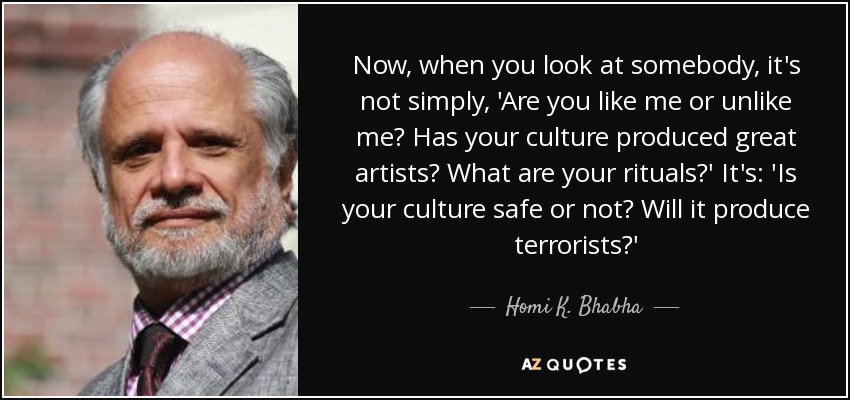
“Now when you look at somebody, it’s not simply: Are you like me or unlike me? Has your culture been purified or is it hybrid?” This observation reflects a shift in how we perceive identity in a globalized world. Hybridity forces us to rethink binaries, complicating the familiar ‘self’ and ‘other’ division.
Hybridity as Challenge to Cultural Essentialism

In Bhabha’s view, hybridity disrupts cultural essentialism—the idea that culture has a pure, fixed essence. Instead, hybrid cultures reveal how identities are constructed in-between spaces, disrupting notions of authenticity and inviting us to embrace complexity.
The Location of Culture: Historical Contexts
Bhabha reminds us that hybridity arises within particular historical contexts of colonial encounter and resistance. This situates hybridity as more than cultural curiosity—it is a strategy of survival and resistance that complicates imperial narratives and authority.
Unsettling Coordinates through Hybridity

Hybridity unsettles traditional coordinates of culture and identity. It challenges the linear narratives of history, revealing life “in-between” where cultural difference does not simply oppose but entwines itself in new configurations.
The Power of Ambivalence in Hybridity
Bhabha articulates hybridity’s ambivalence: the simultaneous attraction and resistance at the heart of cultural interaction. This ambivalence is a site of creative tension where new forms of identity and knowledge emerge, reflecting why hybridity remains a captivating subject.
Hybridity as a Site of Cultural Translation
Hybridity involves translation—not just linguistic but cultural translation—where meanings shift between contexts. This process highlights the productive possibilities of negotiating difference rather than erasing it, enriching our understanding of cultural dynamics.
Hybridity Disrupts Nationalist Narratives
By exposing how identities are hybrid, Bhabha undermines nationalist narratives that rely on purity and exclusion. This disruption reveals the constructed nature of national identities and invites us to recognize the plurality inherent in all cultures.
Hybrid Identities and the Future of Culture
Looking ahead, hybridity offers a framework for thinking about culture in an interconnected world. It encourages openness, dialogue, and innovation, challenging rigid cultural norms and making space for new forms of belonging.
Why We Are Fascinated by Hybridity
Ultimately, our fascination with hybridity lies in its capacity to question the fixed categories we depend on. It reveals the complex, layered realities of cultural existence and invites us to embrace multiplicity—a vital lesson in a world where cultures constantly intersect and evolve.