The Communist Manifesto, penned by Karl Marx and Friedrich Engels, remains one of the most influential political manuscripts in history. It powerfully outlines the theory and practice of revolutionary communism and delves deeply into the struggles between social classes. Revolution, as framed in this work, is not merely an uprising but a profound shift in social, economic, and political paradigms. Here are 10 compelling quotes from The Communist Manifesto that capture the essence of revolution and the call to action for the working class.
Revolution as the Driving Force of History
“The history of all hitherto existing society is the history of class struggles.” This foundational quote sets the stage for understanding revolution as an inevitable clash between the oppressed and their oppressors. Marx and Engels emphasize the cyclical nature of societal conflict leading toward transformative change.
The Role of the Proletariat in Revolution

“The proletarians have nothing to lose but their chains. They have a world to win. Proletarians of all countries, unite!” This fiery call to solidarity highlights the working class’s power and stake in revolution. It frames revolution as a collective endeavor to dismantle oppressive structures.
Overthrowing Bourgeois Control
“What the bourgeoisie, therefore, produces, above all, are its own grave-diggers.” By this, Marx and Engels point to how the capitalist class unwittingly creates the conditions for its own overthrow through the exploitation of the proletariat.
The Necessity of Revolutionary Change

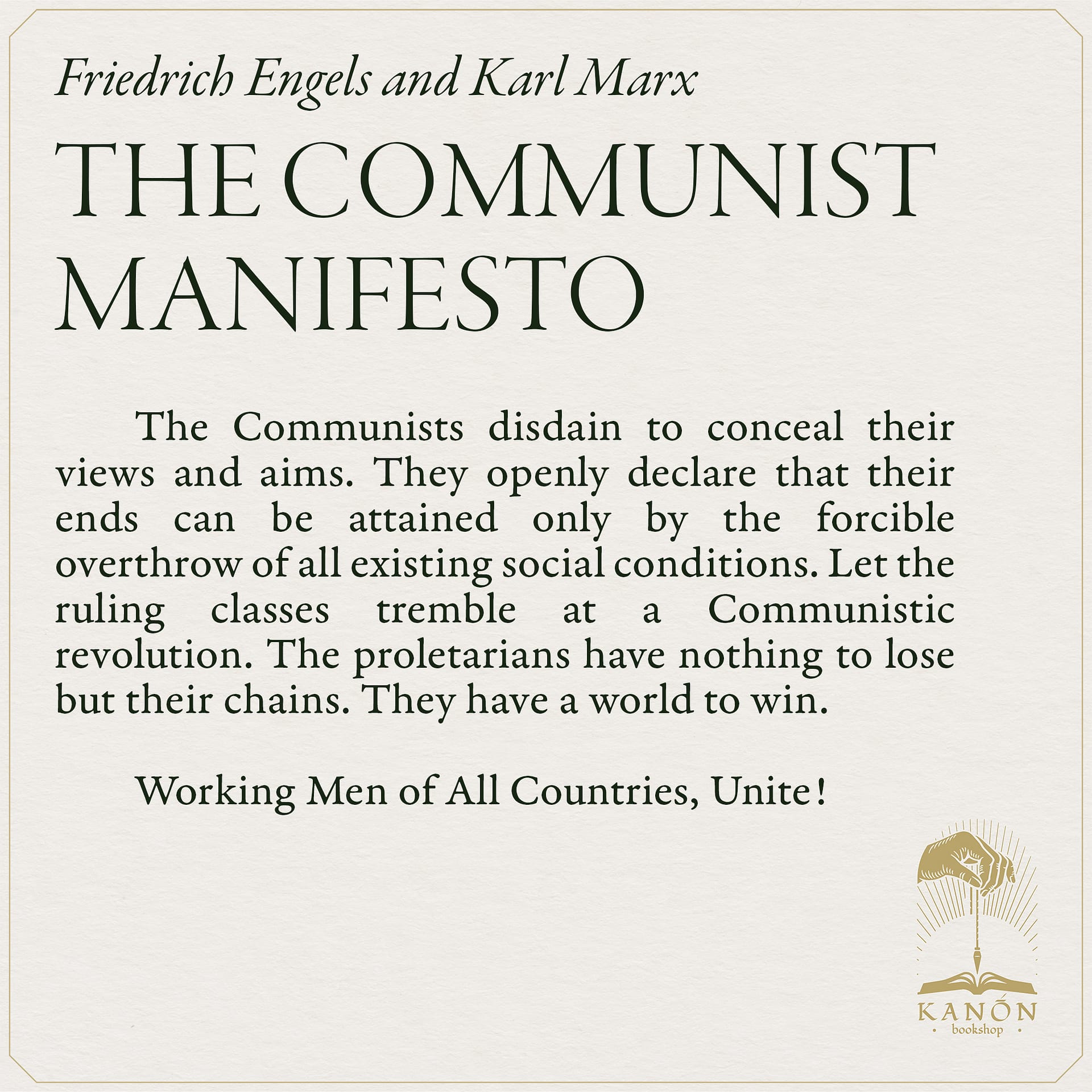
“The Communists disdain to conceal their views and aims. They openly declare that their ends can be attained only by the *forcible overthrow* of all existing social conditions.” This bold declaration stresses the uncompromising nature of true revolutionary transformation.
The Inevitable Fall of Capitalism

“Capital is reckless of the health or length of life of the laborer, unless under compulsion from society.” This quote exposes the exploitative, destructive tendencies inherent in capitalism, underlining why revolution is necessary to protect the working masses.
The Transformative Power of Revolution
“The proletariat will use its political supremacy to wrest, by degrees, all capital from the bourgeoisie, to centralize all instruments of production in the hands of the state.” Revolution is described here as a process that restructures social and economic power for the benefit of the many rather than the few.
Internationalism in Revolution
“The ruling ideas of each age have ever been the ideas of its ruling class.” Marx and Engels stress the importance of international working-class unity against the global ruling bourgeoisie, advocating for a revolution that transcends national borders.
Revolution as a Catalyst for Social Justice
“A spectre is haunting Europe—the spectre of Communism.” This striking metaphor signals the growing awareness and fear among elites regarding the inevitable rise of revolutionary thought aimed at establishing social justice.
The Abolition of Class Distinctions
“Abolition of property in land and application of all rents of land to public purposes.” Here, the Manifesto outlines specific revolutionary measures geared toward dismantling the foundations of class privilege and redistributing wealth equitably.
The Call for Persistent Struggle
“The Communists everywhere support every revolutionary movement against the existing social and political order of things.” Marx and Engels encourage continuous engagement in revolutionary struggles, emphasizing that revolution is not a one-time event but an ongoing fight for human liberation.