


Roland Barthes’ provocative idea of “The Death of the Author” resonates deeply with readers and scholars alike, challenging traditional notions of authorship and interpretation. Through his insightful quotes, Barthes invites us into a transformative discourse about the relationship between the author, the text, and the reader. Each statement reveals layers of meaning, highlighting why this concept continues to fascinate and spark debate decades after its introduction. Here, we delve into ten compelling quotes from Barthes that explore the enigmatic death of the author.
The Author’s Disappearance: A New Beginning for Text


Barthes famously proclaimed that with the death of the author, the birth of the reader occurs. This suggests that the interpretation of a text should not be limited by the author’s intended meaning but instead open to the reader’s unique perspective. When the author “dies,” the text becomes a living entity, fluid and interactive, allowing multiple meanings to coexist.
Author vs. Text: Releasing the Text into the World
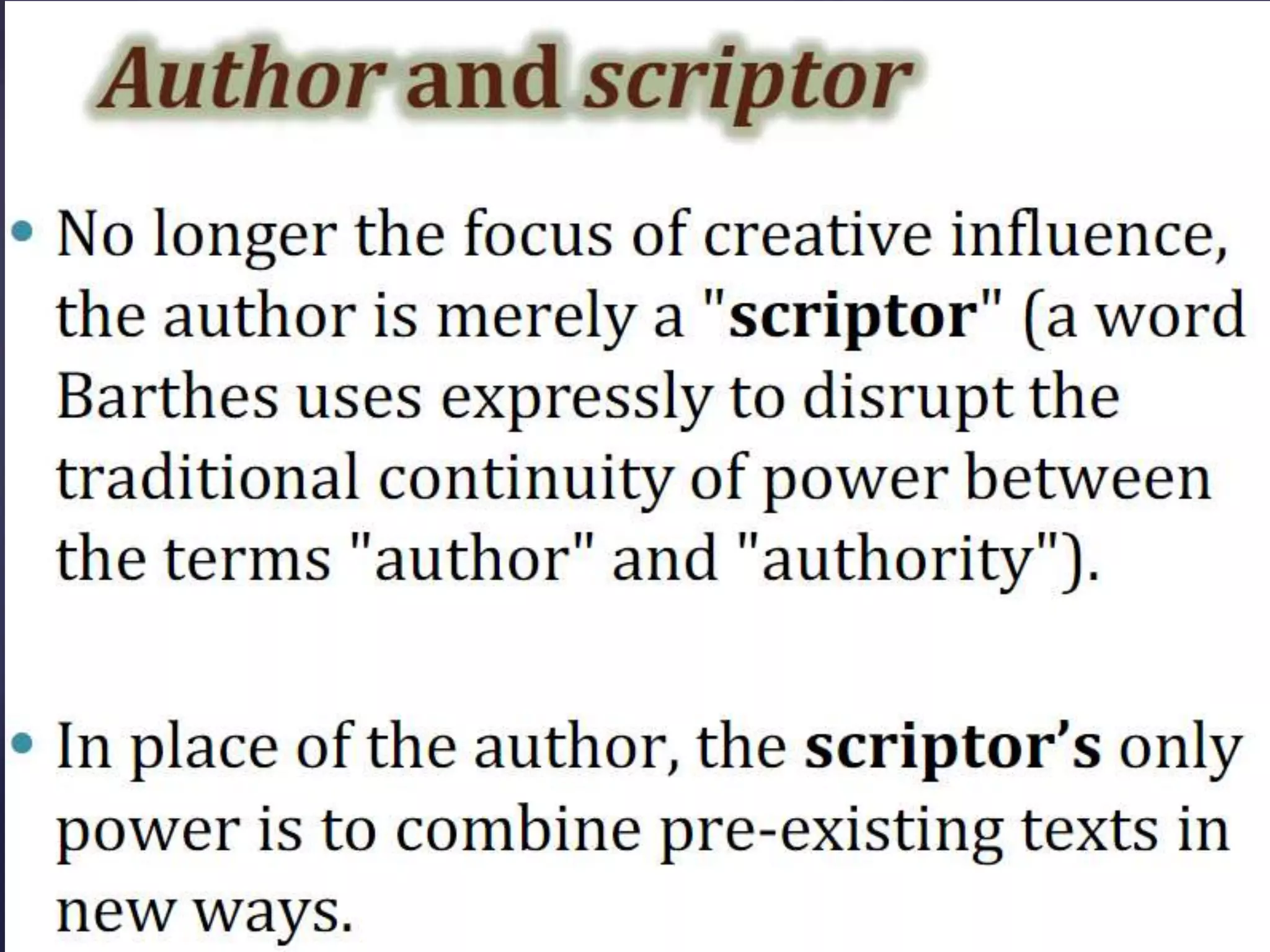
Barthes argues that the author’s presence should not constrain the text’s interpretation. Instead, the text must be freed from its creator’s ownership, enabling it to stand autonomously. This separation challenges the conventional authority of the author and empowers readers to derive their own meanings based on personal contexts.
Text as a Multi-Dimensional Space
The text is described by Barthes as a multi-dimensional space where various writings blend and clash. It is not a closed system originating from a single person, but a network of cultural and linguistic codes that readers must navigate. This idea distances the text from the author’s personal identity and roots it in collective interpretation.
“The Author Enters into His Own Death”
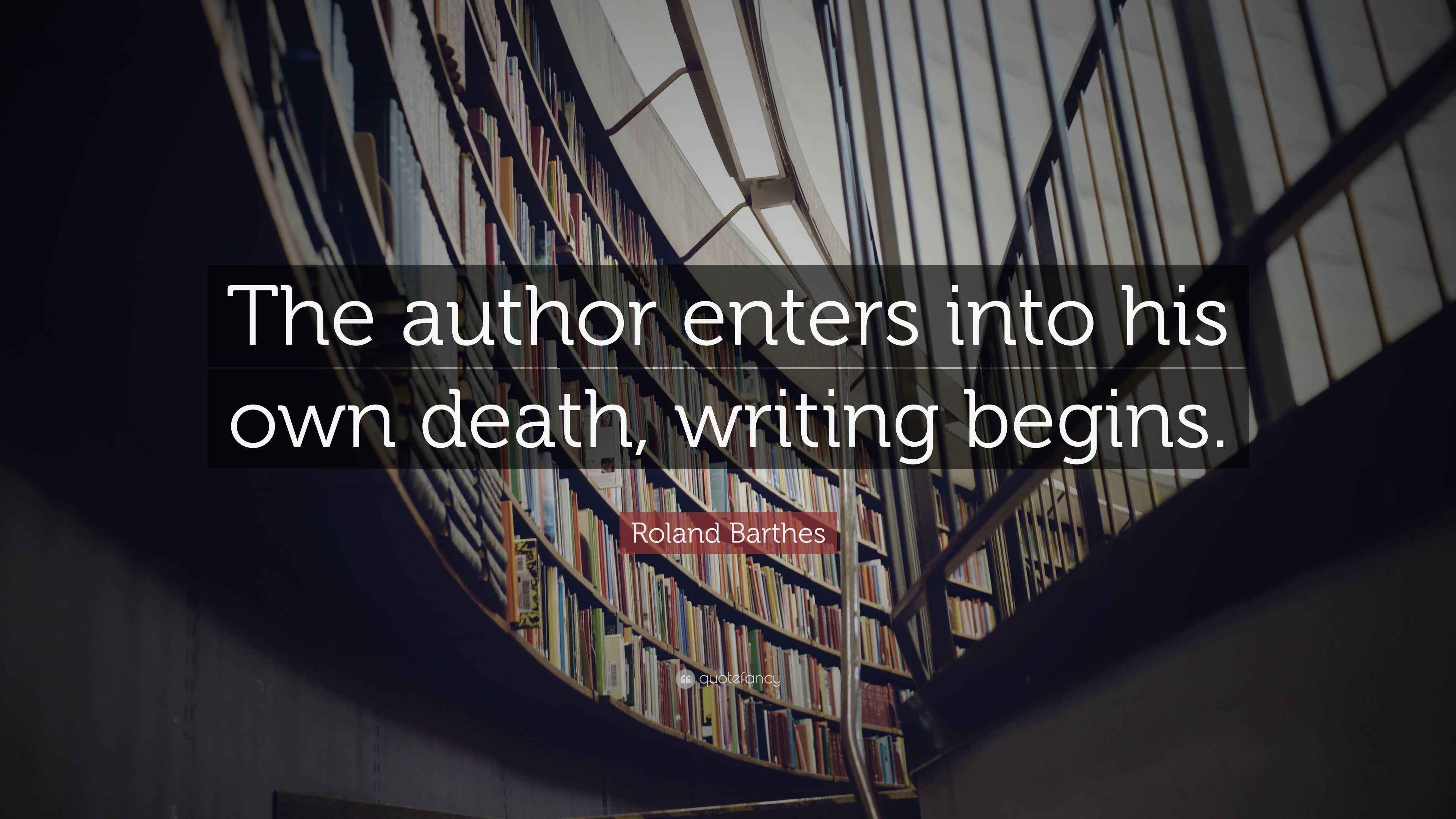
Barthes poetically suggested that with the act of writing, the author simultaneously dies in a symbolic sense, disappearing behind the text. This “death” allows the work to exist independently and be reborn through the eyes of readers, free from authorial intention or biography.
The Liberation of Language from the Author
Language, Barthes insists, exists beyond the author’s control; it is inherently public and intertextual. The author merely borrows words and phrases from a larger cultural lexicon. This perspective dissolves the myth of original authorship and encourages readers to engage with texts as part of a broader dialogue.
Deconstructing Authorial Authority
By declaring the author “dead,” Barthes critically undermines the authority traditionally granted to authors. This deconstruction shifts power dynamics in literature, urging us to question not only who controls meaning but also how interpretation evolves over time and across cultures.
The Reader’s Role in Meaning-Making
Barthes elevates the reader’s experience as central to the creation of meaning. Without the author’s fixed identity, readers assume an active, participatory role where their perspectives, contexts, and reflections are essential to enacting the full life of the text.
Writing as a Product of Cultural Codes
The idea that writing is a product of cultural codes rather than individual genius demystifies literary creation. Barthes emphasizes that texts are mosaics of quotations, shaped by history, society, and language, further diminishing the privileged status of the author.
Endless Interpretation: A Text Without a Single Truth
From Barthes’ viewpoint, texts resist a single, authoritative interpretation. The “death” of the author means every reading opens up new possibilities and meanings, keeping the literary work perpetually alive and dynamic across time.
The Continuous Dialogue Between Text and Reader
Ultimately, Barthes’ vision encourages an ongoing conversation between the text and its audience. The text’s life is sustained by readers’ engagement, interpretation, and imagination, underlining why the concept of the Death of the Author remains a potent and fascinating topic in literary studies.
