René Descartes’ Meditations on First Philosophy invites readers on a profound journey through doubt, certainty, and the foundations of knowledge. At its core lies the exploration of the self—the famous “Cogito, ergo sum” (“I think, therefore I am”)—and the existence of God, concepts that challenge our understanding of reality and our place within it. Let’s delve into 10 compelling quotes from Descartes’ meditations that illuminate these themes, each accompanied by a visual reflection to spark your curiosity and invite a shift in perspective.
The Birth of the Thinking Self

“I think, therefore I am.” This succinct statement is the bedrock of Descartes’ philosophy. It encapsulates the realization that while doubt can unsettle all else, the very act of doubting confirms the existence of the self as a thinking entity. Here, Descartes sets the stage for discovering certainty amid uncertainty.
Recognition of the Mind’s Indivisibility
“The mind is better known than the body.” In these words, Descartes highlights the unique clarity with which we comprehend our own consciousness compared to the physical world. This perspective invites us to trust inner reasoning as the path to foundational truths.
The Doubt that Leads to Certainty
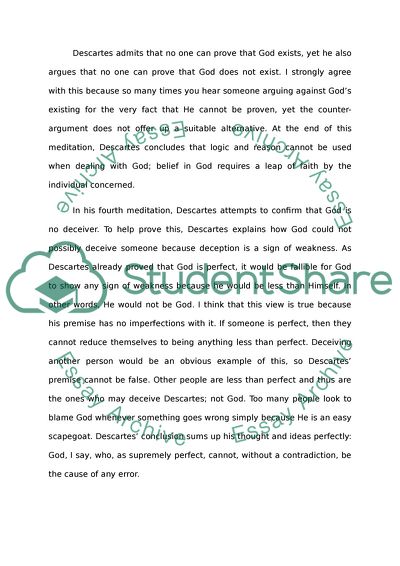
“I will suppose then that everything I see is spurious. I will believe that my memory tells me lies, and that none of the things I formerly took to be true are true.” Descartes’ methodical doubt shakes the ground beneath his beliefs — and ours — pushing us to question what we accept and compelling us to rebuild knowledge from the surest foundations.
The Existence of God as a Perfect Being
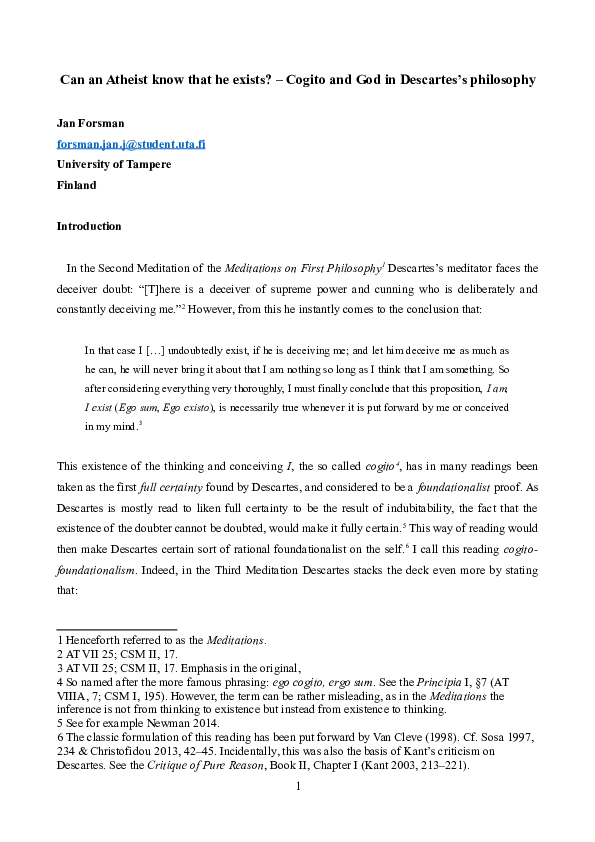
“The idea of God, or a supremely perfect being, must have a cause that contains at least as much reality as the idea itself.” This ontological argument underscores Descartes’ belief that the very concept of perfection points inevitably toward the existence of God, an idea intrinsic and undeniable within our minds.
Self-Existence as Certain and Indubitable

“But I have convinced myself that there is nothing in the world—no sky, no earth, no minds, no bodies. Does it now follow that I too do not exist? No: if I convinced myself of something then I certainly existed.” Here, Descartes claims an unshakable certainty in his own existence as a thinking being, which persists independently of the external world.
Thought as the Essence of the Self
“The mind is a thing that thinks; the body is something that is extended and does not think.” This passage distinguishes mind from body—propelling a dualistic perspective that reality encompasses both immaterial consciousness and physical substance, a distinction with far-reaching philosophical implications.
Clarity and Distinctness as Criteria for Truth
“Whatever I perceive clearly and distinctly is true.” Descartes sets a high bar for certainty by linking truth to perception that is undeniable to the rational mind, emphasizing the role of reason over sensory experience in the quest for knowledge.
God as the Guarantor of Truth
“God is not a deceiver.” This assurance protects Descartes’ entire philosophical edifice. If God’s nature is perfect goodness, then deception is impossible, and the clear and distinct perceptions we hold can be trusted to reveal truth.
The Distinctness of Mind and Body
“Mind and body are really distinct.” This declaration supports the idea that our mental experiences differ fundamentally from physical phenomena, giving rise to centuries of discussion on the nature of consciousness and existence beyond the material world.
Freedom Rooted in Rational Awareness
“The will is by its nature free.” Descartes elevates human freedom, not as mere impulse, but as the capacity for reasoned choice—a cornerstone that links self-awareness, moral responsibility, and the infinite perfection embodied by God.