


Epistemic violence is a concept that challenges the very foundations of knowledge production, silencing marginalized voices under the guise of academic authority. Gayatri Spivak’s seminal essay Can the Subaltern Speak? interrogates how Western academia often appropriates and misrepresents the voices of the subaltern—those outside the dominant power structures. Her work exposes the mechanisms of erasure that render certain histories and experiences invisible. Below, we explore ten powerful quotes from Spivak’s essay that illuminate the depth of epistemic violence and its enduring impact on global discourse.
The Subaltern Cannot Speak—But Why?
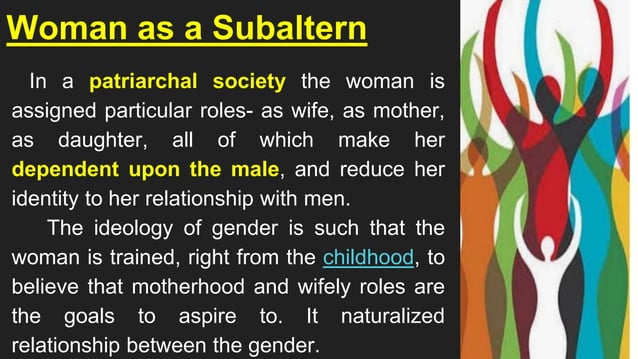
Spivak’s provocative assertion that “the subaltern cannot speak” is not a statement of incapacity but a critique of the systems that prevent their voices from being heard. This paradox highlights how the subaltern’s agency is systematically erased by colonial and neocolonial structures. The act of speaking itself becomes a privilege reserved for those who control the narrative, leaving the subaltern in a perpetual state of voicelessness.
Epistemic Violence: The Erasure of Marginalized Histories

Epistemic violence manifests when dominant knowledge systems dismiss or distort the experiences of the oppressed. Spivak argues that even well-intentioned academic inquiries can perpetuate harm by framing subaltern narratives through a Western lens. This violence is not merely about exclusion; it is about the active rewriting of history to serve the interests of power. The subaltern’s story is often reduced to footnotes in grand narratives, stripped of its complexity and authenticity.
The Role of the Intellectual in Perpetuating Silence

Intellectuals, Spivak contends, are complicit in epistemic violence when they claim to represent the subaltern without acknowledging their own positionality. The act of speaking *for* the subaltern, rather than creating spaces for them to speak *themselves*, reinforces the very hierarchies that silence them. True solidarity requires a shift from speaking about to listening to, a humility that challenges the savior complex embedded in academic and activist traditions.
The Global South as a Site of Knowledge Extraction
Spivak’s critique extends to the global dynamics of knowledge production, where the Global South is often treated as a repository of raw data to be mined by Western scholars. This extractive approach strips local contexts of their meaning, reducing complex social realities into digestible, marketable knowledge. The subaltern’s voice is commodified, repackaged, and sold back to them as “expertise,” further entrenching their marginalization. Decolonizing knowledge means dismantling these extractive practices and centering the voices of those most affected.
The Paradox of Representation in Postcolonial Studies

Representation in postcolonial studies is fraught with contradictions. While the field emerged to challenge colonial narratives, it often reproduces the same power imbalances it seeks to dismantle. Spivak questions whether representation can ever be truly ethical when it is mediated by those in positions of privilege. The subaltern’s struggle for visibility is not just about being seen but about being heard on their own terms. This paradox forces us to confront the limitations of representation and the urgent need for alternative modes of knowledge dissemination.
