Hockey isn’t just a sport in Beartown—it’s a mirror held up to the town’s soul. Fredrik Backman’s novel weaves the game into the fabric of community, identity, and morality, showing how the rink becomes a stage for both triumph and tragedy. The quotes from this book don’t just describe plays or players; they reveal the raw, unfiltered truths about what it means to chase victory, to fail, and to stand by your principles when the stakes couldn’t be higher. Whether it’s the pressure of expectation or the quiet moments of reflection, hockey in Beartown is never just about the game. It’s about the people who play it, the ones who watch it, and the choices they make when the puck drops.
The Weight of Expectations on Young Shoulders

In a town where hockey is life, the burden of carrying the community’s dreams falls on the shoulders of its youngest players. One of the most poignant lines in the book captures this perfectly: “A town doesn’t need a hockey club. A hockey club needs a town.” This isn’t just about talent or skill—it’s about the unspoken contract between the players and the people who cheer them on. The rink becomes a place where failure isn’t just a missed shot; it’s a betrayal of the town itself. The pressure to perform isn’t just external; it’s internalized, shaping how these young athletes see themselves and their worth. Hockey, in this context, is less about the game and more about the identity it forces upon its players.
Where Loyalty and Morality Collide

Hockey in Beartown isn’t played in a vacuum—it’s played in a town where everyone knows each other’s business, and silence is often complicity. One of the most striking quotes in the book reflects this tension: “People say that Beartown doesn’t live up to its name, that it’s just a place where nothing happens. But that’s not true. Beartown lives. It breathes. It hurts.” The game becomes a microcosm of the town’s moral struggles, where loyalty to teammates can clash with loyalty to truth. The rink, with its bright lights and cheering crowds, is where these conflicts play out most visibly. Players are forced to confront not just their opponents on the ice, but the expectations and secrets of their community. Hockey here isn’t just a sport; it’s a battleground for integrity.
The Illusion of Unity in a Divided Town

Hockey is often sold as a unifying force, a way to bring people together under a common banner. But in Beartown, the game exposes the cracks in that illusion. One quote resonates deeply: “A town is more than its hockey team. A town is the people who live in it.” This line cuts to the heart of the novel’s exploration of community. The rink might be where everyone gathers, but it’s also where divisions become impossible to ignore. The players, the coaches, the parents, and the fans all bring their own agendas, their own grievances, and their own hopes to the ice. Hockey doesn’t heal these rifts—it highlights them. The game becomes a stage where the town’s fractures are laid bare, and the choices made on the ice reflect the choices the town must make off it.
The Cost of Winning at Any Price
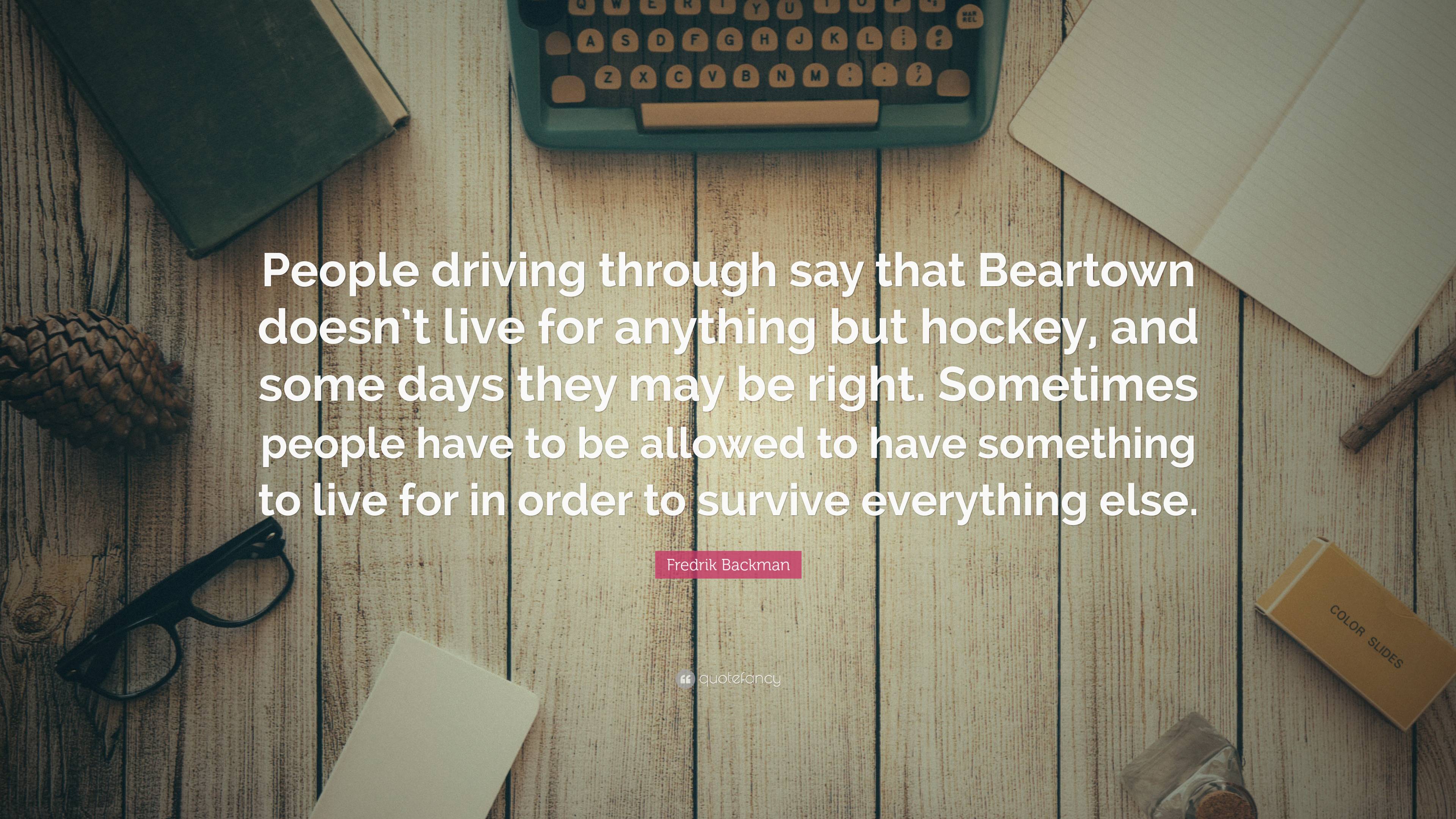
Victory in Beartown isn’t just a celebration—it’s a transaction. The novel forces readers to question what it means to win when the price is integrity, when the cost is the well-being of others. One of the most haunting lines in the book encapsulates this: “People driving through say that Beartown doesn’t live up to its name. They say it’s just a place where nothing happens. But that’s not true. Beartown lives. It breathes. It hurts.” The pursuit of the championship isn’t just about the trophy; it’s about the erosion of values, the compromises made in the name of glory. Hockey, in this context, becomes a metaphor for life itself—where the line between ambition and corruption is thin, and the choices made in the heat of the moment can echo for years.
The Quiet Heroism of Standing Alone
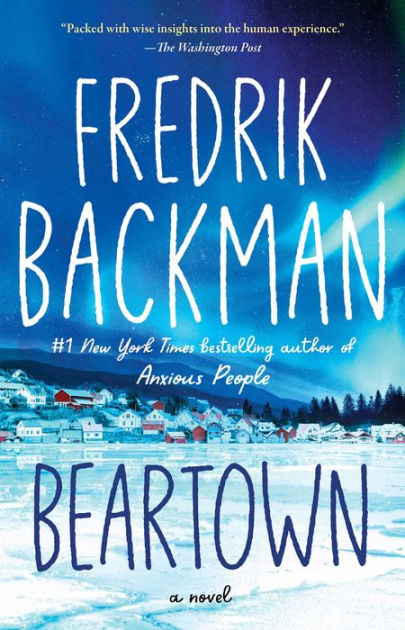
Not every hero in Beartown wears a jersey or scores the winning goal. Some of the most powerful moments in the book come from those who refuse to play the game by the town’s rules, who choose morality over loyalty, truth over silence. One quote stands out: “A town doesn’t need a hockey club. A hockey club needs a town.” This line flips the script, reminding readers that the game isn’t the end-all, be-all. The real strength of a community lies in its ability to support those who stand up for what’s right, even when it’s unpopular. Hockey players may be the stars, but it’s the quiet acts of courage—by players, coaches, and townspeople alike—that truly define the town’s character. In a place where everyone is watching, being the one to look away takes more guts than scoring a hat trick.