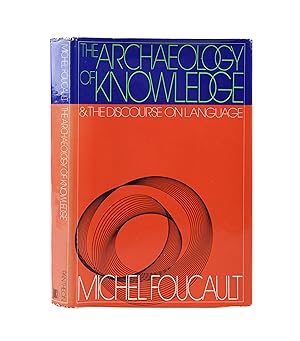
Discourse is the invisible architecture of thought—an unseen framework that shapes what we can say, think, and know. Michel Foucault’s The Archaeology of Knowledge peels back this layer, revealing how language isn’t just a tool for communication but a silent regulator of truth itself. His work exposes the hidden rules that govern what counts as knowledge, who gets to speak, and how ideas circulate within society. These insights aren’t just academic; they’re a mirror held up to the way power and language intertwine, often without our awareness. Below, we explore ten powerful quotes from Foucault’s text that illuminate the mechanics of discourse and why they continue to captivate scholars and thinkers alike.
The Rules That Govern What We Can Say

Foucault argues that discourse isn’t random; it operates under strict, often unspoken rules that determine what can be said at any given time. These rules aren’t laws in the traditional sense but rather the conditions that make certain statements possible while excluding others. For instance, in a medical context, only certain types of language are permissible when discussing illness, while poetic metaphors might be dismissed as irrelevant. This selective permissibility isn’t just about accuracy—it’s about control. By defining the boundaries of acceptable speech, discourse subtly enforces a hierarchy of knowledge, privileging some voices over others.
The Illusion of Neutral Language

One of Foucault’s most striking observations is that language often presents itself as neutral, when in reality, it carries the weight of historical and institutional biases. What we take for granted as objective truth is frequently the result of centuries of discursive practices that have been naturalized over time. For example, scientific language today is assumed to be objective, yet its categories and methods are shaped by the discourses of past eras. This illusion of neutrality is what allows power to operate unnoticed—because if language appears neutral, its biases become invisible, and resistance to them becomes nearly impossible.
The Archive: Where Discourse Lives and Breathes

Foucault introduces the idea of the “archive” not as a physical storage space but as the system that defines the conditions for what can be said, thought, and known within a culture. The archive is the silent backdrop against which all discourse unfolds, determining which statements are intelligible and which are not. It’s not a static collection but a dynamic set of rules that evolve over time. For instance, the way we discuss mental health today is vastly different from how it was discussed in the 19th century, not because our understanding of the brain has changed fundamentally, but because the discursive rules governing the topic have shifted. The archive, then, is both a prison and a playground—it limits what we can say while also enabling the emergence of new forms of knowledge.
The Role of the Author in Shaping Discourse

Traditionally, the author is seen as the origin of meaning, the individual genius who gives birth to ideas. Foucault dismantles this notion, arguing that the author is merely a function within the discursive field—a temporary point where meaning converges before dispersing again. The real authors of discourse are the systems of rules and practices that allow certain statements to emerge while suppressing others. For example, a scientific paper isn’t the product of a single author’s brilliance but of a complex web of prior knowledge, institutional support, and cultural assumptions. By decentering the author, Foucault reveals how discourse operates as a collective enterprise, where individual voices are just nodes in a much larger network of power and knowledge.
The Historical Shifts in Discursive Practices
Discourse isn’t static; it evolves in response to historical, social, and political changes. Foucault’s work traces how the rules governing discourse shift over time, often in response to broader transformations in society. For instance, the way we talk about sexuality today is radically different from how it was discussed in the Victorian era, not because our biology has changed, but because the discursive rules surrounding sex have been rewritten. These shifts aren’t neutral—they reflect power struggles, where new groups gain the ability to define what is sayable while others are silenced. Understanding these historical transformations is key to recognizing how discourse isn’t just a reflection of reality but an active force in shaping it.