Adam Smith, the father of modern economics, is often celebrated for his groundbreaking ideas on self-interest and its role in shaping societies. His writings reveal a deep understanding of human nature, where self-interest isn’t merely a selfish pursuit but a driving force that, when channeled wisely, can lead to collective prosperity. These quotes not only reflect his economic theories but also offer timeless wisdom on human behavior, morality, and the invisible hand that guides markets. Here are 10 intriguing metaphors and highlights from Adam Smith’s thoughts on self-interest that continue to resonate today.
The Invisible Hand: A Guiding Force in Human Endeavors


Smith’s most famous metaphor, the “invisible hand,” suggests that individuals pursuing their own self-interest often unintentionally benefit society as a whole. It’s as if an unseen force orchestrates the chaos of human actions, turning personal ambition into public good. This idea challenges the notion that self-interest is inherently destructive, instead portraying it as a silent conductor of harmony in the marketplace.
The Merchant’s Compass: Navigating Trade with Self-Interest
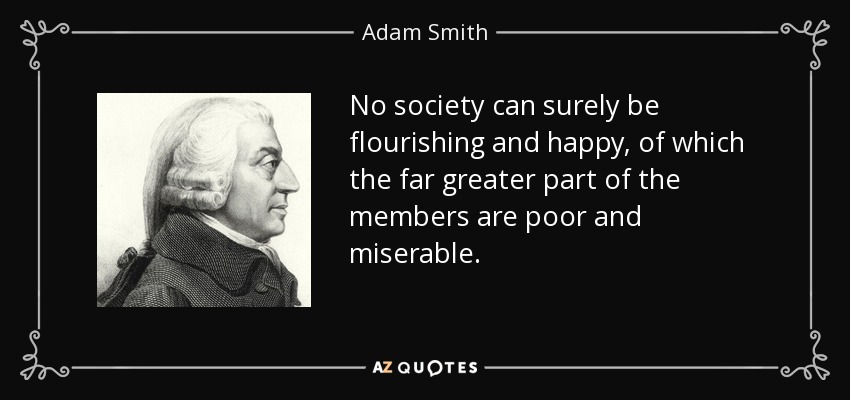
Imagine a merchant navigating the treacherous waters of trade, guided not by altruism but by the steady pull of profit. Smith argues that this self-interest acts as a compass, steering individuals toward opportunities that align with their needs while simultaneously fueling economic growth. The merchant’s pursuit of wealth doesn’t just enrich them—it creates jobs, stimulates innovation, and enriches the community, proving that self-interest can be a force for shared advancement.
The Weaver’s Loom: Interwoven Threads of Mutual Benefit

Smith compares the economy to a loom where each thread—each individual’s self-interest—contributes to a larger, more intricate tapestry. Just as a weaver doesn’t need to understand the entire design to create something beautiful, individuals don’t need to intend to benefit others for their actions to have a positive collective impact. The loom metaphor underscores how self-interest, when woven together, forms the fabric of a thriving society.
The Gardener’s Pruning Shears: Shaping Growth Through Self-Interest

Picture a gardener using pruning shears to trim a plant, not out of cruelty but to encourage healthier growth. Similarly, Smith suggests that self-interest acts as a tool for refining human actions. While individuals may act out of personal gain, the result is often a more efficient and productive society. The shears metaphor highlights how self-interest, when properly directed, can prune away inefficiencies and foster an environment where everyone thrives.
The Lighthouse Keeper’s Beacon: Illuminating Paths to Prosperity
Smith likens self-interest to a lighthouse keeper’s beacon, guiding ships safely to shore. In this metaphor, the “ships” are the countless transactions and interactions in an economy. While the keeper’s primary concern is maintaining the light, their actions ensure that others reach their destinations. Likewise, when individuals pursue their self-interest, they inadvertently light the way for others, creating a safer and more prosperous economic landscape.
The Chess Player’s Strategy: Moves That Benefit All
Think of a chess player making a move that seems selfish—advancing their pawn—but ultimately leads to a checkmate that benefits both players. Smith’s self-interest is like this strategic move: what appears to be a narrow pursuit often results in outcomes that serve the greater good. This metaphor challenges the idea that self-interest is a zero-sum game, instead framing it as a series of calculated moves that can lead to mutual gain.
The River’s Current: Flowing Toward Collective Flourishing
Imagine a river where each drop of water flows independently, yet together they carve a path that nourishes the land. Smith’s self-interest operates similarly—individual actions, though seemingly disjointed, create currents that shape the economic landscape. The river metaphor emphasizes how self-interest, when allowed to flow naturally, can lead to a society that is not just surviving but flourishing.
The Architect’s Blueprint: Designing a Society Through Individual Actions
Smith compares self-interest to an architect’s blueprint, where each line drawn represents an individual’s pursuit of their goals. While the architect may not intend to create a masterpiece with each stroke, the cumulative effect is a structure that stands the test of time. This metaphor underscores how self-interest, when guided by the right principles, can design a society that is both functional and beautiful.
The Marketplace’s Orchestra: Harmonizing Diverse Interests
Picture an orchestra where each musician plays their part with passion and precision. Smith’s self-interest is like the sheet music guiding each player—individual notes may seem insignificant, but together they create a symphony of economic activity. The orchestra metaphor highlights how self-interest, when harmonized, can produce a society that is not just productive but also rich in diversity and creativity.
The Gardener’s Harvest: Reaping What You Sow (Indirectly)
Finally, Smith’s self-interest can be likened to a gardener planting seeds with the sole purpose of growing food for themselves. Yet, in the process, they inadvertently create a garden that feeds others. This metaphor captures the essence of Smith’s argument: self-interest doesn’t exist in a vacuum. It ripples outward, creating abundance that extends far beyond the original intent, proving that personal gain and collective benefit are not mutually exclusive.