


Few comedic acts have left as indelible a mark on laughter as the Marx Brothers, whose rapid-fire wit and surreal antics continue to dazzle decades later. Their humor thrives on absurdity, blending linguistic acrobatics with the kind of chaotic charm that makes even the most mundane situations feel like a circus act. Whether through Groucho’s razor-sharp one-liners or Harpo’s wordless mischief, the brothers crafted a comedic universe where logic takes a backseat to pure, unfiltered joy. Here are ten quotes that capture the essence of their genius—each a testament to their ability to turn the ordinary into the extraordinary.
“I wouldn’t want to belong to any club that would have me as a member.”
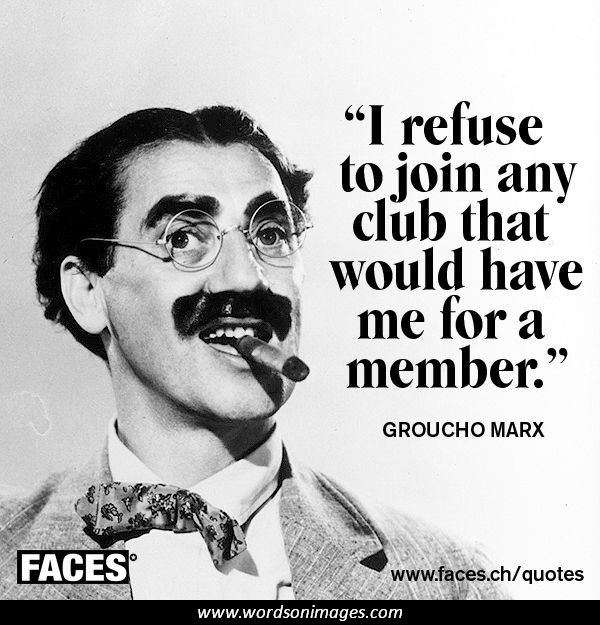
This line, delivered with Groucho’s trademark smirk, is a masterclass in backhanded logic. It’s the kind of statement that makes you laugh while simultaneously questioning the very fabric of social acceptance. The absurdity lies in the implication that exclusivity is a two-way street—if a club is desperate enough to recruit you, it’s probably not worth joining. The quote’s brilliance is in its simplicity, proving that sometimes the funniest jokes are the ones that sound like they were scribbled on a napkin during a particularly rowdy dinner.
The Marx Brothers’ ability to weaponize sarcasm

Sarcasm isn’t just a tool for the Marx Brothers—it’s their native language. Their dialogue crackles with a wit so sharp it could cut through steel, yet delivered with the effortless charm of a man who’s just stumbled upon a goldmine of insults. The beauty of their sarcasm lies in its unpredictability; one moment they’re dissecting the absurdity of high society, the next they’re reducing a perfectly good argument to a pile of linguistic confetti. It’s the kind of humor that makes you want to quote them in every conversation, even if it means sounding like a deranged philosopher.
“Time flies like an arrow; fruit flies like a banana.”
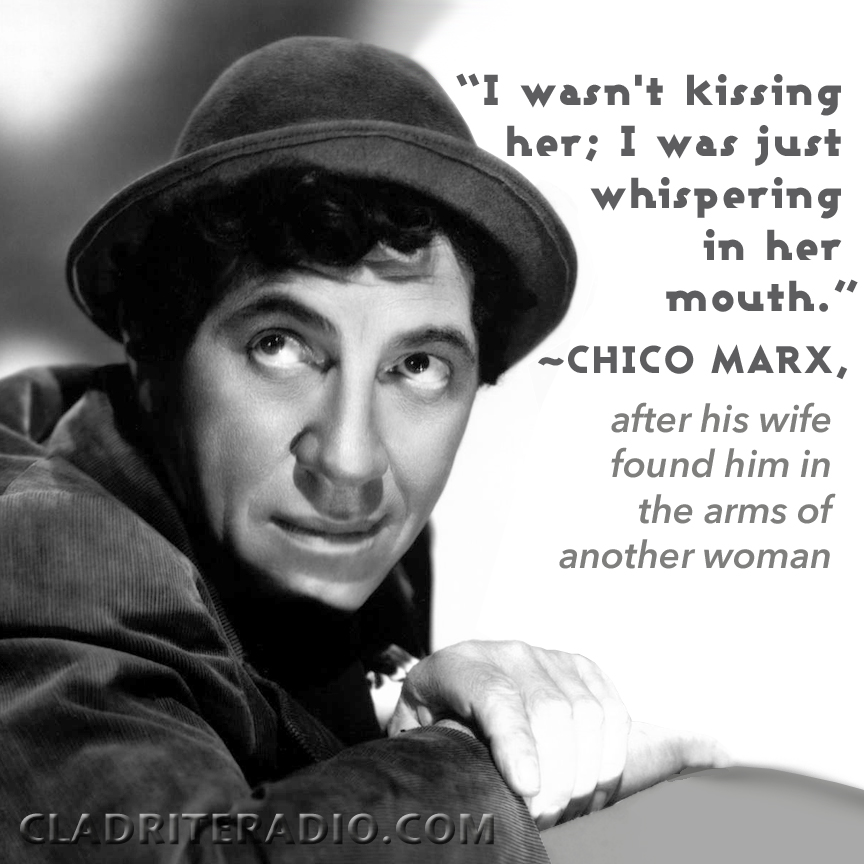
This quote is a linguistic Rube Goldberg machine, where words collide in the most delightfully nonsensical way. The Marx Brothers didn’t just play with language—they turned it into a playground where puns and wordplay were the main attractions. Here, they take a familiar idiom and twist it into something so absurd it loops back around to brilliance. It’s the kind of joke that makes linguists groan and comedy lovers cheer, a perfect example of how the brothers could make even the most mundane observations feel like a revelation.
The surreal charm of Harpo’s silent rebellion
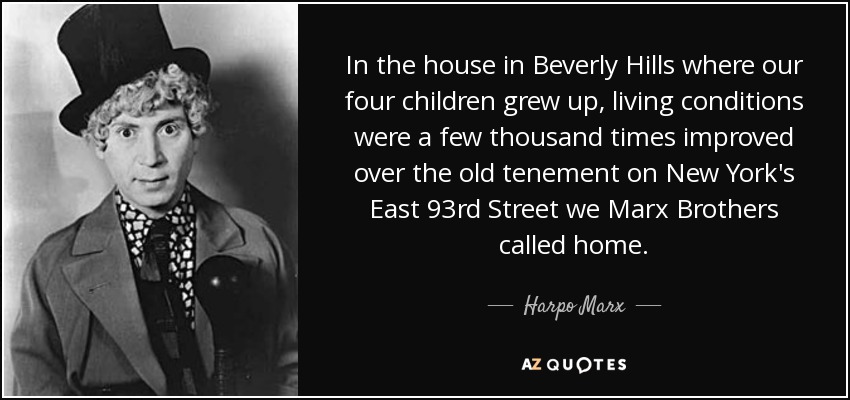
Harpo Marx didn’t need words to steal the show—his antics spoke volumes in a language all their own. Whether he was honking a bicycle horn in the middle of a serious conversation or chasing a pretty girl with a net, his silent chaos was a masterclass in physical comedy. The Marx Brothers understood that sometimes the funniest moments come from the most unexpected places, and Harpo’s wordless mischief was their secret weapon. His ability to turn silence into a punchline proves that comedy doesn’t always need a script—just a willingness to embrace the absurd.
“Outside of a dog, a book is man’s best friend. Inside of a dog, it’s too dark to read.”

Groucho’s one-liners often feel like they were crafted in a pressure cooker of pure, unfiltered genius. This quote, with its unexpected twist on a familiar saying, is a perfect example of his ability to take a cliché and flip it on its head. The image of a man trying to read inside a dog is so absurd it loops back to brilliance, a testament to the brothers’ knack for finding humor in the most unlikely places. It’s the kind of joke that lingers in your mind long after the laughter fades, a reminder that comedy is as much about surprise as it is about wit.
The Marx Brothers’ gift for turning logic into a circus
If the world had a rulebook, the Marx Brothers would’ve torn it up and used the pages to build a fort. Their humor thrives on the collision of highbrow wit and lowbrow chaos, creating a comedic style that’s as unpredictable as it is brilliant. Whether they’re dissecting the absurdity of social norms or reducing a perfectly good argument to a pile of linguistic confetti, their ability to weaponize absurdity is unmatched. It’s a reminder that sometimes the funniest jokes are the ones that sound like they were scribbled on a napkin during a particularly rowdy dinner.
“I never forget a face, but in your case, I’d be glad to make an exception.”
Groucho’s insults weren’t just clever—they were a form of art. This line, delivered with a smirk that could melt steel, is a perfect example of his ability to turn a simple compliment into a backhanded masterpiece. The absurdity lies in the implication that forgetting a face is a kindness, a sentiment so ridiculous it loops back to brilliance. It’s the kind of joke that makes you laugh while simultaneously questioning the very fabric of social graces, a testament to the brothers’ ability to make even the most mundane interactions feel like a performance.
The Marx Brothers’ legacy of linguistic anarchy
The Marx Brothers didn’t just push the boundaries of comedy—they bulldozed them with a grin. Their humor was a wild, untamed beast, a blend of wit, absurdity, and sheer audacity that continues to inspire comedians to this day. Whether through Groucho’s razor-sharp insults or Harpo’s silent chaos, their ability to find humor in the most unlikely places is a testament to their genius. It’s a reminder that sometimes the funniest jokes are the ones that sound like they were scribbled on a napkin during a particularly rowdy dinner, a legacy that proves comedy is as much about surprise as it is about wit.
“Who are you going to believe, me or your own eyes?”
This line, delivered with Groucho’s signature smirk, is a perfect example of the brothers’ ability to weaponize skepticism. It’s the kind of joke that makes you laugh while simultaneously questioning the very fabric of reality, a testament to their genius for turning the mundane into the extraordinary. The absurdity lies in the implication that perception is negotiable, a sentiment so ridiculous it loops back to brilliance. It’s a reminder that sometimes the funniest moments come from the most unexpected places, a legacy that proves comedy is as much about surprise as it is about wit.
