What if falling apart wasn’t just a metaphor for chaos, but a literal dance of forces, angles, and physics? Imagine a stack of books toppling in slow motion, a vase shattering into fractal patterns, or a bridge collapsing under stress—each moment a silent symphony of tension and release. Now, what if the same principles governed how things come together? From the delicate balance of a yoga pose to the precision of a domino chain reaction, physics is the unseen choreographer behind every fracture and fusion. Here are 10 quotes that blur the line between metaphor and mechanics, turning the act of falling apart—and coming back together—into a playful puzzle of science and art.
Gravity’s Whisper: When Structures Can’t Hold
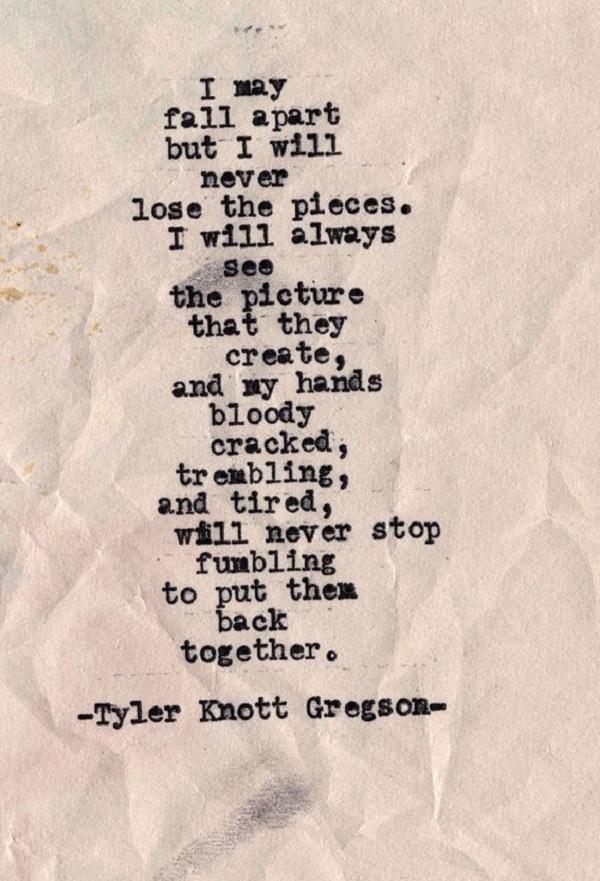
Gravity doesn’t just pull—it reveals. A vase in perfect equilibrium resists collapse until a single misplaced force tips the scales. The moment it shatters, the pieces don’t just fall; they trace parabolic arcs, each fragment a testament to inertia and momentum. This isn’t just a metaphor for life’s fractures; it’s a reminder that even in chaos, the laws of motion are the silent narrators of our unraveling.
Fractal Fractures: The Beauty of Controlled Collapse

Cracks don’t spread randomly—they follow the path of least resistance, branching into intricate fractals that resemble river deltas or lightning bolts. This isn’t destruction without purpose; it’s nature’s way of redistributing stress. Whether it’s a pane of glass or a crumbling empire, the patterns of falling apart often reveal hidden structures, as if the universe itself is solving an equation in real time.
The Domino Effect: How Small Forces Trigger Big Changes

One domino falls, and suddenly, a chain reaction unfolds—each collision a transfer of energy, each topple a domino effect in action. This is the physics of falling apart on a grand scale: a single misstep, a whisper of wind, or a miscalculated stress point can cascade into something irreversible. Yet, what if we flipped the script? What if falling apart was just the first step toward a more stable equilibrium?
Tension and Release: The Physics of a Perfect Pose

Yoga isn’t just about flexibility—it’s about mastering tension. Every pose is a negotiation between gravity and muscle, a delicate balance where too much strain leads to collapse, and too little effort leaves you adrift. The same principles apply to relationships, careers, and even the universe itself. Falling apart isn’t failure; it’s the body’s way of recalibrating, of finding a new center of gravity.
The Collapse of Bridges: When Engineering Meets Reality

Bridges don’t collapse because they’re weak—they fail because their design couldn’t account for an unexpected variable. A gust of wind, a misaligned support, or a hidden flaw in the material can turn a marvel of engineering into a pile of debris. This is the humbling truth of physics: even the most meticulous plans can unravel when the forces at play exceed our predictions. The question isn’t whether things will fall apart, but how we rebuild when they do.
Chaos Theory: The Butterfly Effect of Falling Apart
In chaos theory, a single flap of a butterfly’s wings can set off a hurricane halfway across the world. Similarly, the smallest fracture in a system—whether it’s a crack in a dam or a disagreement in a team—can lead to outcomes no one anticipated. Falling apart isn’t just about breaking; it’s about the unpredictable paths that emerge from that break. The challenge? Learning to navigate the storm before it becomes a hurricane.
The Alchemy of Reassembly: Putting the Pieces Back Together
When a vase shatters, the pieces don’t magically reassemble—but humans do. We glue, we weld, we rebuild, often creating something stronger than before. This is the physics of coming back together: a process of realignment, where new bonds form under pressure. Whether it’s a relationship, a career, or a shattered dream, the act of reassembly isn’t just about fixing what was broken—it’s about discovering what could be.
The Paradox of Control: Letting Go to Find Balance
Physics teaches us that control is an illusion. A spinning top stays upright only until friction and gravity conspire against it. Similarly, the more we cling to stability, the more we resist the natural ebb and flow of forces around us. Falling apart, then, isn’t a sign of weakness—it’s a surrender to the inevitable. The trick is knowing when to hold on and when to let the pieces fall where they may.
The Final Equation: Falling Apart as a Form of Creation
Every collapse is a reformation in disguise. A caterpillar doesn’t resist its metamorphosis into a butterfly; it surrenders to the process. Likewise, the physics of falling apart isn’t just about destruction—it’s about the hidden equations of renewal. The next time you feel like you’re coming undone, remember: even the strongest structures must bend before they break, and sometimes, that’s how the most beautiful things are made.