The concept of the “invisible hand” introduced by Adam Smith in his seminal work The Wealth of Nations has long fascinated economists, philosophers, and curious minds alike. This metaphor encapsulates the idea that individuals’ pursuit of self-interest often unintentionally benefits society as a whole. The allure of this concept lies in its simplicity and profound insight into economic systems. Below are 10 notable quotes from The Wealth of Nations that illuminate different aspects of the invisible hand and deepen our understanding of this enduring principle.
1. The Fundamental Force Behind Market Economies
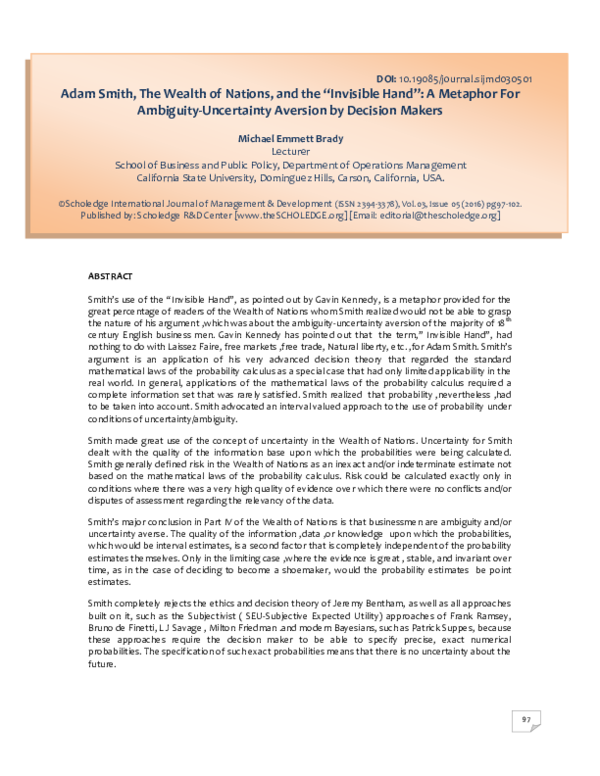

Adam Smith famously writes about an unseen force guiding individuals to promote societal benefits through their own self-interest. This fundamental quote sets the foundation for understanding how markets coordinate production and distribution without centralized control, revealing the intricate balance in economic interactions.
2. Invisible Hand: A Guiding Principle in Wealth Creation

Smith’s work clearly portrays the invisible hand as a guiding principle that enables individuals to generate wealth collectively. While each person aims to improve their own situation, the aggregate outcome often results in enhanced societal welfare, a phenomenon that continues to captivate economists and policymakers.
3. The Coordination of Multiple Interests

This passage details how self-interested actions align with the interest of society, suggesting that the invisible hand coordinates diverse desires and resources. It hints at an inherent wisdom in free markets that transcends individual motives, giving rise to complex economic order.
4. Invisible Hand as a Quote on Human Behavior

“He is led by an invisible hand to promote an end which was no part of his intention,” succinctly captures the paradoxical nature of human behavior in economics. This quote resonates because it recognizes the unintended societal benefits born from personal ambition and economic liberty.
5. Reflecting on the Annual Revenue of Society
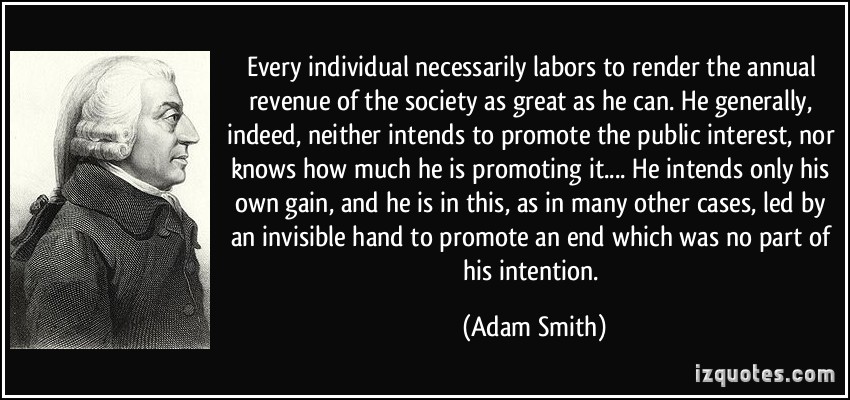
Smith observes that “every individual necessarily labors to render the annual revenue of the society as great as he can,” emphasizing that people’s efforts, while self-interested, build the wealth of the entire community. This statement hints at the invisible hand’s intricate role in economic growth and social prosperity.
6. The Inherent Order Within Economy
Within the invisible hand metaphor lies a suggestion that natural economic order emerges without deliberate design. Smith highlights how voluntary transactions and competition inadvertently lead to efficient resource allocation, a reason many remain fascinated by market dynamics.
7. Moral Philosophy Intertwined with Economics
The invisible hand not only reflects economic mechanisms but also connects with moral philosophy. Smith’s insight implies that individual ethics and societal good are sometimes aligned through market processes, showing deeper reasons for society’s longstanding engagement with his ideas.
8. The Unseen Power Behind Prosperity
This metaphor uncovers an unseen power that drives prosperity and innovation. It points to how decentralized decisions bring about collective benefits, illustrating a balance between freedom and order that continues to inspire discussions on economic policy.
9. Individual Ambition and Public Welfare
Smith’s invisible hand reconciles the tension between self-interest and public welfare by demonstrating how the former can serve the latter. This nuanced understanding underscores why the concept remains a cornerstone in economic theory and popular imagination.
10. Complex Interactions Simplified
Finally, the invisible hand condenses complex socio-economic processes into a relatable image. It invites us to appreciate how intricate economic systems function through countless individual decisions, inviting ongoing fascination with the hidden forces shaping our world.