Sherlock Holmes, the legendary detective whose keen powers of observation and deduction have captured imaginations worldwide, continues to fascinate both casual fans and devoted followers. Beyond the mysteries he solves, it is his unique approach to understanding human behavior and the subtle clues that surround us that inspire awe. The quotes from the BBC adaptation of Sherlock Holmes reveal not only his extraordinary insight but also a deep philosophy about deduction and perception. Here are 10 quotes that encapsulate the art of deduction and the reasons we continue to be drawn to this enigmatic character.
1. The Power of Observation

“You see, but you do not observe. The distinction is clear.” This quote underscores a fundamental principle of Sherlock’s method – it’s not enough to merely notice details; one must interpret and analyze them. It speaks to a deeply human tendency to overlook the obvious in favor of assumptions, and Holmes challenges us to look deeper.
2. Deduction as a Craft

“When you have eliminated the impossible, whatever remains, however improbable, must be the truth.” This famous principle reveals how Holmes meticulously rules out distractions to reveal hidden realities, illustrating deduction not just as random guesswork but as a disciplined craft built on logic.
3. The Fascination with the Human Mind
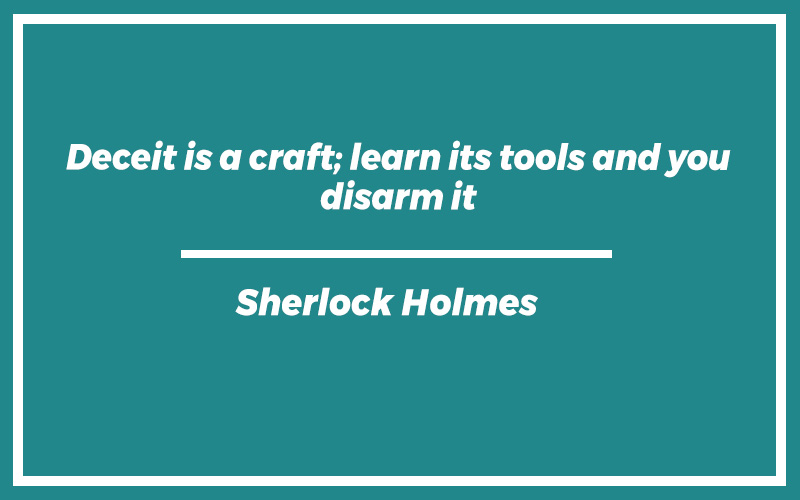
“It is a capital mistake to theorize before one has data.” Holmes reminds us that curiosity alone is insufficient; it must be tempered with evidence and patience. This balanced approach encapsulates why his character remains a beacon of rational thought in a chaotic world.
4. The Art of Deduction in Everyday Life

“The little things are infinitely the most important.” This insight elevates mundane details—be it a scuff on a shoe or the dampness of a coat—to the level of crucial evidence, reminding us that our surroundings constantly communicate secrets to those willing to pay attention.
5. Deduction Requires Logic and Imagination

“Education never ends, Watson. It is a series of lessons with the greatest for the last.” Beyond mere facts, Sherlock’s method relies on continuously refining understanding and combining logic with creative problem-solving. This ongoing process mirrors the complexities of real-life reasoning.