In the intricate dance of reality, where components intertwine and coalesce into dynamic wholes, Manuel DeLanda’s philosophy of assemblages offers a rich tapestry of insight. His words are like keys unlocking the secret choreographies of societies, materials, and ideas, making the unseen patterns shimmer with clarity. Here are ten captivating quotes from DeLanda that weave the enigmatic concept of assemblages into vivid metaphors, illuminating why his thought resonates so deeply in contemporary philosophy.
Assemblage as the Architecture of Complex Societies

DeLanda envisions assemblages as architectural blueprints of societies—structures not monolithic but built from countless interlocking parts. Each component, whether a human, an institution, or a material element, plays a unique role, interacting and reconfiguring constantly. Like a vast city with neighborhoods pulsating to different rhythms, assemblages remind us that no social system is static; instead, it thrives on the ceaseless churn of its parts.
The Materialist Heart: Philosophy Rooted in Matter

“Any materialist philosophy must take as its starting point the reality of individual entities,” DeLanda asserts, drawing attention to the tactile ground beneath abstract thought. Assemblages flourish from the gritty soil of matter and interaction rather than ethereal ideals. His metaphor reveals a philosophy that digs deep into the bedrock of existence, constructing meaning from the solid yet shifting terrains of reality.
Assemblages in Motion: The Fluidity of Realism and Materialism
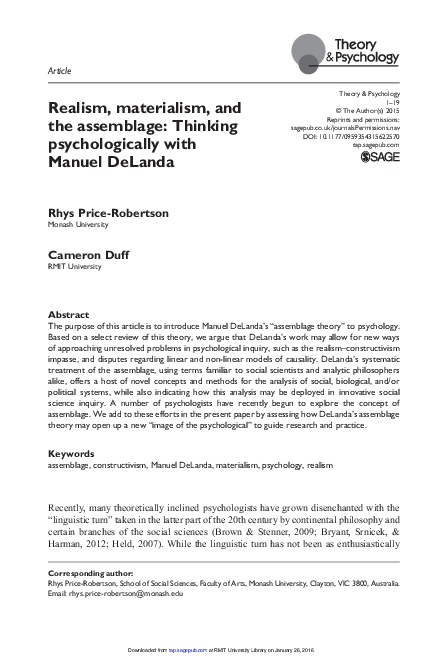
The image encapsulates DeLanda’s dynamic vision—assemblages are less like rigid machines and more like swirling eddies in a stream. They aren’t bound by fixed categories but form and reform as conditions change. Realism, for DeLanda, involves embracing this ceaseless motion, acknowledging that the world is always under construction, a masterpiece in permanent flux.
The New Philosophy of Society: Complexity Woven into Social Fabric
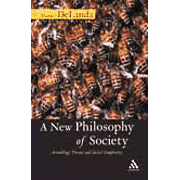
In the weaving of social complexity, DeLanda crafts a philosophy where societies are tapestries of countless threads—each an assemblage layered with history, power, and potential. This metaphor reveals how societies are not uniform cloth but variegated fabric, textured and resilient, shaped by myriad forces beyond any centralized design.
Assemblages and the Pulse of Critical Theory

DeLanda’s assemblage theory pulses at the heart of critical theory like a rhythmic drumbeat—calling attention to the tensions and connections that undergird societal change. His insights reveal assemblages as sites of contestation and creativity, where power flows and fractures, and where new possibilities flicker to life amidst chaos.