Programming is often seen as a technical skill, a means to an end, or simply a job to be done. Yet, for those who truly engage with it, programming transcends mere functionality and emerges as a form of art. The legendary computer scientist Donald Knuth eloquently captures this nuanced view through his memorable quotes. These reflections not only acknowledge the craftsmanship behind coding but also hint at the deeper, almost poetic reasons why programming captivates millions worldwide. Below, we explore ten profound quotes from Knuth that illuminate the artistry of programming.
Telling Another Human What to Do


Knuth famously states, “Programming is the art of telling another human what one wants the computer to do.” This insight reminds us that code is ultimately a language designed for human understanding. Beyond machines, programmers craft instructions that need clarity, elegance, and precision so others can comprehend and build upon them. This highlights programming as a collaborative art form, a dialogue between minds mediated through logic and syntax.
The Human Being Behind the Code
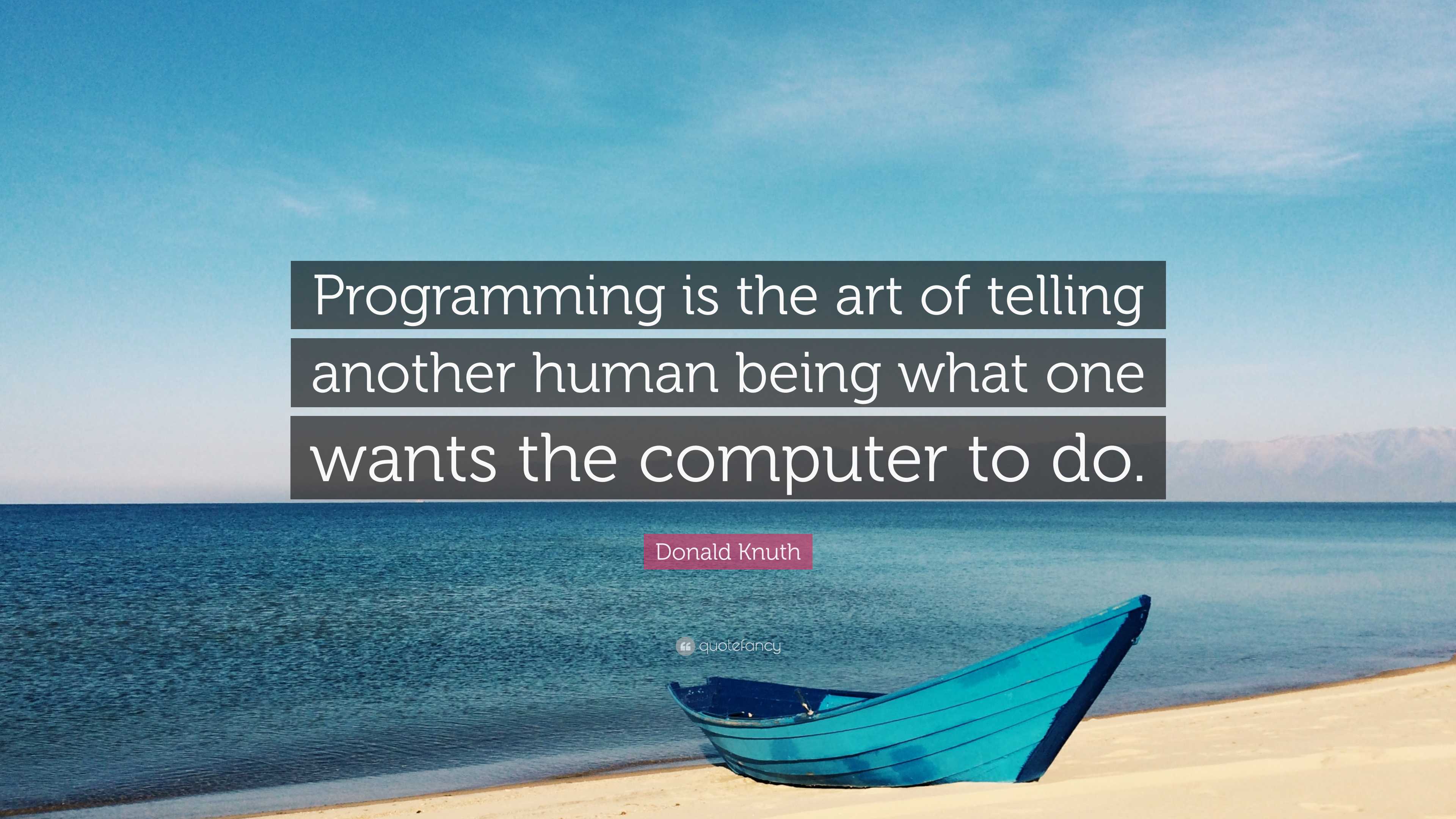
Extending the previous thought, Knuth emphasizes the “another human being” element, underscoring the empathy and foresight required in programming. Good code anticipates future readers and thinkers, conveying intentions clearly. This perspective transforms programming from a solitary act into a humane craft, where the coder’s responsibility is to their fellow human—even those potentially decades away from the original creation.
Programming as an Art

Knuth’s assertion that “Computer programming is an art” invites us to look beyond engineering to creativity. Like painters or musicians, programmers create patterns, harmonies, and new systems from abstract ideas. The craftsmanship lies not merely in functionality, but in the elegance and efficiency of the solution. This elevates programming to a pursuit where aesthetics and ingenuity matter just as much as utility.
Quotes That Inspire Reflection

Knuth’s insights serve as a continual reminder that programming is much more than typing code; it’s an intellectual and artistic challenge. His reflections inspire programmers to consider the beauty in their lines of code, the joy in problem-solving, and the human stories behind algorithms. This perspective fosters a deeper appreciation for the craft and motivates continual learning and refinement.
Applying Artistic Principles
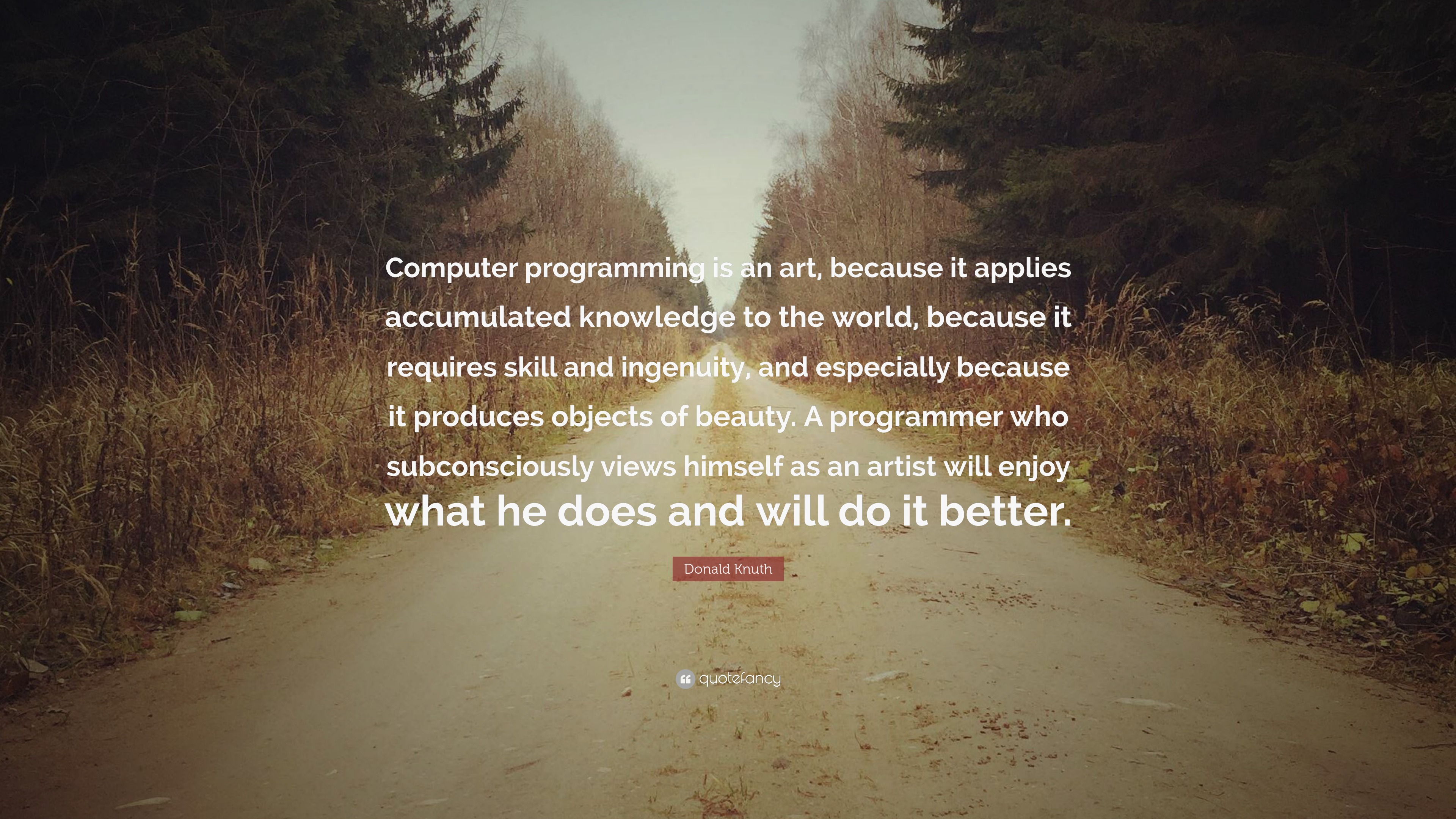
Knuth also points out that programming “applies artistic principles,” highlighting the intersection of creativity and discipline. Just as artists leverage form, balance, and composition, programmers apply logic, structure, and design patterns to create elegant, maintainable solutions. This blending of art and science makes programming a uniquely fulfilling endeavor, one that satisfies both the mind and the imagination.