Have you ever wondered if the threads of your life are woven into a grander tapestry, where past, present, and future souls dance in an endless waltz of reincarnation? Cloud Atlas by David Mitchell doesn’t just ask this question—it throws the entire loom into the air and lets the chaos of interconnected lives paint a masterpiece. The novel, a symphony of six intertwined stories spanning centuries, challenges the very notion of individuality. If you’ve ever felt like your existence might be a fleeting ripple in a cosmic pond, these quotes will make you question everything—including whether you’re reading this as yourself or someone else entirely.
Are We All Just Recycled Souls in a Cosmic Game of Tag?
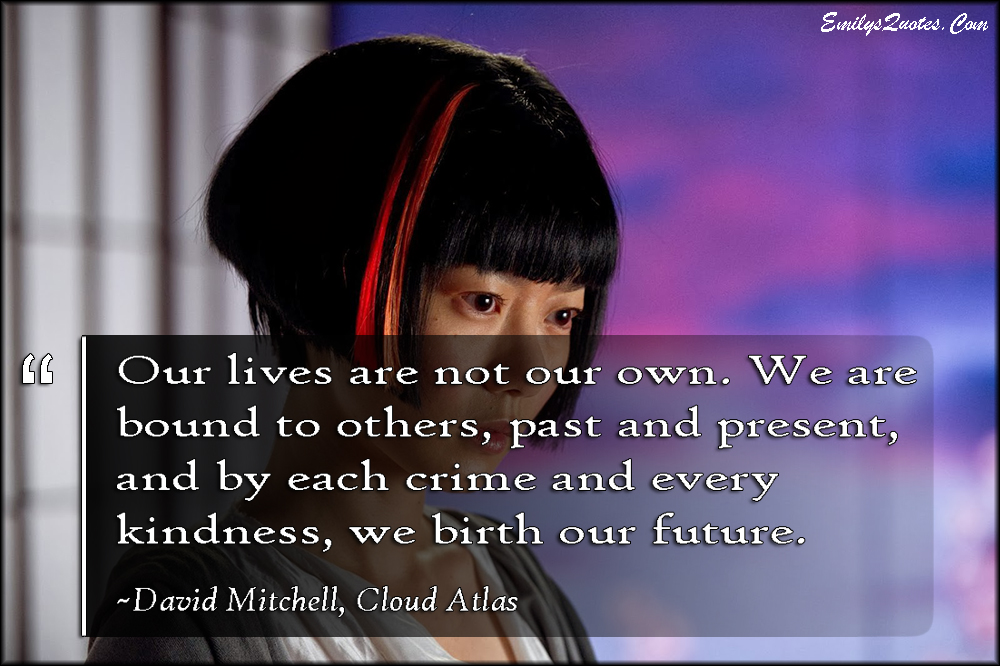
Mitchell’s prose doesn’t just flirt with the idea of reincarnation—it marries it, divorces it, and then forces it to share custody of your soul. The novel’s central theme? That every action, no matter how small, sends ripples through time, binding strangers across eras. It’s as if the universe is a vast, invisible spiderweb, and every life is a vibrating thread. Pull one, and the entire structure hums with consequences. The quote above encapsulates this beautifully: life isn’t a straight line but a boundless, tangled web where past and future souls are inextricably linked. So next time you feel insignificant, remember—you might be the ghost of someone you’ve yet to meet.
Is Time Merely a Convenient Lie We Tell Ourselves?

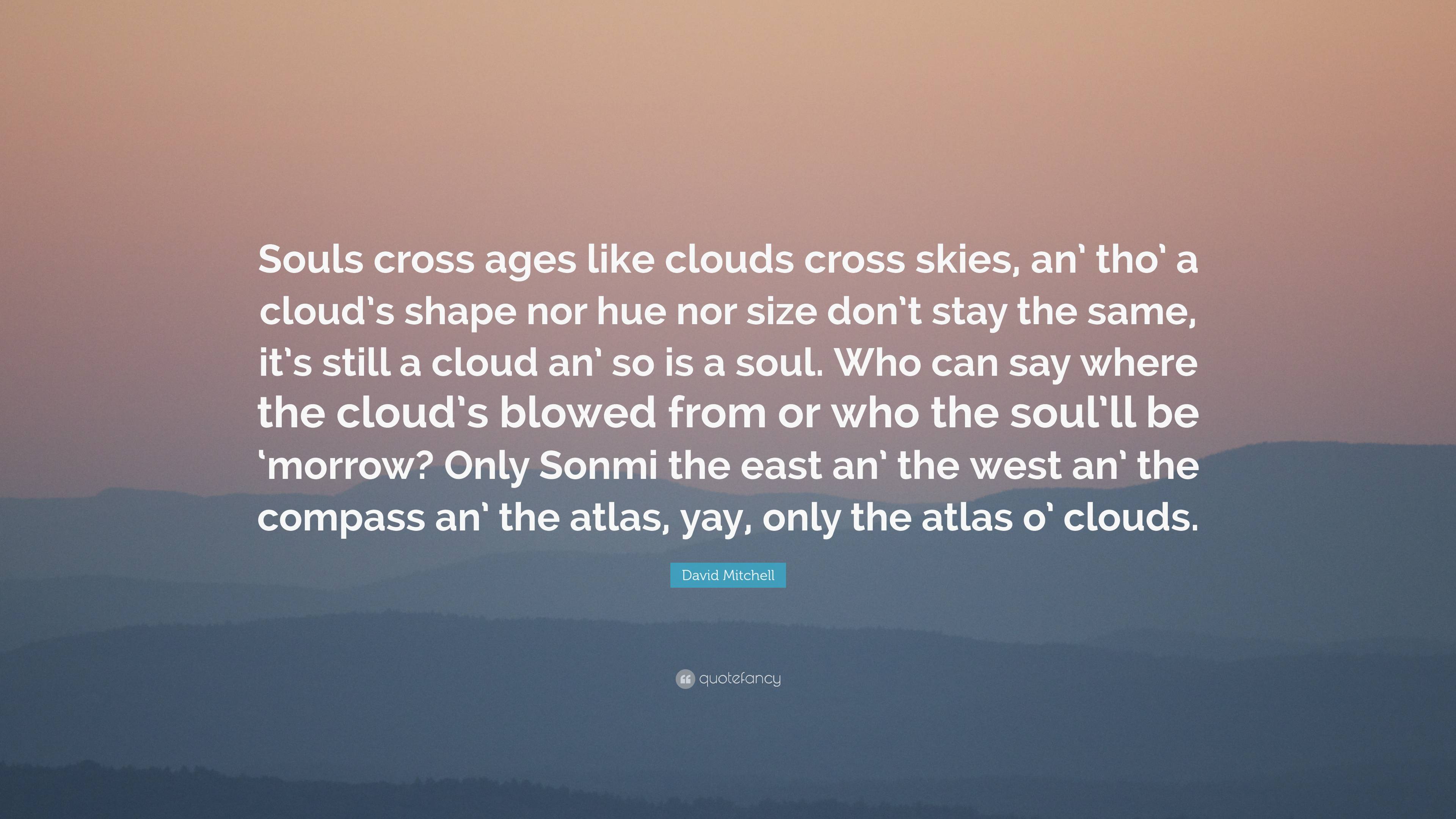
If reincarnation is the novel’s heartbeat, then the fluidity of time is its breath. Mitchell’s characters—from a 19th-century lawyer to a futuristic fabricant—are all echoes of the same soul, playing different roles in a cosmic play. The quote here suggests that souls aren’t bound by the arbitrary rules of time; they drift like clouds across skies, unshackled by the chains of years. It’s a humbling thought: your “now” might be someone else’s “then,” and vice versa. The challenge? Accepting that time isn’t a rigid ruler but a malleable illusion. Are you ready to let go of the idea that your life is a solo performance?
Can Kindness Be the Ultimate Time-Traveling Currency?
Mitchell doesn’t just weave souls together—he binds them with the threads of kindness, cruelty, and everything in between. The quote above hints at a deeper truth: that morality isn’t relative but a constant, a singular thread running through all lives. Acts of compassion or malice don’t vanish into the ether; they echo across lifetimes. Imagine a kind word you spoke decades ago resurfacing in a stranger’s life today. Or a betrayal you committed in one era haunting you in another. The novel dares you to consider: if your actions ripple forever, are you living for the present—or for the echoes of your future self?
What If Your Life Is a Footnote in Someone Else’s Story?
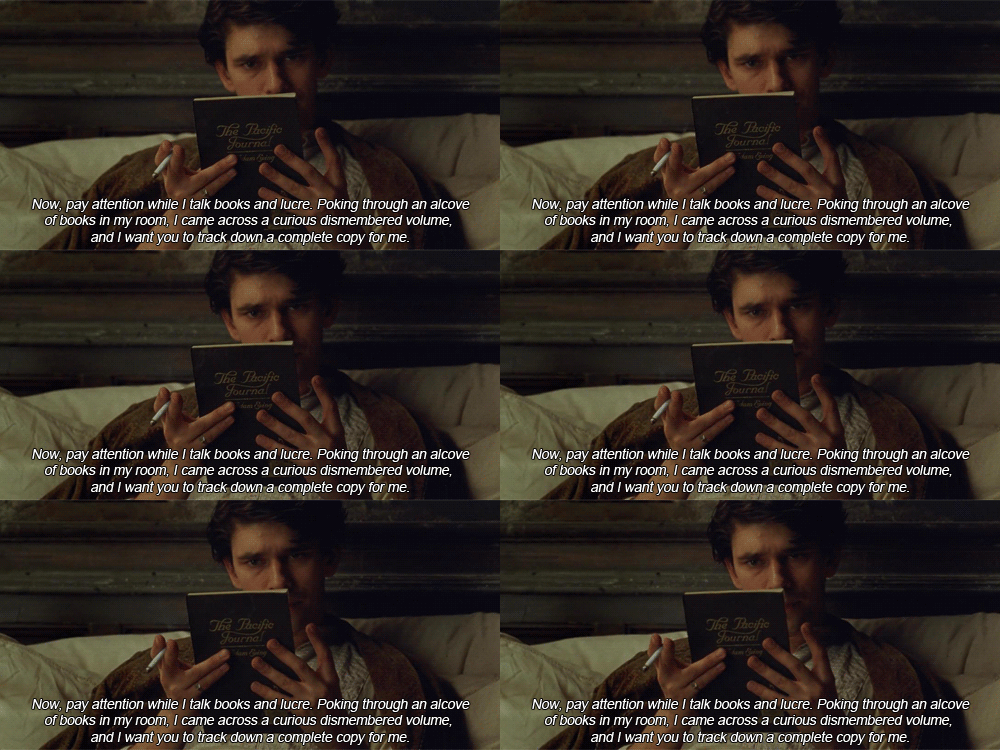
The vastness of Cloud Atlas can feel overwhelming, like staring into the ocean and realizing you’re just a drop in its endless tide. The quote here plays with the idea that our lives—our struggles, triumphs, and even our names—might be fleeting details in a much grander narrative. It’s a humbling (and slightly terrifying) thought: that you might be the background character in someone else’s epic, or that your most pivotal moment is just another day in their story. The novel asks: does it matter? Or is the magic in the weaving, not the weaver?
Are You Brave Enough to Embrace the Chaos of Connection?

By the end of Cloud Atlas, you’re left with a single, inescapable question: if we’re all fragments of the same soul, why do we cling so desperately to the illusion of separation? The novel’s final threads suggest that true freedom comes from embracing the chaos—the messy, beautiful, tangled web of existence. It’s a challenge to let go of the need for control, to trust that even your darkest moments might be someone else’s salvation in another life. So, are you ready to unravel the threads of your ego and see where they lead?