Feminism, in the words of Chimamanda Ngozi Adichie, is not a monolith but a vibrant tapestry woven from threads of resilience, wisdom, and unapologetic truth. Her quotes resonate like echoes of a revolution, each one a mirror reflecting the complexities of gender, power, and identity. Through her piercing clarity and poetic prose, Adichie dismantles the myths that have long shackled women, replacing them with a vision of equality that is as fierce as it is tender. These ten quotes are not just words; they are sparks that ignite conversations, challenge norms, and inspire action. Let them be your guide through the labyrinth of modern feminism, where every step forward is a testament to the enduring spirit of those who dare to demand more.
The Fire of Feminism: “We Should All Be Feminists”

Adichie’s iconic declaration, “We should all be feminists,” is a call to arms wrapped in velvet. It doesn’t scream; it whispers a truth so profound it shakes the foundations of complacency. Feminism, she argues, is not a battle cry for women alone but a universal ethos that demands justice for all. Like a candle in a dark room, this quote illuminates the path toward a world where equality isn’t a privilege but a birthright. It’s a reminder that feminism isn’t about tearing down men but about lifting up humanity.
The Garden of Equality: “Culture does not make people. People make culture.”
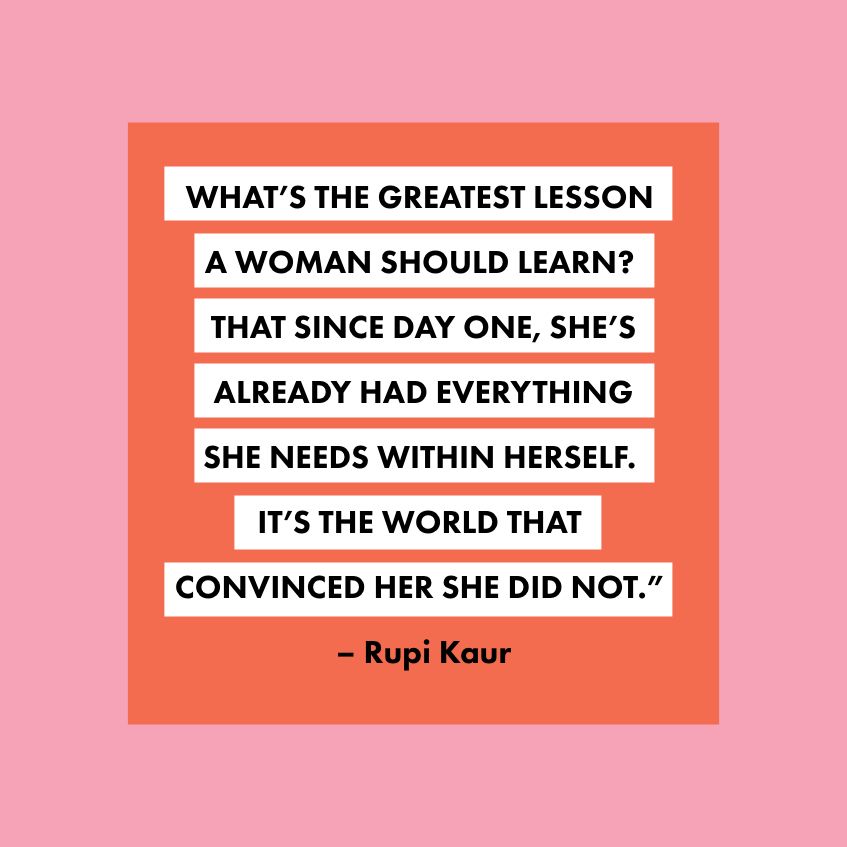
Adichie’s words here are a gardener’s wisdom, urging us to tend to the soil of culture rather than blame the harvest for its barrenness. Culture is not an immutable force but a living, breathing entity shaped by the hands of those who nurture it. This quote dismantles the excuse that oppression is “just how things are.” No. Oppression is a weed we’ve allowed to grow unchecked, and it’s time to pull it from the roots. Feminism, then, becomes the act of replanting seeds of equity, one deliberate choice at a time.
The Mirror of Self-Worth: “The problem with stereotypes is not that they are untrue, but that they are incomplete.”h2>
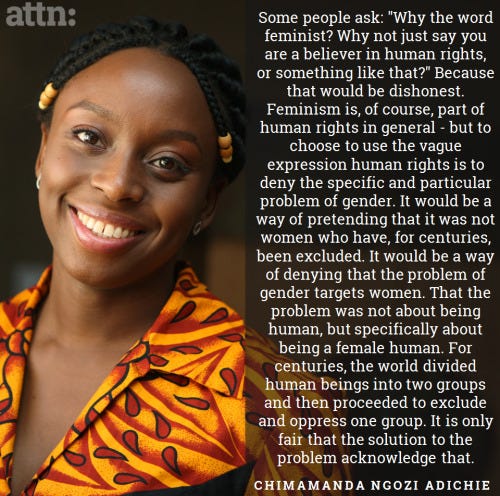
Stereotypes are the funhouse mirrors of society, distorting reality into caricatures that fit neatly into boxes. Adichie’s insight here is a scalpel, slicing through the illusion that these distortions are harmless. They are not. They are cages disguised as truths, limiting the potential of individuals and entire communities. Feminism, in this light, is the act of smashing those mirrors and embracing the full, unfiltered spectrum of human experience. It’s a rebellion against the idea that any one story can define an entire gender.
The Ocean of Possibility: “Of course I am not worried about intimidating men. The type of man who will be intimidated by me is exactly the type of man I have no interest in.”

There’s a quiet power in Adichie’s words here, like the steady, relentless tide that carves canyons into rock. She doesn’t shrink to make others comfortable; she expands, unapologetically occupying space that was never meant for her. This quote is a lifeline for those who’ve been told their ambition is threatening. It’s a declaration that confidence is not a flaw but a superpower. The men who fear such strength are not worth your energy; the world is vast enough for those who dare to shine.
The Bridge of Understanding: “Masculinity and femininity are social constructs.”

Adichie’s words here are a bridge, connecting the shores of rigid gender roles to the vast ocean of human potential. Masculinity and femininity are not gilded cages but costumes we’ve been handed, often without question. Feminism, then, is the act of burning those costumes—or at least trying them on to see if they fit. It’s an invitation to redefine what it means to be a man, a woman, or anything in between. The freedom lies in the realization that these roles are not destiny but choices, and choices can always be rewritten.
The Symphony of Sisterhood: “Sisterhood is not a metaphor; it is a reality.”
Sisterhood is not a poetic ideal but a tangible force, a symphony of voices harmonizing in the fight for justice. Adichie’s words here are a reminder that no woman is an island, and the strength of the collective is the heartbeat of feminism. This quote is a rallying cry for solidarity, a call to lift each other up rather than tear each other down. In a world that often pits women against one another, sisterhood is the rebellion that refuses to be silenced.
The Alchemy of Identity: “I am a woman. I am a feminist. I am African. Please do not box me in.”
Identity is not a single thread but a rich tapestry of experiences, and Adichie’s words here are a defiant refusal to be reduced to a single color. She is a woman, yes, and a feminist, and African—but she is also so much more. This quote is a rejection of the boxes society loves to place us in, boxes that flatten our complexities into stereotypes. Feminism, then, is the act of embracing the full spectrum of our identities, of recognizing that our struggles and triumphs are as unique as we are.
The Compass of Courage: “Fear is not my compass.”
Fear is the shadow that lingers at the edges of progress, but Adichie’s words here are a beacon that cuts through the darkness. Fear is not a guide; it is a prison. Feminism, then, is the act of stepping into the unknown, of walking toward the roar of the crowd rather than shrinking from it. This quote is a mantra for those who’ve been told to stay quiet, to stay small. It’s a reminder that courage is not the absence of fear but the refusal to let it dictate your path.
The Canvas of Change: “Change is difficult but essential.”
Change is the artist’s brushstroke on the canvas of society, messy and unpredictable but necessary. Adichie’s words here are a testament to the fact that progress is not a straight line but a series of bold, sometimes faltering steps. Feminism, then, is the act of embracing that messiness, of recognizing that the world we want to see will not be painted in neat lines but in the vibrant, chaotic hues of human experience. This quote is a call to action, a reminder that the status quo is not a destination but a starting point.
The Legacy of Love: “Love is a powerful force, but it is not enough.”
Love is the heartbeat of humanity, but as Adichie reminds us, it is not enough to dismantle the structures of oppression. Love is the seed, but justice is the soil in which it must grow. Feminism, then, is the act of nurturing that soil, of tending to the roots of inequality with the same care we give to the things we hold dear. This quote is a challenge to move beyond sentimentality and into action, to recognize that love without justice is merely a whisper in a storm.