Curiosity and fear often walk hand in hand, especially when stepping into the unknown. Elizabeth Gilbert’s Big Magic explores this delicate dance, offering wisdom that resonates with anyone who has ever hesitated before pursuing a passion. The book reminds us that curiosity is the spark, while fear is the shadow that follows—but neither has to dictate our actions. Below are ten powerful quotes from Big Magic that illuminate the relationship between curiosity and fear, encouraging us to embrace both without letting them hold us back.
Curiosity as the First Step Toward Courage

Gilbert suggests that curiosity is the gentlest form of inspiration, a quiet nudge that asks us to explore something new. Unlike grand ambitions, curiosity doesn’t demand immediate commitment—it simply invites us to take the first step. This approach disarms fear, making it easier to move forward without the pressure of perfection. By focusing on what intrigues us rather than what terrifies us, we create space for creativity to flourish naturally.
Fear as a Constant Companion, Not a Dictator

Fear isn’t the enemy—it’s a signal that we’re venturing into meaningful territory. Gilbert argues that fear will always be present when we pursue something worthwhile, but it doesn’t have to be in control. Instead of fighting it, we can acknowledge its presence and proceed anyway. This shift in perspective turns fear from a roadblock into a companion, one that reminds us we’re on the right path.
The Paradox of Pursuing What Scares Us
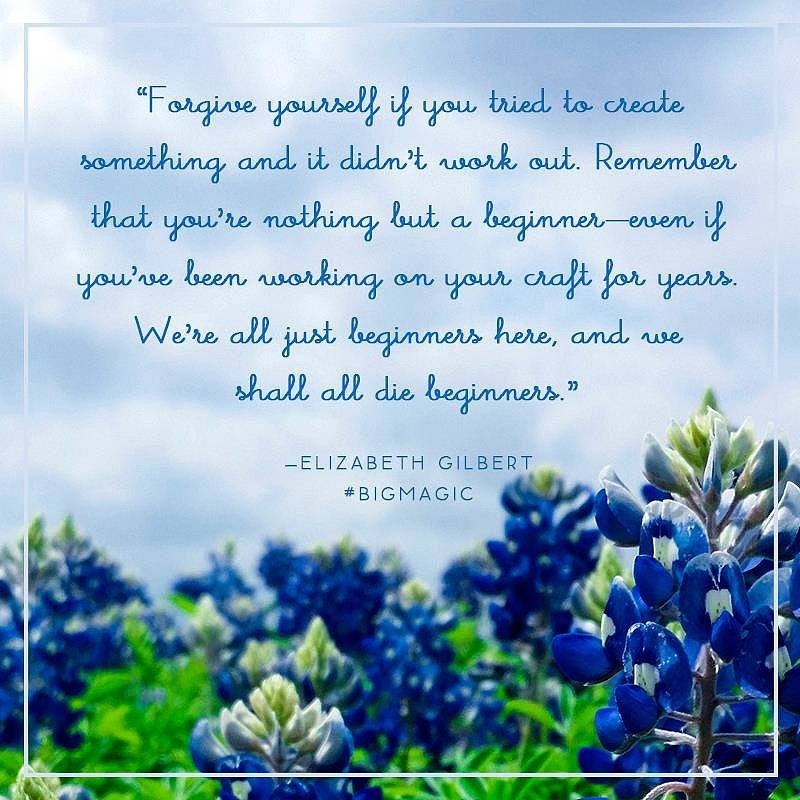
There’s a strange alchemy in doing what frightens us: the more we resist, the stronger fear becomes. Gilbert’s words suggest that curiosity and fear are two sides of the same coin—both essential to growth. When we lean into curiosity, fear loses its grip. The key is to start small, trusting that each step forward, no matter how tentative, weakens fear’s power and strengthens our resolve.
Curiosity Overcomes the Paralysis of Overthinking

Overthinking often stems from fear of failure or judgment, but curiosity cuts through the noise. Gilbert encourages us to act before we’re fully ready, trusting that curiosity will guide us better than endless planning. When we focus on what excites us rather than what might go wrong, we bypass the paralysis of doubt and tap into a more intuitive, creative flow.
Fear Doesn’t Understand the Joy of Creation

Fear thrives on worst-case scenarios, but it can’t fathom the joy of creation—the thrill of bringing something new into the world. Gilbert reminds us that fear doesn’t understand the deep satisfaction of following our passions, no matter how small. By prioritizing curiosity, we align ourselves with the things that bring meaning, leaving fear to wonder why we’re not afraid of the right things.
The Courage to Stay Curious Despite Fear
Remaining curious in the face of fear requires courage, but it’s a different kind of bravery than we’re used to. Gilbert frames it as a quiet rebellion against the status quo, a refusal to let fear dictate our lives. This courage isn’t about being fearless—it’s about choosing curiosity as our guiding force, even when fear is loudest.
Fear Distorts Reality, Curiosity Clarifies It
Fear has a way of magnifying risks and minimizing rewards, but curiosity does the opposite. It sharpens our focus, helping us see opportunities where fear sees only obstacles. Gilbert’s insights suggest that curiosity acts as a lens, bringing the world into clearer view and making it easier to navigate the uncertainties that come with any creative endeavor.
The Gift of Curiosity in Uncertain Times
In moments of doubt, curiosity is the compass that points us toward what truly matters. Gilbert’s work highlights how curiosity doesn’t just fuel creativity—it also provides stability in chaos. By staying curious, we remain open to new possibilities, even when the path ahead is unclear. Fear may linger, but curiosity ensures we don’t miss the magic hiding in the unknown.
Curiosity as a Lifelong Practice
Gilbert’s philosophy positions curiosity as a daily practice, not a fleeting moment of inspiration. Fear will always be there, but curiosity can be cultivated through small, consistent actions. Whether it’s picking up a new hobby, asking questions, or simply observing the world with fresh eyes, curiosity keeps fear in its place—on the sidelines, watching but never winning.