Albert Camus, the French philosopher and Nobel laureate, remains one of the most influential voices in existentialist thought. His exploration of the absurd—the tension between humanity’s search for meaning and the silent, indifferent universe—has left an indelible mark on philosophy, literature, and art. The quotes below capture the essence of Camus’ philosophy, offering profound insights into life, existence, and the human condition. Whether you’re seeking inspiration, reflection, or a deeper understanding of the absurd, these quotes will challenge and provoke thought.
The Absurd: A Clash of Human Longing and a Silent Universe
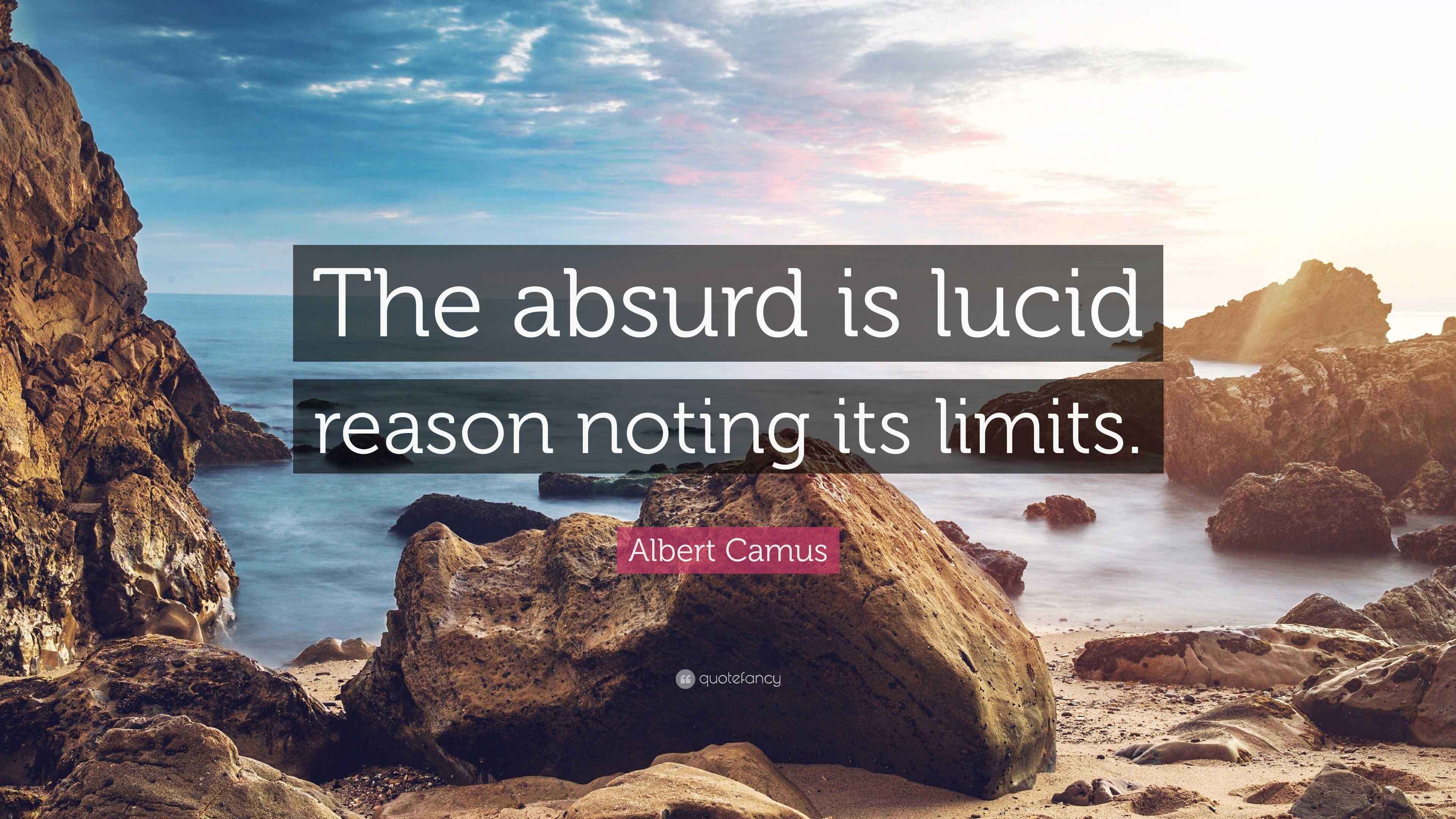
The absurd arises when human reason, driven by an insatiable desire for meaning, confronts a universe that offers none. Camus argues that this tension is not a flaw but a fundamental truth of existence. Rather than despairing at the silence of the cosmos, the absurd man embraces it with clarity and lucidity. This quote underscores the importance of recognizing the limits of human understanding while still striving to find purpose within those boundaries.
Finding Meaning in the Face of the Absurd
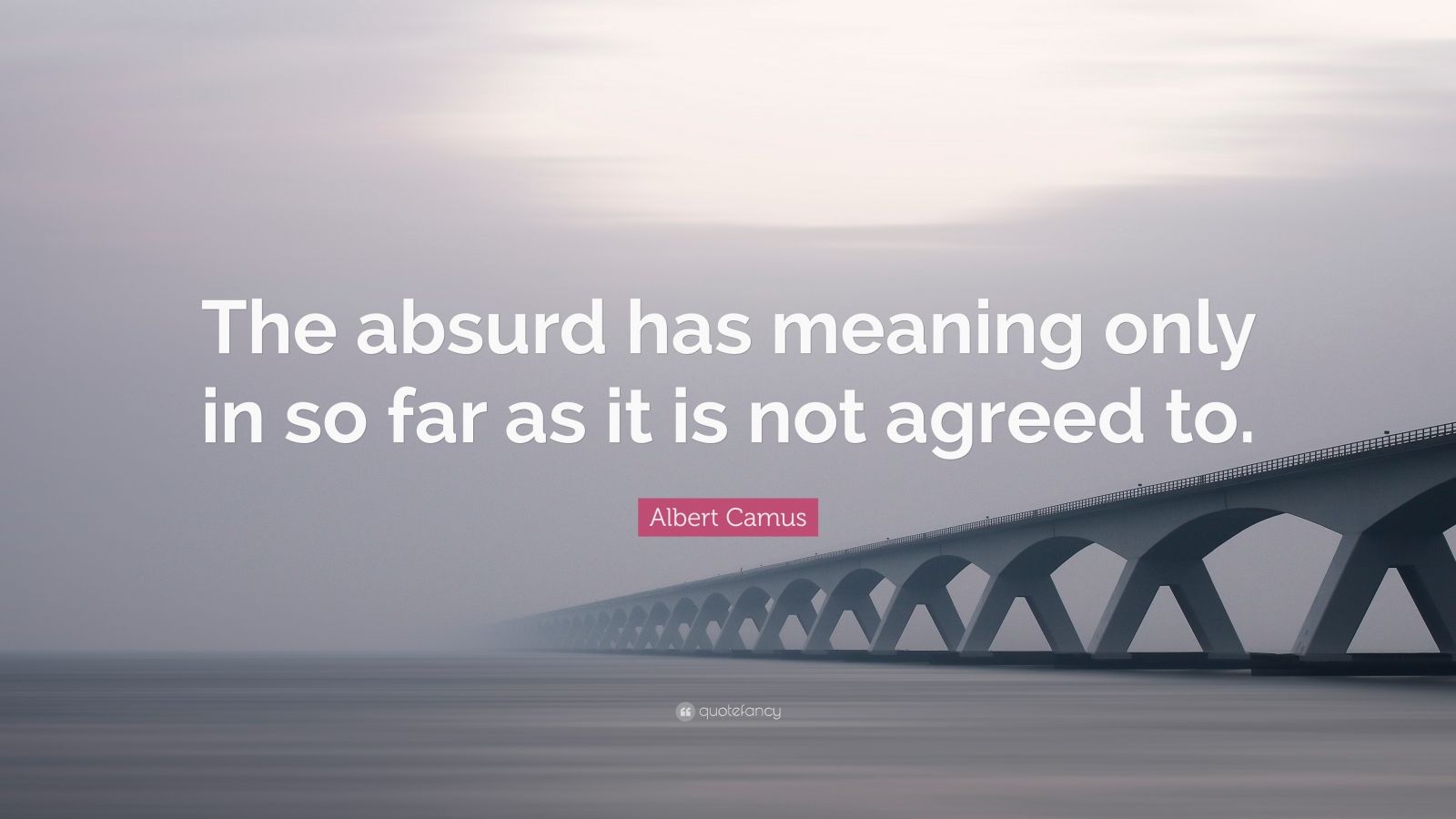
Camus suggests that the absurd itself can become a source of meaning. When we accept the inherent contradiction between our search for meaning and the universe’s indifference, we free ourselves from illusions. The absurd, in this sense, is not an end but a beginning—a foundation upon which we can build our own values and live authentically. This perspective invites us to create meaning rather than passively await it.
The Absurd Man: Embracing the Struggle
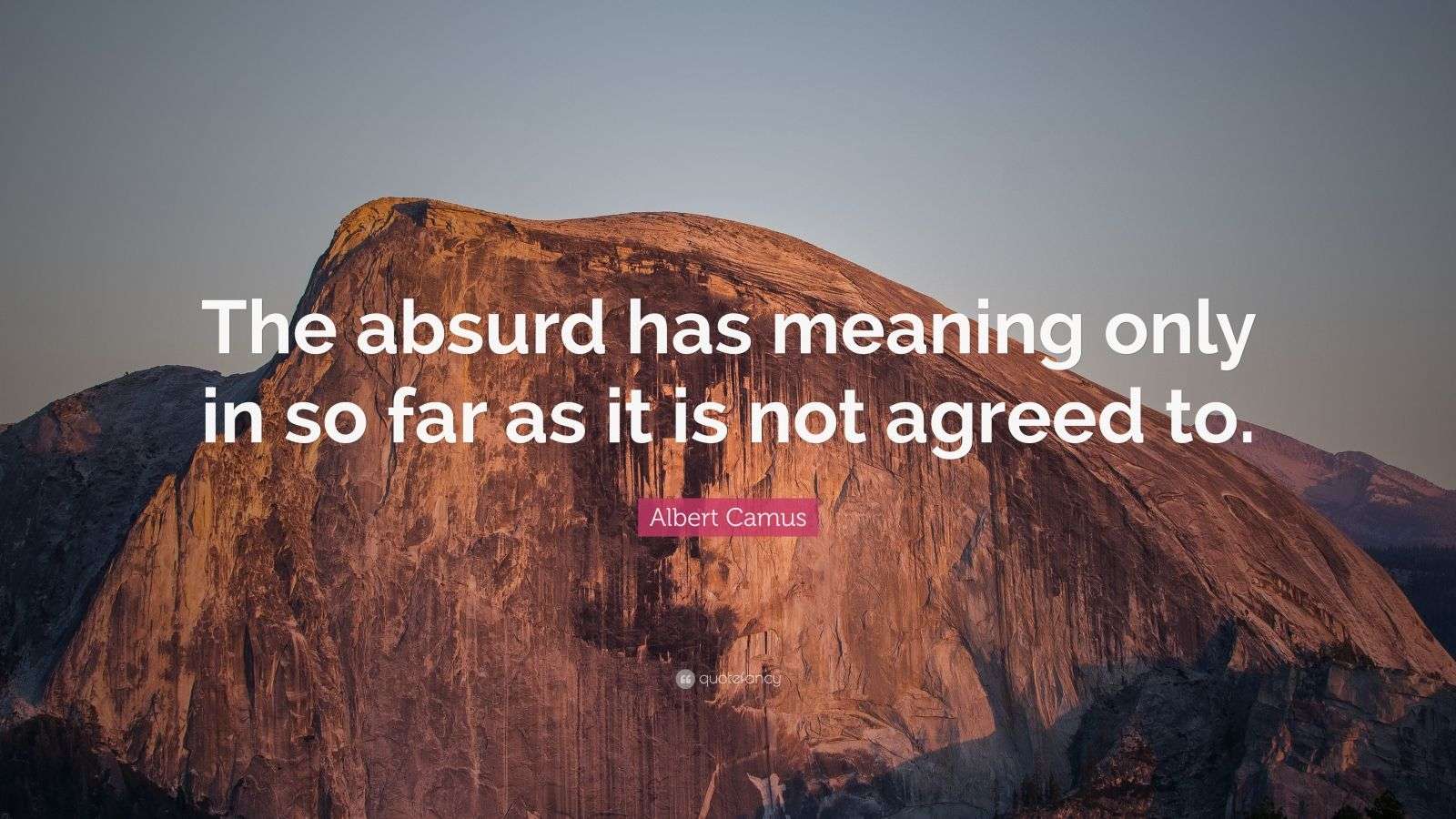
For Camus, the absurd man is not one who succumbs to despair but who confronts the absurd with defiance and passion. He rejects the comfort of easy answers and instead embraces the struggle itself as a form of rebellion. This quote highlights the dual nature of the absurd: it can either crush us or empower us, depending on how we choose to engage with it. The absurd man finds freedom in the very act of questioning.
Rebellion Against the Absurd
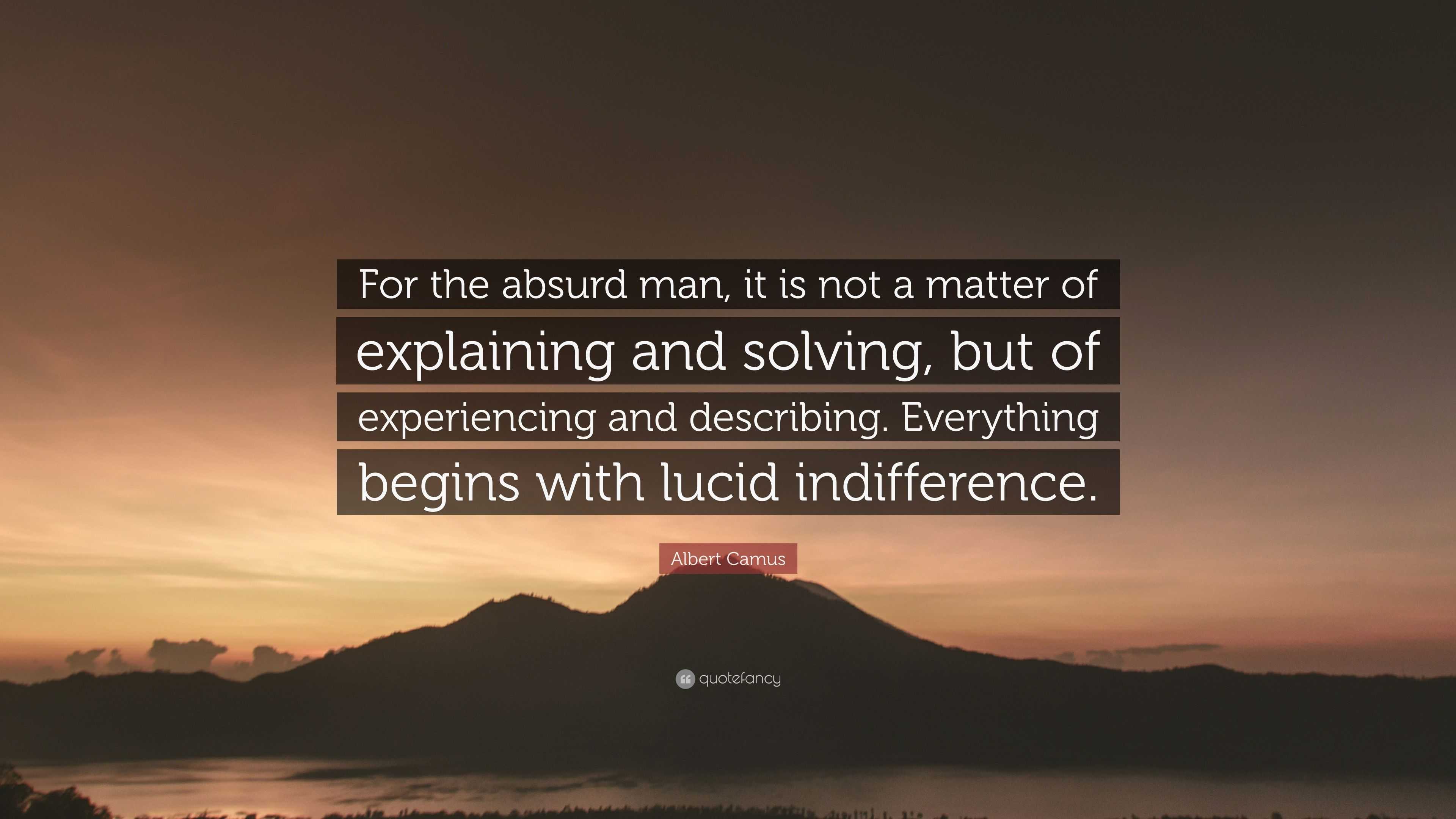
Camus distinguishes between passive acceptance and active rebellion. The absurd man does not seek to “explain away” the absurd or impose artificial meaning on life. Instead, he experiences it fully, describing its contours with honesty and precision. This approach transforms the absurd from a philosophical problem into a lived reality, one that demands our engagement rather than our resignation.
The Absurd and the Beauty of Everyday Life
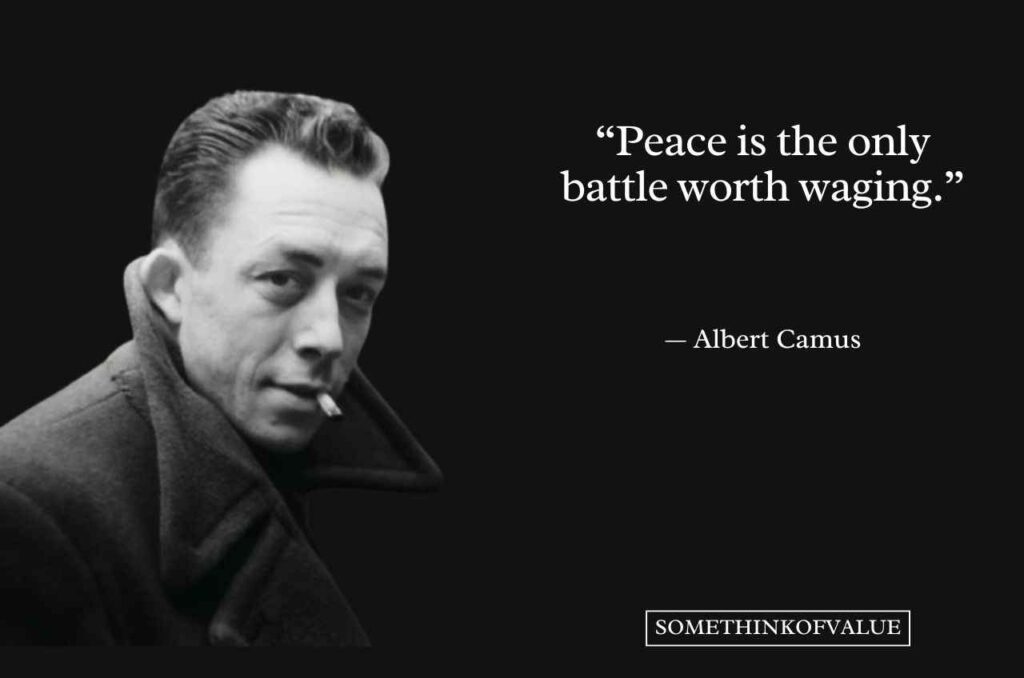
Camus often emphasized the importance of embracing the present moment, even in its absurdity. This image, featuring a collection of his quotes, reminds us that the absurd is not something to escape but something to live through. Whether it’s the beauty of a sunset, the warmth of human connection, or the simple act of breathing, the absurd man finds joy in the immediacy of existence. The challenge lies in recognizing that joy without illusion.
The Absurd as a Path to Freedom
Freedom, for Camus, is not the absence of constraints but the courage to live authentically within them. The absurd man is free because he does not cling to illusions or surrender to despair. Instead, he creates his own values and lives by them, even in the face of a silent universe. This quote encapsulates the liberating potential of embracing the absurd—it is not a prison but a space for genuine self-expression.
The Absurd and the Search for Truth
Truth, for Camus, is not found in grand metaphysical systems but in the raw, unfiltered experience of life. The absurd man seeks truth not through dogma or ideology but through direct engagement with reality. This quote underscores the importance of lucid reason—using our intellect to recognize the limits of our knowledge while still pursuing understanding. The absurd does not negate truth; it redefines it as something personal and lived.
The Absurd in Love and Relationships
Love, too, is touched by the absurd. Camus suggests that even in the deepest human connections, we are confronted with the same tension between longing and indifference. Yet, it is precisely this tension that makes love meaningful. By embracing the absurdity of our relationships, we can find a love that is authentic, passionate, and free from illusion. This perspective challenges us to love not despite the absurd but because of it.
The Absurd as a Call to Live Fully
Ultimately, Camus’ philosophy is a call to live fully, even in the face of the absurd. The quotes above remind us that the search for meaning is not futile but essential. By embracing the absurd, we reclaim our agency, our freedom, and our capacity to create a life worth living. The absurd is not the end of the story—it is the beginning of a journey toward authenticity and passion.