


The family we’re born into often feels like an unchangeable fact of life—a fixed construct passed down by blood and fate. Yet, throughout our lives, most of us encounter another kind of family: the one we choose. This shift from kinship by biology to kinship by heart is a deeply moving and revealing aspect of human connection. Whether we realize it or not, our “family of choice” carries equal weight in defining our emotional landscape, offering belonging when the origins of our lineage didn’t. It’s this fascinating duality—the contrast between the family handed to us and the family we actively forge— that speaks volumes about our capacity for love, resilience, and self-definition.
—
When Life Gives You Roots

The family we’re born into plants the emotional soil where our earliest lessons unfold—both the wounds we internalize and the unshakable truths we absorb. This foundational family frames our earliest sense of security, or its absence, shaping how we navigate the world before we even learn to speak. Yet, while it offers us a starting point, it doesn’t always provide everything we need to grow. For many, the paradox of biological ties lies in how they challenge or confine rather than fulfill. It’s not unusual to feel a gaping chasm between our roots and our aspirations, to leave behind familial expectations that felt like cages. That’s precisely why the space they leave behind becomes fertile ground for the family we choose to cultivate—one built on trust, shared journeys, and mutual adoration.
—
The First Family Isn’t Always Our Choice
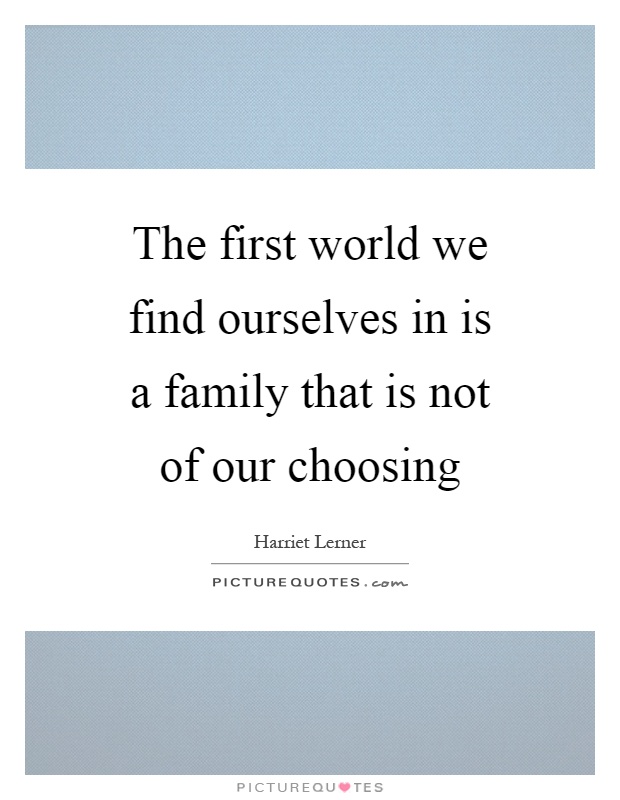
Most of us didn’t select our families of origin. There’s an inherent irony in being handed your genetic ties without a say in whether you want them, yet the bonds formed later—which don’t rely on blood—feel more deliberate. The difference between these two realms is striking: while family by chance often comes with the pressure of “supposed to” and generational patterns, family by choice thrives on alignment. In either camp, connections are tested and revealed. There’s a raw honesty to acknowledging that love isn’t always mutual or equitable in family by descent. Choosing not to seek approval from those who couldn’t—or wouldn’t—give it transforms self-preservation into an act of profound authenticity, laying the groundwork for a family that honors your wholeness without conditions.
—
Uniting Through Love: Celebrating the New Covenants
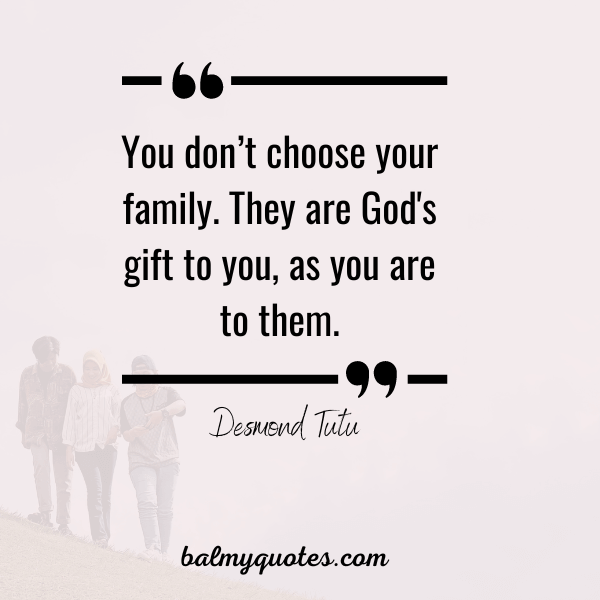
In some of life’s most tender moments, family becomes an active verb rather than a given. It’s in moments of vulnerability shared over midnight calls, or when a beloved voice emerges amidst laughter at a birthday table, that we recognize the alchemy of choice. These relationships transcend distance and time, often proving more steadfast than the ties that bind us by luck. Chosen family isn’t an add-on; it’s a lifeline. It provides the refuge and the fuel to confront circumstances the family of origin couldn’t—whether it’s stepping into a challenging year alone, or receiving the compassion never directed at you as a child. They show up precisely because you’re their anchor, just as you’re theirs. This newfound harmony can feel like rediscovering hope when old models of belonging never felt like a safe harbor.
—
The Quotes That Connect Ours

Rebecca Addison once mused, *”The heart is a place one enters alone but from which nothing goes there unshared.”* This truth underpins the reality that we’re born into families that reflect a shared genetic narrative, but we choose families that resonate with our soul’s story. Each chosen bond is an affirmation: we matter deeply enough to be welcomed, imperfectly, yet wholly. The beauty lies in the raw honesty of these gatherings, whether they form overnight or over decades. Some families stretch across decades, like those born from shared dreams or quiet resilience, growing into the kind of love that withstands the tests of time and distance.
—
Honoring the Space Between

*”You didn’t choose your family, they’re given to you. But in time, you realize that the people who choose YOU, for any reason at all, are your true family.”* Desmond Tutu’s words distill this universal truth into poetic simplicity. The tension between these two facets of family—one imposed and one chosen—often becomes the fulcrum of life’s biggest growth and healing. Neither realm is inherently superior; each has lessons and blessings of its own. The richness lies in how we navigate both, transforming inherited ties that may require forgiveness into a tapestry richer with every thread woven by those who dared to believe in us even before we believed in ourselves.
—
