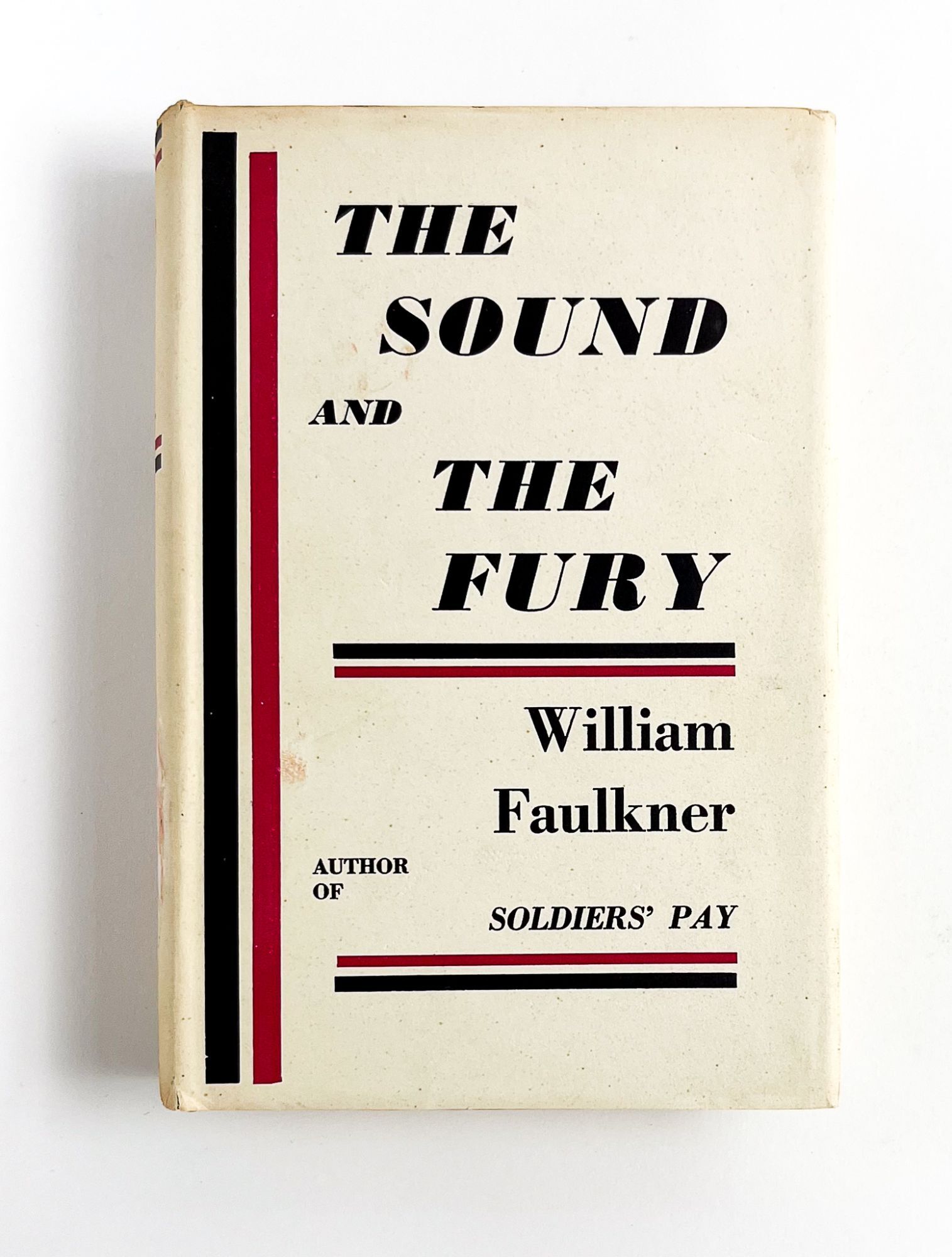
William Faulkner’s The Sound and the Fury delves deep into complex themes of time and memory, exploring how they shape identity and experience. Through intricate narrative styles and multi-layered perspectives, Faulkner invites readers to contemplate the fluidity of time and the haunting persistence of memories. Below are ten profound quotes from the novel that reflect these themes, accompanied by insightful reflections and evocative imagery.
The Fragmented Flow of Time

“I give you the mausoleum of all hope and desire; I give it to you not that you may remember time, but that you might forget it now and then for a moment and not spend all your breath trying to conquer it.” This quote encapsulates Faulkner’s portrayal of time as a fluctuating entity, one that disrupts the linearity of human experience and forces one into a continual battle with memory and loss.
Memory’s Commanding Presence

“Clocks slay time… time is dead as long as it is being clicked off by little wheels; only when the clock stops does time come to life.” This line reveals Faulkner’s idea that mechanical time, measured and precise, distances us from the living, breathing flow of past and present memories that truly define our existence.
Time as a Living, Breathing Entity

“I could remember nothing, and nothing was complete; but the past that I could recall, was still vivid with love and loss.” The emotional texture of memories, as Faulkner illustrates, remains vivid and potent despite their fragmented nature, revealing how time interweaves with the deepest parts of our emotional landscape.
Time’s Weight on the Human Soul

“I don’t know what I am. I don’t know if I am or not.” Faulkner presents memory and time as disorienting forces that challenge self-awareness, underscoring the struggle to find a coherent identity amidst the relentless passage of moments and the shadows they cast.
The Silence Between Moments
“The past is never dead. It’s not even past.” This iconic quote expresses the inescapable nature of memory where time folds in on itself, continually shaping the present. The past intrudes on every moment, making the narrative’s timeline beautifully nonlinear and haunting.