Despair, as Søren Kierkegaard explores in The Sickness Unto Death, is more than just sorrow or sadness—it’s a profound state of being that challenges the very essence of our existence. His insights invite us to reexamine the nature of self, faith, and the struggle within. Here, we delve into 10 powerful quotes from this seminal work that unravel the many layers of despair, offering a transformation in how we understand our struggles and the path to self-realization.
Understanding the Depths of Despair

“Despair is the sickness unto death.” This opening affirmation sets the tone for Kierkegaard’s exploration. It’s not a simple illness, but a profound existential condition, one that reflects the chasm between who we are and who we could be. This quote compels us to recognize despair as a critical, albeit painful, dimension of self-consciousness and identity.
The Paradox of Self-Relation
Kierkegaard suggests, “The self is a relation which relates itself to itself.” This paradox highlights the self’s unique struggle—constantly turning inward, wrestling with its own despair. It challenges us to consider how our sense of self depends on this self-reflective relationship, and how despair disrupts or obscures it.
Despair as a Hidden Condition
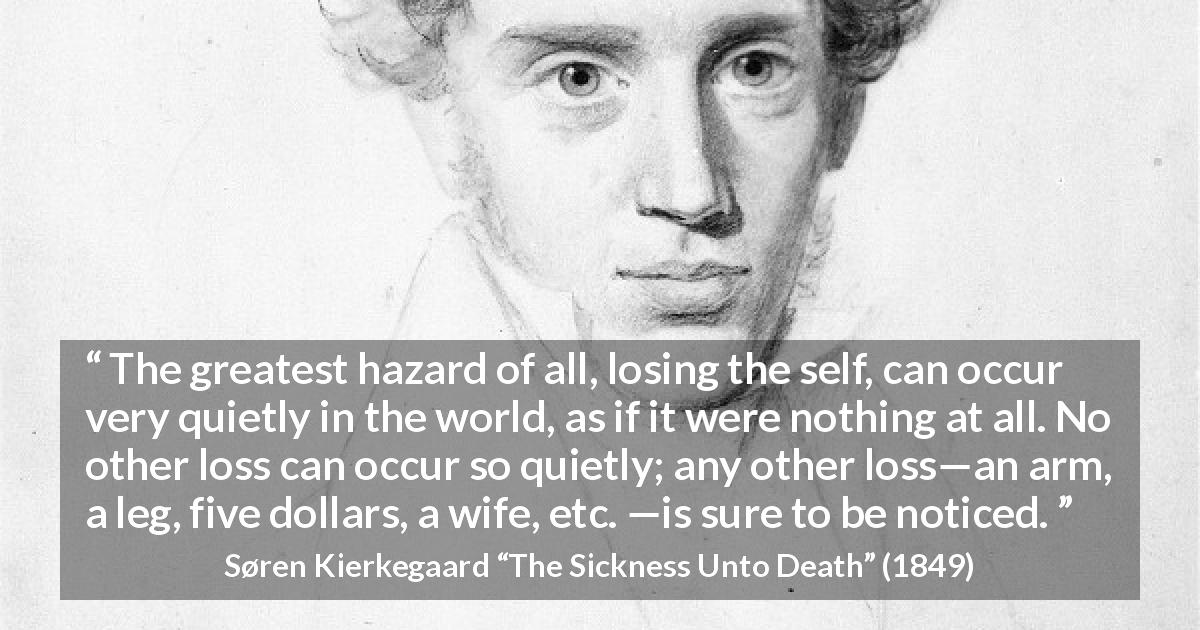
“Most people, however, are not in despair because they do not know they are in it.” This startling insight reveals despair’s silent influence in daily life, often unnoticed but deeply present. It invites us to awaken to hidden struggles that shape our emotions and choices beneath the surface.
Despair and the Quest for Authenticity

“To be despairing is to be unable to be oneself.” This quote unpacks despair as a barrier to living authentically. It propels us to ask: How can we rise from despair to reclaim a truer version of ourselves, shedding the masks imposed by society or fear?
The Weight of Infinite Possibility

“Despair expresses itself in an infinite way.” Kierkegaard points to despair’s boundless nature, rooted in the tension between finite existence and infinite aspirations. This quote pushes us to envision despair not only as limitation but also as a gateway to profound existential freedom.