Niccolò Machiavelli, the renowned political thinker and author of The Prince, offers profound insights into the nature of power—insights that continue to resonate in modern discourse. His reflections challenge traditional perceptions and invite us to reconsider the dynamics of authority, influence, and leadership. Below are ten compelling quotes that illuminate Machiavelli’s perspective on power, each promising to alter the way you understand control and governance.
The Reality of Power and Morality

Machiavelli famously separates power from conventional morality. He suggests that rulers must be prepared to act immorally when necessary, because the survival and strength of their state take precedence over traditional ethics. This pragmatic approach forces us to question whether power can ever truly be separated from ruthless decisions.
The Inevitability of Political Struggle

According to Machiavelli, political power is in a constant state of flux, surrounded by an unending struggle for dominance. His assertion that “he who desires to rule must be prepared to both trust and deceive” invites us to think of power as a battlefield where strategic cunning often triumphs over straightforward honesty.
Power and the Perception of Strength
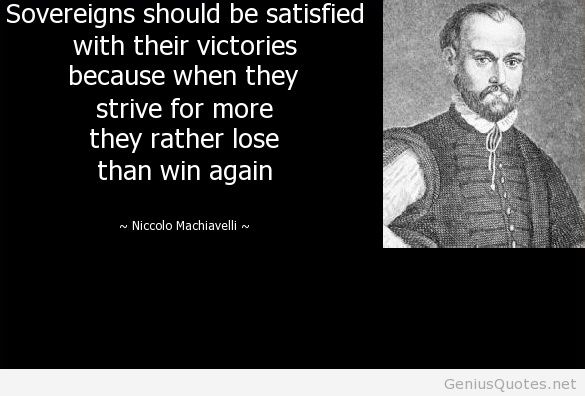
One of Machiavelli’s key lessons is the importance of appearances. Power is not only about actual strength but about the perception of strength—how others view the leader’s authority and capability. This challenges us to see power not as a static possession but as something continuously negotiated through image and influence.
The Duality of Virtù and Fortuna

Machiavelli’s concept of virtù—the ability to shape one’s destiny—and fortuna—chance or luck—complicate the notion of power. His belief that success requires not just skill but also favorable circumstance makes us rethink the role of individual agency in the exercise of authority.
Power as the Ultimate Arbiter of Right

Perhaps one of the most unsettling Machiavellian truths is his claim that power dictates what is “right.” The statement, “He who has the power is always right; the weaker is always wrong,” challenges ideals of justice and fairness, compelling us to evaluate authority through the raw lens of dominance rather than moral superiority.