Herbert Simon, a pioneering thinker in the fields of psychology, economics, and artificial intelligence, introduced the concept of bounded rationality to explain the limitations humans face when making decisions. Unlike the idealized notion of perfect rationality, Simon emphasized that individuals operate within constraints such as limited information, limited time, and cognitive limitations. Here, we explore 10 insightful quotes from Herbert Simon that shed light on the intricacies of bounded rationality and the realistic human decision-making process.
1. Understanding the Limits of Rationality
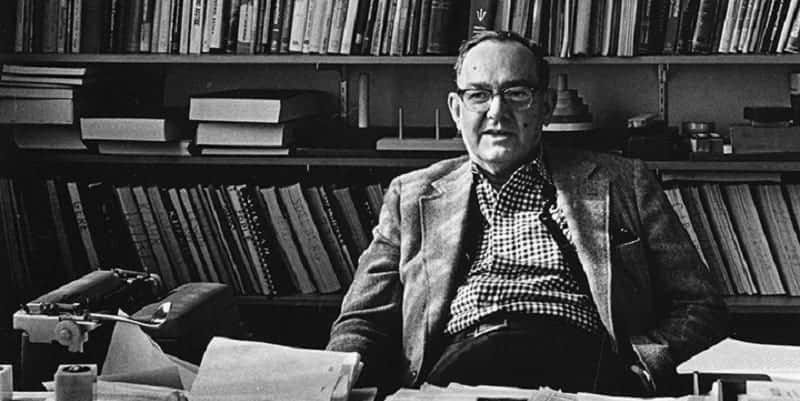
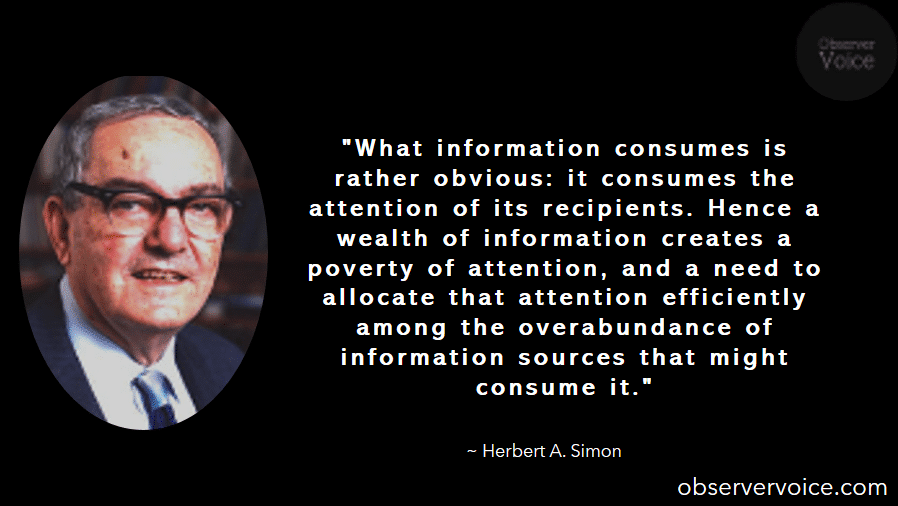
“A wealth of information creates a poverty of attention.” This profound observation by Simon reminds us that more information does not guarantee better decisions; instead, it often overwhelms decision-makers. Bounded rationality highlights how cognitive limits force people to filter and prioritize data, leading to satisficing rather than optimizing choices.
2. Recognizing Human Decision-Making Realities
Simon stated, “The capacity to think is limited; consequently, the capacity to decide optimally is constrained.” This quote encapsulates the essence of bounded rationality, where decision-makers must operate under constraints, making satisfactory rather than perfect choices. Accepting these limitations is crucial for understanding how humans behave in economic and social systems.
3. The Impact of Simplifying Complex Systems

Simon emphasized, “In an environment of complexity, humans do not attempt to find the best solution; they look for one that is good enough.” This pragmatic approach acknowledges that in real-world settings, searching for ideal solutions is often impossible. Instead, people rely on heuristics to navigate complexity effectively.
4. Bounded Rationality in Decision Making Processes

“Decision-making is about finding a solution that satisfies criteria rather than maximizing,” Simon once explained. This quote reflects the shift from the traditional economic assumption of maximizing utility to a more realistic depiction where ‘good enough’ solutions are preferred due to constraints on time and information.
5. The Human Side of Rationality

“Rationality is not about always achieving the best outcome, but about the processes by which humans make decisions limited by their knowledge and environment.” Simon’s perspective humanizes economic theories by focusing on real cognitive capabilities and environmental factors, making his bounded rationality framework applicable across disciplines.
6. On Knowledge and Its Limits
“Knowledge is never complete, and thus decisions must be made without full information.” Simon recognizes that the information available to decision-makers is always partial, which necessitates reliance on judgment and experience rather than exhaustive analysis.
7. From Optimization to Satisficing
Simon coined the term “satisficing” to describe a decision-making strategy that aims for a satisfactory solution rather than the optimal one. “Satisficing reflects the reality of human problem-solving where aiming for perfection may be impractical or impossible.” This shift away from idealized models is one of Simon’s key contributions.
8. The Role of Heuristics
“Heuristics serve as mental shortcuts that allow individuals to cope with complex decisions efficiently.” Simon acknowledged that while heuristics may not always yield the best solution, they enable timely decisions within the constraints people face.
9. Implications for Organizations
“Organizations exist not to maximize rationality but to cope with bounded rationality of individuals.” This quote illustrates how institutions develop procedures and routines that support decision-making under uncertainty and cognitive limitations.
10. Embracing the Imperfection of Rationality
Lastly, Simon reminds us, “Accepting bounded rationality means embracing the imperfect, messy nature of human decision-making.” Rather than a flaw, this imperfection reflects the adaptive strategies humans use to survive and thrive in a complex world.
Herbert Simon’s insights into bounded rationality provide a nuanced understanding of decision-making that transcends simplistic economic models, offering valuable lessons for psychology, management, and artificial intelligence. These quotes capture his legacy of combining rigorous analysis with a deep appreciation for human limitations.