Gwendolyn Brooks’s poem We Real Cool is a sparking ember of youthful defiance and poignant reflection, a crisp silhouette etched against the fading light of innocence and recklessness. Her words resonate like a jazz riff—short, sharp, vulnerable, and pulsating with the rhythm of lives walking a razor’s edge. Through metaphor and bare-bones phrasing, Brooks captures the essence of rebellion, fleeting joy, and mortality in a small group of young lives. Here are ten quotes mined from this cultural gem, each illuminating the shadowy dance of “We Real Cool” with a unique shimmer.
The Pool Players Leaving Betwixt Walls

“We real cool. We / Left school.” This opening line is a drumbeat of youthful swagger, a metaphorical declaration of independence. The pool players who “left school” symbolize a deliberate stepping outside societal norms. The brevity of the line mirrors their abrupt break from the conventional path, setting the tone for a poem as much about absence as presence.
Golden Joints Striking Like Lightning

“We / Lurk late.” This metaphor signals both nocturnal escapades and a lurking, hidden danger akin to lightning in a dark sky. The late hours underscore the allure of the night as a realm where rules bend, and the youthful rebels claim their territory. It is a symbol of both liberation and looming peril.
The Daring Dancers at the Edge of Dawn
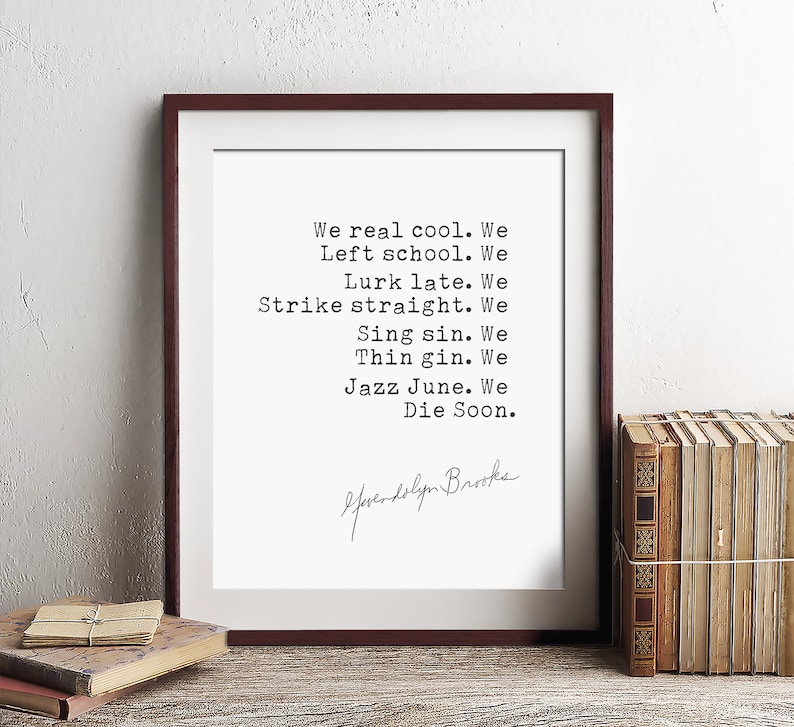
“We / Strike straight.” Like arrows loosed in the twilight, this phrase stands for directness and bravado. The young players don’t waver; they live by instinct, boldly “striking” their chosen chords. It’s a metaphor not only for action but for the sharp clarity of youthful purpose, unfettered and raw.
The Melodic Muses of Secret Jubilation
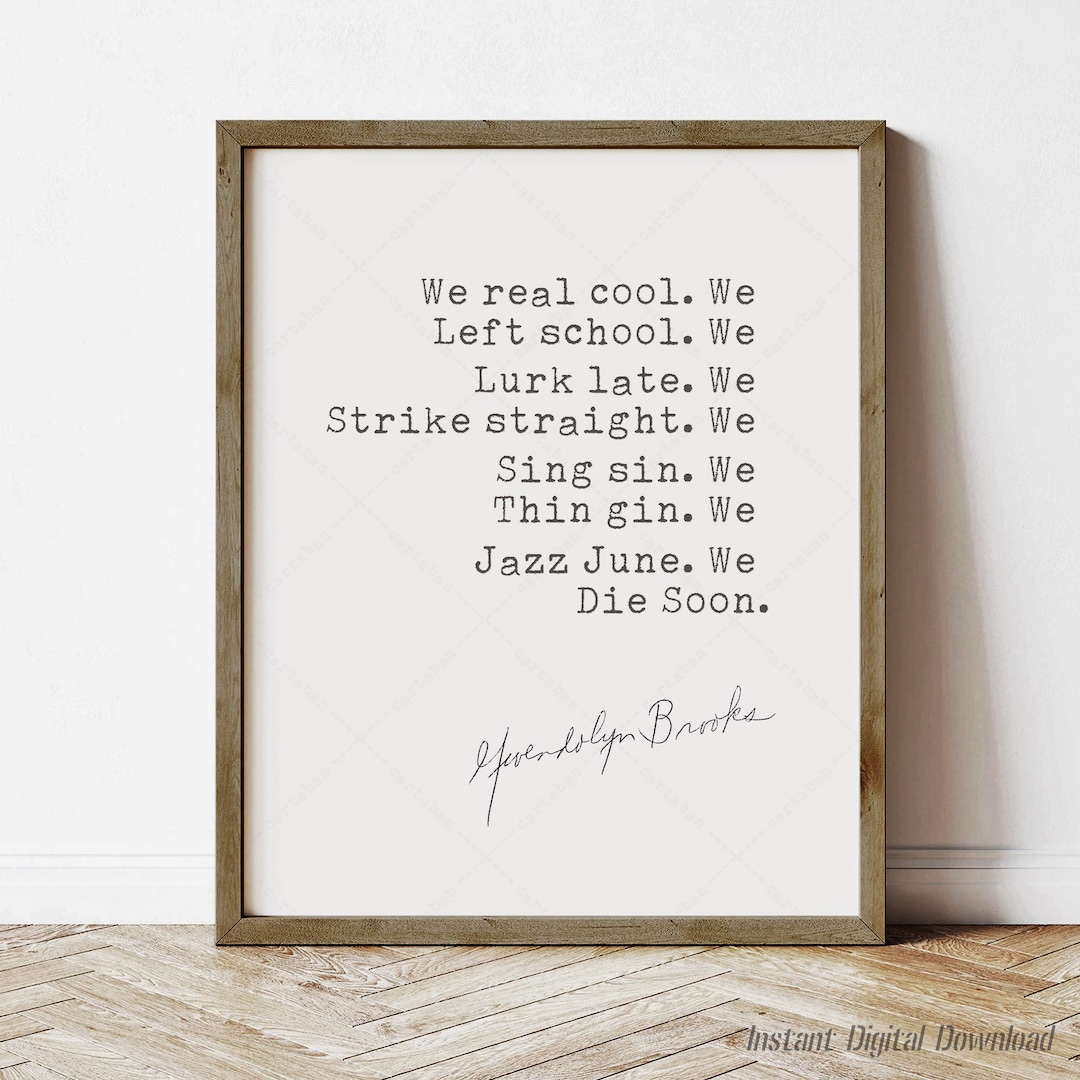
“We / Sing sin.” Here, sin becomes an unexpected song, a melody underscoring the youth’s embrace of rebellion. The alliteration softens yet sharpens the risk—singing isn’t silent; it’s loud and embraces the defiance with a rhythm all their own, a hymn to both freedom and consequence.
The Sudden Flicker of Lives Like Candles
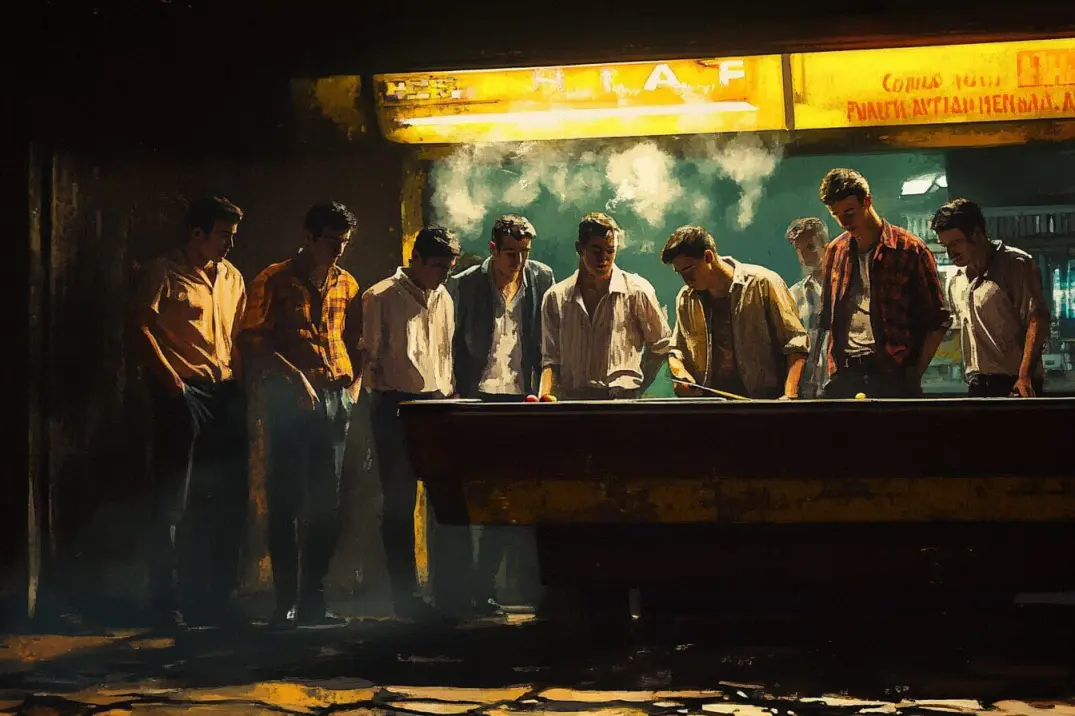
“We / Thin gin.” This metaphor blends the ephemeral nature of their indulgence with the thinning smoke of candlelight fighting the dark. It’s both indulgence and dilution—pleasure mixed with a subtle foreshadowing of fragility and fleeting existence, underscoring the poem’s somber undertone.
The Mirage of Cool and the Reality of Time
“We / Jazz June.” Jazz is the heartbeat of their identity, a metaphor for improvisation, spontaneity, and the chaotic beauty of youth. June, ripe with summer’s promise, adds a layer of temporary brilliance—those long, brief days filled with heat and possibility before the inevitable autumn of consequence.
Pulse of the Pool—A Fragmented Chorus
“We / Die soon.” The poem concludes with this chilling line, a stark metaphor that cuts to the core of impermanence. The youth’s defiance and rhythm culminate in an acknowledgment of mortality—a vivid reminder that their jazz-infused nights and cool bravado are set against the ticking clock of life.
The Silent Thrum of the Night’s Anthem
Brooks’s language is tantalizingly pared down but dense with meaning. Each couplet dances with duality—the simultaneous allure and threat of youthful rebellion. The poem’s minimalist stanzas act as an echo chamber, amplifying the tension between freedom and fatality.
The Poetry of Departure and Place
“We / Left school” is a metaphor for departure not just from an institution but from the protective walls of childhood. It suggests stepping into uncharted territory, where risks multiply but the future remains uncertain. It’s a bold exit and a fragile crossing.
The Persistent Pulse of Identity in Defiance
Through metaphor and repetition, Brooks crafts an anthem of identity that defies societal expectations while acknowledging their ultimate vulnerability. The repeated “We” is simultaneously a statement of unity and a fragile chorus singing against the quiet imminence of loss.