Immanuel Kant’s Groundwork of the Metaphysics of Morals remains a cornerstone in moral philosophy, especially his concept of the Categorical Imperative. This principle serves as a universal moral law guiding ethical decisions, independent of personal desires or consequences. Below, we explore 10 profound quotes from Kant’s work that illuminate the essence and application of the Categorical Imperative. Each section includes a relevant image to enrich your understanding of his transformative ideas.
The Foundation of Moral Law

Kant begins by emphasizing that morality must be grounded not in empirical experience but in pure reason. The Categorical Imperative commands actions that are objectively necessary in themselves, devoid of personal inclinations, establishing the foundation for all moral judgment.
Act Only According to That Maxim You Can Will to Become Universal Law
This fundamental formulation of the Categorical Imperative challenges individuals to examine their motives. Kant insists that a maxim should only be followed if it can be consistently applied as a universal law, reinforcing the idea of fairness and impartiality in moral actions.
Humanity as an End in Itself
Kant argues that humans must always be treated as ends in themselves, never merely as means to an end. This respect for the intrinsic value of human beings is a vital component of the Categorical Imperative, making ethical integrity central to human interactions.
Autonomy and Moral Responsibility

Autonomy—the capacity for self-governance—is essential in Kant’s moral framework. The Categorical Imperative demands that individuals act according to laws they give to themselves, underscoring personal responsibility in ethical decision-making.
Rationality as the Basis of Ethics
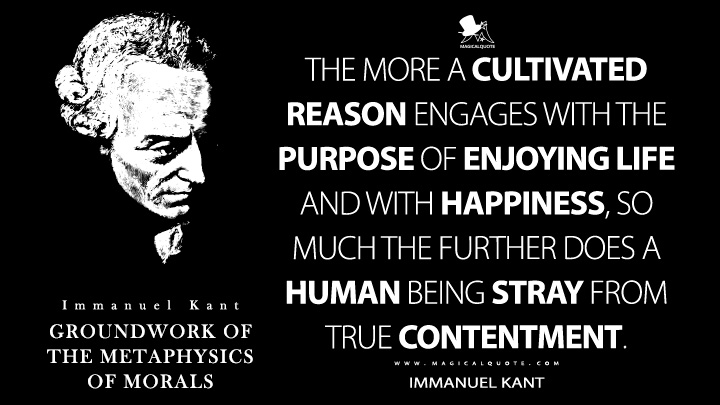
Kant believes that reason guides moral decisions beyond subjective desires. A well-cultivated reason applies universal principles deliberately, linking morality to rationality rather than emotion, which enhances the dignity and clarity of moral laws.
Duty Over Inclination
One of the pivotal ideas Kant presents is that genuine moral actions arise from duty, not from personal inclinations or consequences. The Categorical Imperative commands adherence to duty for its own sake, revealing the purity and strength of true ethical conduct.
The Universality of Moral Obligation
Kant emphasizes that moral laws derived from the Categorical Imperative hold for all rational beings regardless of their particular circumstances. This universality distinguishes moral commands from contingent social norms or subjective preferences.
Freedom and Moral Law
Central to Kant’s philosophy is the idea that freedom is compatible with moral law. Freedom means acting according to laws one gives oneself, and by following the Categorical Imperative, individuals express their rational will, thus achieving moral freedom.
Respect for Moral Law as a Practical Principle
Kant insists that respect for moral law is not only an abstract ideal but a practical principle that governs daily life. This respect manifests as reverence for objective ethical mandates, leading to consistent and principled conduct.
The Supreme Principle of Morality
At the core of Kant’s ethic is the supreme principle that determines all moral obligations. The Categorical Imperative encapsulates this supreme principle, orienting individuals to deliberate and choose actions that uphold moral law as universally valid and necessary.