


Imagine your mind as a ship sailing through unpredictable seas. The waves, winds, and storms represent the events beyond your control, yet the helm in your hands is your will—the true captain of your fate. Epictetus, a master of Stoic wisdom, offers profound insights on control, guiding us to steer our lives with clarity and strength regardless of external turmoil. Join me as we explore 10 evocative quotes that illuminate the art of mastering control through the vivid lens of Epictetus’s timeless philosophy.
The Helm of Freedom: Choosing Your Response
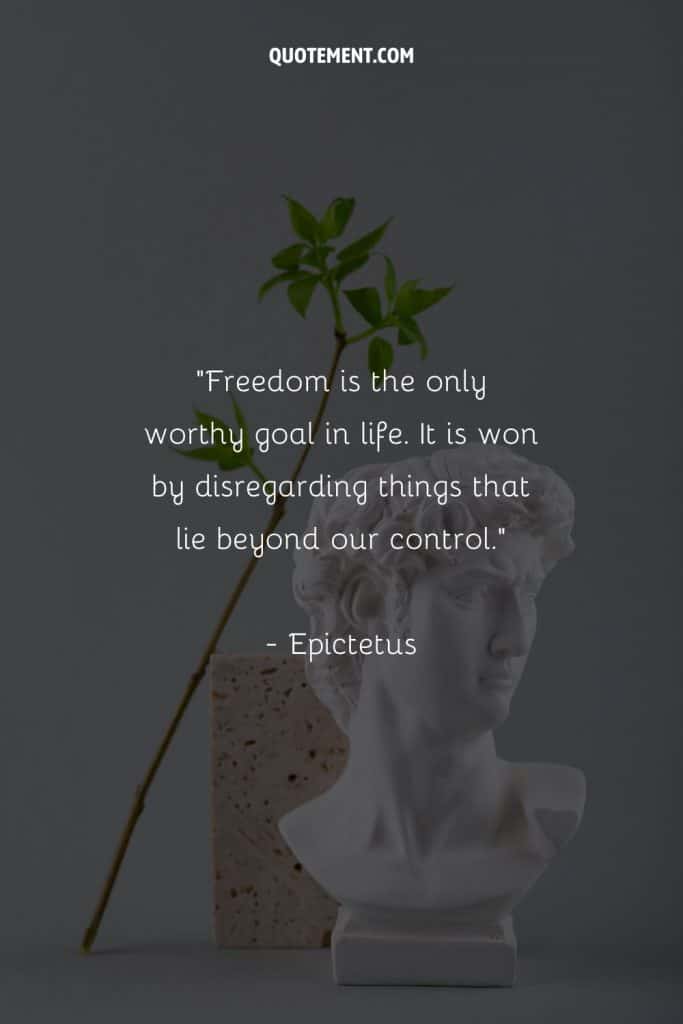
“Freedom is the only worthy goal in life. It is won by disregarding things that lie beyond our control.” Like a sailor who cannot command the wind, we often find ourselves powerless against external forces. Yet, Epictetus reminds us that real freedom blooms when we anchor our will away from what we cannot change and instead steer toward what we can master: our own judgments and actions.
The Invisible Rudder: Control Within the Storm

Epictetus likens control to an invisible rudder beneath stormy waters. Though the tempest rages around us, the rudder—the mind’s discipline—keeps the ship on course. This metaphor assures us that while external chaos may be loud and violent, the quiet command of our thoughts can maintain unshakable direction.
Weathering the Tempest: Master Your Mind

“It’s not what happens to you, but how you react to it that matters.” Here, Epictetus paints our mind as the ship’s deck where the storm may pummel us, but the stance we hold defines our journey. By mastering the sails of emotion and reason, we become resilient captains against adversity.
Charting the Course: Focus on Inner Latitude
Control is likened to latitude charts that give sailors freedom to navigate inside the barrenness of unpredictability. Epictetus emphasizes the power found in the internal compass—values, virtues, and choices—that no external wave can erase, granting us autonomy even when the horizon seems blurred.
The Anchor of Acceptance: Letting Go of the Uncontrollable

“Don’t seek to have events happen as you wish, but wish them to happen as they do.” In this metaphor, acceptance is the anchor preventing the ship from drifting helplessly. By embracing what we cannot change, we find stable ground beneath turbulent waves, conserving energy to navigate forward.
The Captain of Your Mind: Rule Your Inner Kingdom
Epictetus often compared the mind to a kingdom where we alone must be sovereign. External chaos is like invading forces, but the true power lies in how we govern our thoughts. You hold the scepter; wield it to crown peace over panic.
The Lighthouse of Reason: Guiding Through Darkness
In times of confusion and fear, reason acts as a lighthouse, highlighting the path through rocky uncertainties. Epictetus’s wisdom teaches us to shine this beacon inward, illuminating choices and perceptions that shape our experience beyond the shadows of circumstance.
The Ship’s Logbook: Reflections on Control
Writing our own narrative is an act of control. Epictetus invites us to keep a mental logbook, recording what is truly ours to command—our responses, beliefs, and actions—allowing us to navigate life with intentionality and grace rather than drift mindlessly with the currents.
The Compass of Virtue: Navigating Moral Direction
The true compass on Epictetus’s ship is virtue, not fortune. Regardless of external chaos, the soul guided by courage, wisdom, and justice finds the true north, steering through life’s tempests with unwavering moral integrity.
The Voyage Within: Mastery Beyond External Chains
Epictetus reminds us that freedom is not dictated by externals but by the mastery of self. The voyage within is the most profound journey, where the mastery of desire and aversion unlocks a realm beyond any physical boundary, where the ship sails ever free.
