


Clifford Geertz, one of anthropology’s most influential thinkers, revolutionized the way we understand culture through his concept of “thick description.” This method goes beyond surface-level observations to uncover the intricate meanings embedded in human behavior. Geertz’s work challenges us to look deeper, to see the layers of significance that shape social interactions. His quotes on thick description aren’t just academic musings—they’re invitations to explore the hidden narratives that define our world. Below, we delve into 10 of his most insightful observations on this transformative approach.
The Essence of Thick Description: Beyond the Surface
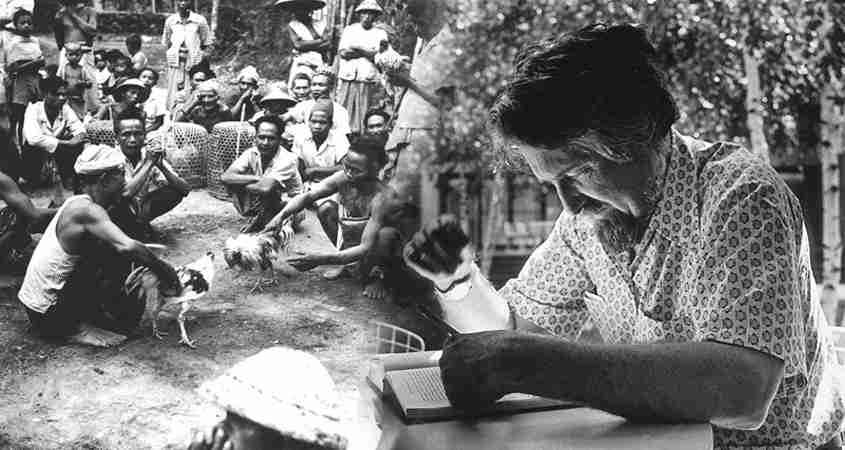
Geertz famously argued that thick description is about more than just recording actions—it’s about interpreting them. He wrote, “Doing ethnography is like trying to read a manuscript—foreign, faded, full of ellipses, incoherencies, suspicious emendations, and tendentious commentaries.” This analogy captures the challenge of deciphering culture, where every gesture, word, or ritual carries layers of meaning that require careful unraveling. Thick description isn’t just observation; it’s a detective’s work, piecing together clues to reveal the deeper story.
Culture as a Web of Significance
One of Geertz’s most enduring metaphors is his view of culture as “a web of significance” that humans themselves have spun. He emphasized that to understand any social action, we must grasp the meanings woven into that web. “Man is an animal suspended in webs of significance he himself has spun,” he noted. This idea underscores why thick description is essential—it’s the only way to navigate the complex, self-created structures of meaning that guide human behavior. Without it, we risk mistaking the surface for the substance.
The Role of Interpretation in Social Analysis

Geertz’s emphasis on interpretation over mere observation highlights a critical shift in anthropology. He believed that social scientists must act as interpreters, not just collectors of data. “What we call our data are really our own constructions of other people’s constructions of what they and their compatriots are up to,” he explained. This recursive layering of meaning is what makes thick description so powerful—it acknowledges that understanding culture requires engaging with multiple levels of interpretation, each building on the last.
Thick Description and the Problem of Subjectivity

One of the most debated aspects of thick description is its subjectivity. Geertz didn’t shy away from this challenge. He argued that while subjectivity is inevitable, it’s not a flaw—it’s a feature of the method. “Anthropology is not a science of the concrete but of the interpretive,” he wrote. This perspective reframes subjectivity as a tool rather than a limitation, allowing researchers to embrace their role in shaping the narrative while remaining transparent about their biases and perspectives.
The Importance of Context in Cultural Analysis
Geertz’s work underscores that meaning is never static—it’s always embedded in context. He famously stated, “Meaning is socially, historically, and culturally constructed.” This idea is central to thick description, which demands that we consider the broader social and historical backdrop of any action. Without context, even the most detailed observations can lead to misinterpretation. Thick description, therefore, is not just about what is said or done but about the world in which it occurs.
The Balancing Act: Depth and Accessibility
Geertz’s writing often walks a fine line between depth and accessibility. He believed that anthropological insights should be both rigorous and readable. “The aim is to draw large conclusions from small, but very densely textured facts,” he noted. This approach ensures that thick description doesn’t become an esoteric exercise but instead serves as a bridge between academic rigor and public understanding. The challenge lies in making the complex simple without sacrificing nuance.
Thick Description as a Tool for Empathy
At its core, thick description is an exercise in empathy. By immersing ourselves in the details of another’s world, we begin to see the world through their eyes. Geertz’s method encourages us to move beyond stereotypes and assumptions, fostering a deeper connection with those we study. “The goal is to understand, not to judge,” he implied. This empathetic approach transforms anthropology from a distant observation into a meaningful dialogue between cultures.
The Limits of Thick Description

While thick description is a powerful tool, Geertz acknowledged its limitations. He recognized that no method can fully capture the complexity of human experience. “We are all, in the end, trapped in our own skins,” he reflected. This humility reminds us that thick description is not a magic bullet but a lens—one that offers valuable insights while acknowledging the inherent constraints of any interpretive framework.
The Legacy of Thick Description in Modern Anthropology
Geertz’s concept of thick description has left an indelible mark on anthropology and beyond. It has influenced fields as diverse as sociology, political science, and even literary criticism. His insistence on depth, context, and interpretation has reshaped how we approach the study of human behavior. Today, thick description remains a cornerstone of qualitative research, proving that sometimes, the most profound insights come from looking closer—not wider.
Applying Thick Description in Everyday Life
Thick description isn’t just for academics—it’s a mindset that can enrich our daily interactions. By paying attention to the details, questioning assumptions, and seeking deeper meanings, we can foster more meaningful connections with those around us. Geertz’s work challenges us to move beyond snap judgments and superficial observations, urging us to engage with the world in a more thoughtful, empathetic way. In doing so, we honor his legacy and contribute to a more nuanced understanding of humanity.
