


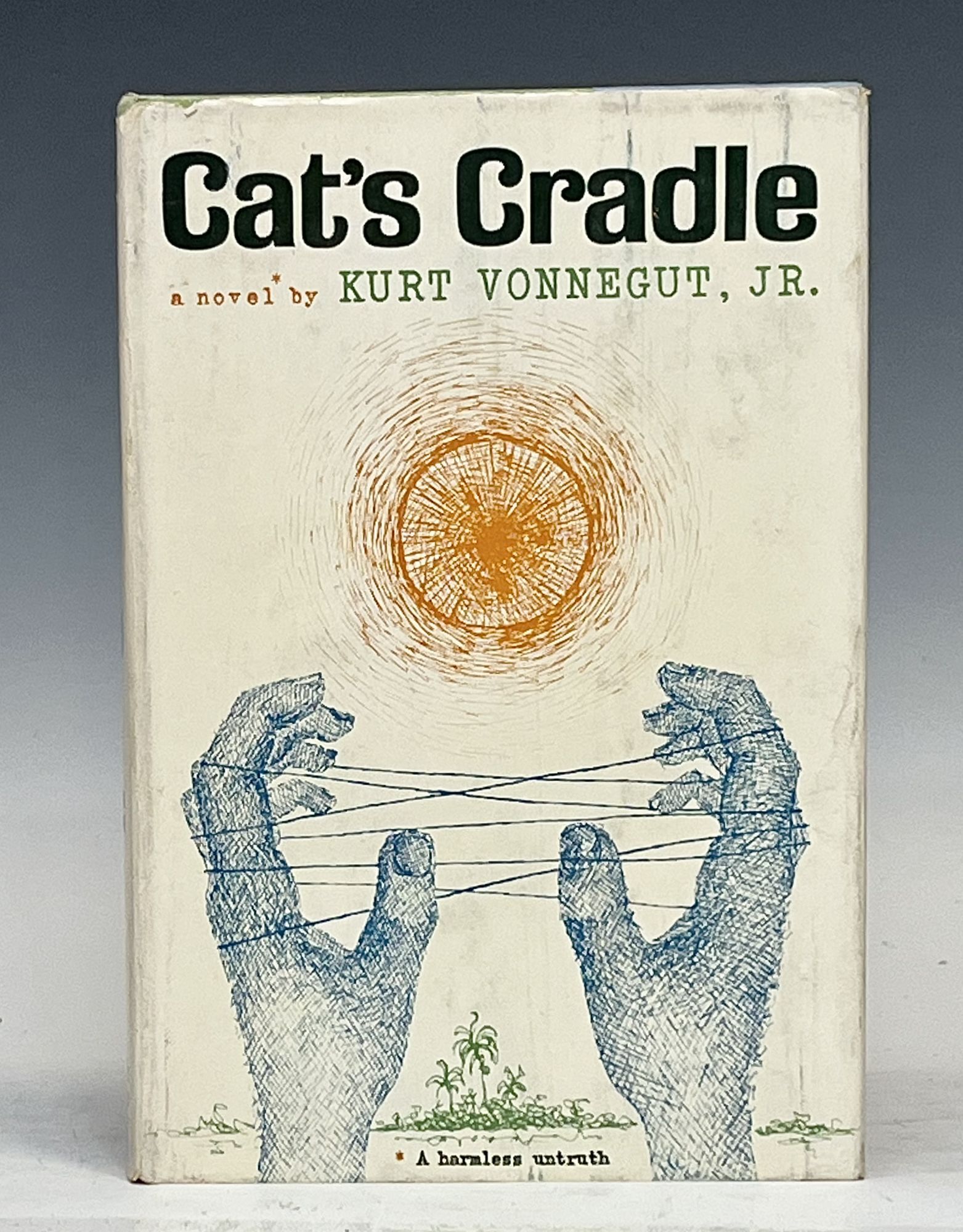
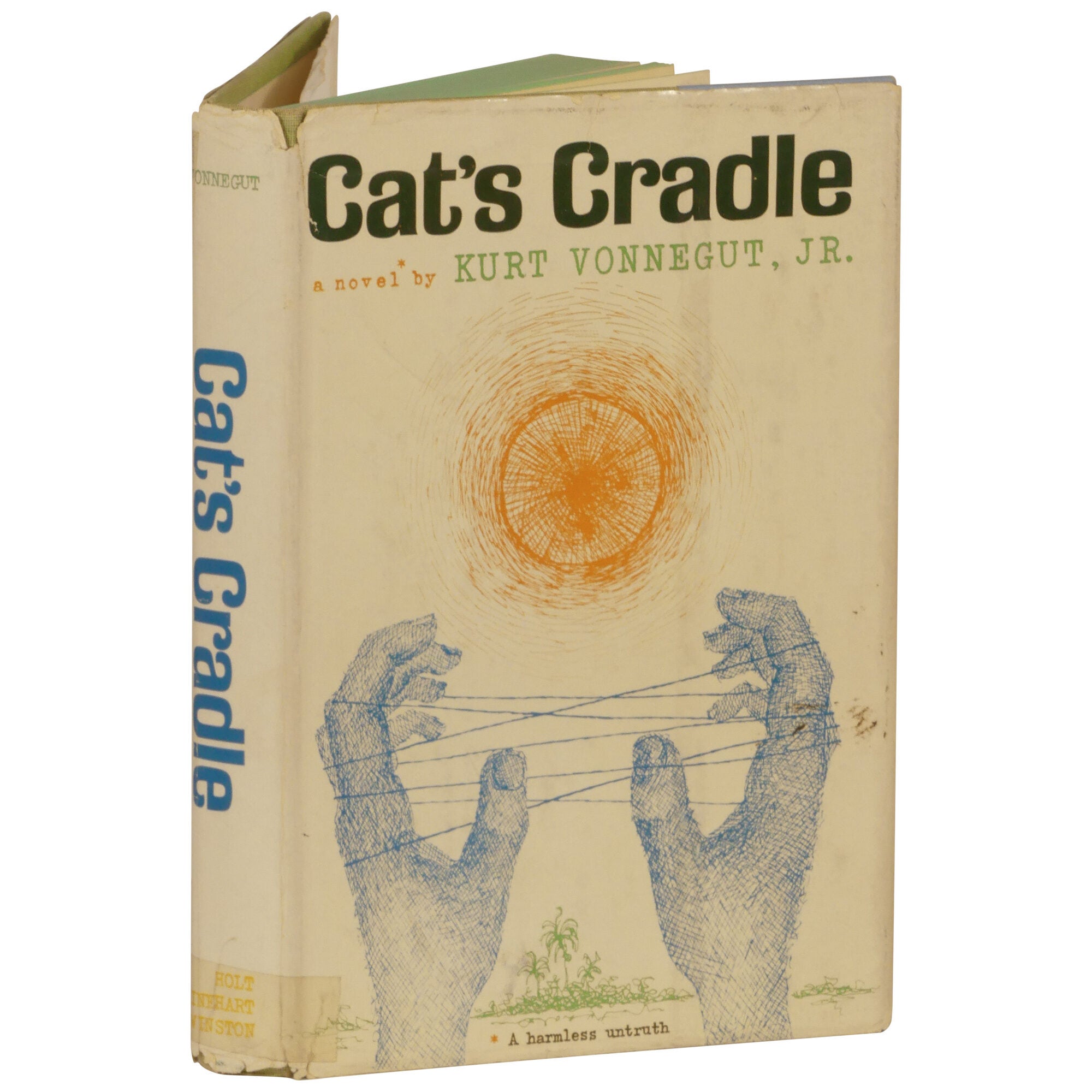
Kurt Vonnegut’s Cat’s Cradle is a masterclass in satirical storytelling, weaving together science, religion, and human folly with razor-sharp wit. The novel introduces us to a world where the pursuit of knowledge collides with moral recklessness, leaving readers to question the very foundations of progress. Through its sharp dialogue and biting observations, Cat’s Cradle doesn’t just entertain—it challenges us to reconsider our own beliefs and the consequences of unchecked ambition. Here are 10 quotes that highlight the novel’s exploration of science and religion, each one a nudge toward a fresh perspective.
The Danger of Playing God
“Any scientist who can’t explain to an eight-year-old what he’s doing is a charlatan.” This line underscores the novel’s skepticism toward scientific elitism. Vonnegut suggests that true innovation should be accessible, not shrouded in jargon or arrogance. When science operates in a vacuum, detached from ethical considerations, it risks becoming a tool of destruction rather than enlightenment. The quote serves as a reminder that knowledge without responsibility is a dangerous game.
Religion as a Crutch
“Live by the foma that make you brave and kind and healthy and happy.” Here, Vonnegut pokes at the fragility of human belief systems. The term “foma” refers to harmless lies that people cling to for comfort. Whether in science or religion, these comforting fictions can shape behavior, for better or worse. The quote invites us to reflect on the stories we tell ourselves—and whether they serve us or merely pacify us.
The Illusion of Control
“We’re all in this together, trapped in the amber of the moment. Time is an illusion.” This quote captures the novel’s existential undercurrent. Science promises control over nature, yet human lives remain subject to chaos. Vonnegut’s words remind us that despite our advances, we’re still at the mercy of forces beyond our understanding. It’s a humbling thought—one that questions the hubris of believing we can ever fully master our fate.
Science Without Ethics is Madness

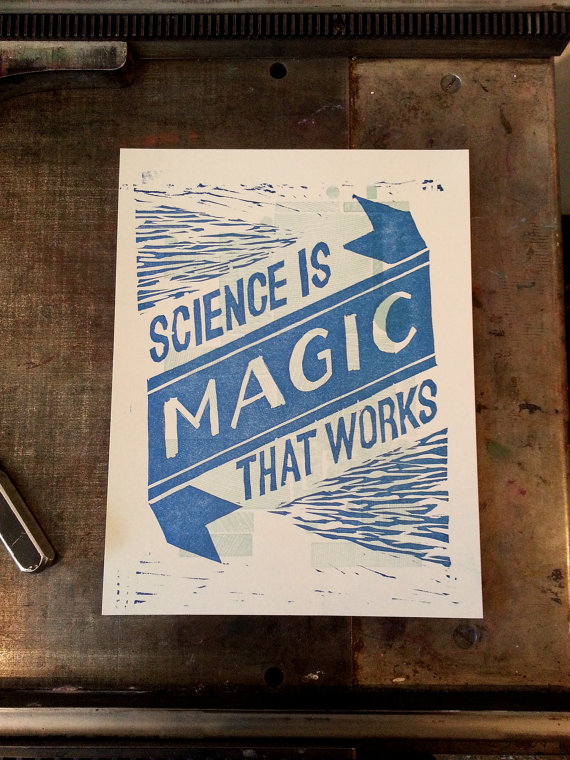
“New knowledge is the most valuable commodity on earth. The more truth we have to work with, the richer we become.” Yet Vonnegut doesn’t stop there. He follows this with a warning: “But most of us fear becoming richer.” The duality highlights the tension between curiosity and caution. Science, when divorced from moral guardrails, can lead to catastrophe. The quote challenges us to ask: Are we seeking truth for the sake of progress, or are we merely chasing power?
The Absurdity of Human Beliefs
“Bokononism was founded on a lie, and it worked.” This quote cuts to the heart of the novel’s satire. Religion, like science, is often built on assumptions and half-truths. Yet, if these beliefs bring people together, foster kindness, or provide meaning, does their origin matter? Vonnegut forces us to confront the pragmatism behind our most cherished convictions, suggesting that truth is less important than the stories we choose to live by.
The Fragility of Human Progress
“Everything was beautiful and nothing hurt.” This line, spoken in the context of the novel’s apocalyptic ending, is a cruel irony. It reflects the delusion of a world that believes it has conquered suffering through technology and faith. Yet, Vonnegut’s sarcasm is palpable. Progress is fleeting, and our achievements are as fragile as a child’s game of cat’s cradle. The quote lingers like a question: How much of our confidence in the future is justified?
Faith as a Survival Mechanism
“If I were a religious man, I would say that God has a sense of humor.” Science and religion often clash, but Vonnegut finds common ground in their shared absurdity. Both offer frameworks for understanding a chaotic world. The quote suggests that laughter might be the only rational response to the unpredictability of existence. Whether through divine intervention or cosmic joke, the universe remains a mystery—and perhaps that’s for the best.
The Hypocrisy of Human Nature
“I wanted all things to make sense. They never do, but I thought they could.” This confession reveals the universal longing for order in a disordered world. Science seeks patterns; religion seeks meaning. Yet both are ultimately human constructs, flawed and incomplete. The quote resonates because it mirrors our own struggles to reconcile the chaos around us with the order we crave.
The Power of Stories
“All of the true things I am about to tell you are shameless lies.” Vonnegut’s meta-commentary on storytelling underscores the power of narrative. Whether in science or religion, the stories we tell shape our reality. The quote is a playful jab at the notion of absolute truth, reminding us that even the most earnest beliefs are, at their core, stories we’ve chosen to believe.
The Inevitability of Change
“So it goes.” This recurring phrase in the novel is a nod to acceptance. Whether describing death, destruction, or the passage of time, it’s a mantra of resignation. Science and religion promise answers, but life remains unpredictable. The quote encapsulates the novel’s philosophy: some things are beyond our control, and that’s okay. It’s a call to embrace the uncertainty rather than fight it.
