What if the key to unlocking the mysteries of the world lay hidden in the words of a woman who dared to walk where few would tread? Alexandra David-Néel, the intrepid explorer, mystic, and scholar, spent her life unraveling the secrets of Tibet, blending adventure with deep spiritual insight. Her journey wasn’t just about crossing borders—it was about crossing into the heart of a culture that fascinated and bewildered the Western world. From the bustling markets of Lhasa to the silent peaks of the Himalayas, she chronicled her experiences with a pen as sharp as her wit. What lessons can we glean from her reflections on a land that was both a dream and a challenge to her? Let’s dive into ten of her most thought-provoking quotes about Tibet, each a window into a world where magic and reality intertwine.
The Magic of Tibetan Mysticism

Tibet wasn’t just a destination for Alexandra David-Néel—it was a living laboratory of the supernatural. She immersed herself in the practices of lamas, yogis, and mystics, documenting rituals that blurred the line between the ordinary and the extraordinary. “The Tibetan people,” she wrote, “live in a world where the invisible is as real as the visible.” This quote captures the essence of her fascination: Tibet was a place where prayer wheels spun with the wind, where mantras carried the weight of centuries, and where the veil between this world and the next seemed thinner than a monk’s robe. To her, the magic wasn’t just folklore—it was a way of life, a lens through which to see the universe.
The Challenge of the Unknown
David-Néel didn’t just observe Tibet from the safety of a scholar’s chair—she ventured into its heart, facing dangers that would deter the faint-hearted. “To know Tibet,” she mused, “one must first lose one’s way in its labyrinth of customs and beliefs.” Her words hint at the paradox of discovery: the more you seek to understand a culture, the more you realize how little you truly grasp. Tibet, with its rigid traditions and hidden spiritual practices, was a puzzle that demanded not just curiosity but courage. For those willing to take the leap, the rewards were immeasurable—yet the path was fraught with challenges that tested both body and mind.
The Silence of the Himalayas

There’s a quiet majesty to the Himalayas that David-Néel often described in her writings, a silence that speaks louder than words. “The mountains do not speak,” she observed, “but they teach those who listen.” This quote reflects her deep connection to the landscape, where the absence of noise became a teacher. In the stillness of the high-altitude air, she found clarity—a rare commodity in a world obsessed with constant chatter. For her, Tibet’s silence wasn’t empty; it was a canvas upon which the soul could paint its deepest reflections. It’s a reminder that sometimes, the most profound lessons come not from what we hear, but from what we choose to ignore.
The Paradox of Tibetan Hospitality

Tibetans are often romanticized as a people of unparalleled kindness, yet David-Néel’s experiences revealed a more complex reality. “Hospitality in Tibet is a sacred duty,” she noted, “but it is also a test of endurance.” Guests were treated with reverence, but the expectations were equally high. To refuse food or shelter was to insult the host, yet the demands of such generosity could be overwhelming. Her words challenge the idealized image of Tibetan warmth, exposing the tension between tradition and personal limits. Hospitality, in her view, wasn’t just about kindness—it was a cultural contract, one that demanded both grace and resilience from all involved.
The Illusion of the Exotic
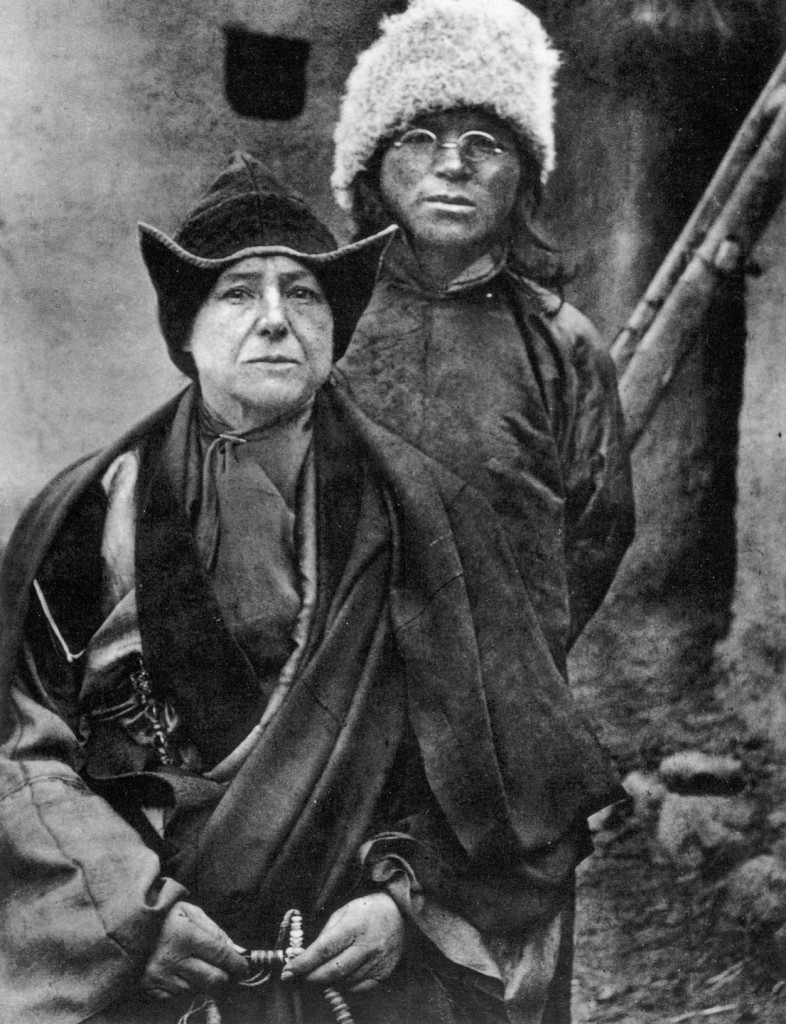
Westerners often viewed Tibet through a lens of exoticism, a land of dragons and hidden lamas. David-Néel, however, saw through the fantasy. “The real Tibet is not the one painted by travelers’ tales,” she cautioned, “but the one lived by its people.” Her words serve as a reality check, urging us to look beyond the stereotypes. The Tibet she knew was a place of hardship, devotion, and everyday struggles, not just a backdrop for adventure stories. For those who romanticize the Himalayas, her quote is a gentle (or not-so-gentle) nudge to dig deeper, to seek the truth beneath the surface. The exotic is often just the ordinary, dressed in unfamiliar clothes.