


Ernest Hemingway’s A Moveable Feast is a timeless memoir that captures the magic of Paris in the 1920s and the struggles and joys of writing. Through vivid prose and intimate reflections, Hemingway paints a picture of a city that shaped his craft and his life. The book is a treasure trove of wisdom, offering insights into creativity, discipline, and the art of storytelling. Whether you’re a writer, a dreamer, or simply a lover of Paris, these quotes will resonate deeply. Below, we explore ten powerful quotes from the memoir, each paired with an image that reflects the spirit of Hemingway’s words.
Paris as a Muse: Where Every Street Inspires
Hemingway often spoke of Paris as a living, breathing entity that fed his creativity. In A Moveable Feast, he writes about how the city’s energy seeped into his writing, turning even the simplest moments into stories. The cafés, the Seine, and the quiet streets became his classroom, teaching him the rhythm of life and art. This image of a Parisian café terrace captures the essence of those long afternoons spent scribbling in notebooks, surrounded by the hum of conversation and the clink of coffee cups.
The Discipline of Writing: Showing Up Every Day
One of Hemingway’s most enduring lessons is the importance of discipline in writing. He believed that talent alone wasn’t enough; it was the daily grind of putting words on paper that made a writer. This image of a vintage typewriter on a cluttered desk mirrors his relentless work ethic. Whether it was early morning or late at night, Hemingway showed up, knowing that consistency was the key to mastering his craft. His words remind us that greatness is built one sentence at a time.
Writing About What You Know: The Power of Authenticity
Hemingway’s advice to writers was simple: write about what you know. In A Moveable Feast, he emphasizes the importance of drawing from personal experiences to create authentic stories. This image of an open book with handwritten notes reflects the raw, unfiltered process of turning life into art. Whether it’s the people you’ve met, the places you’ve been, or the emotions you’ve felt, your own experiences are the richest source of material. Hemingway’s own work proves that truth often resonates more deeply than fiction.
The Struggle of the Blank Page: Embracing the Unknown

Every writer knows the dread of the blank page—the fear of not knowing where to begin. Hemingway faced this struggle too, but he learned to embrace it. In A Moveable Feast, he describes the anxiety of staring at an empty sheet of paper, unsure of what would come next. This image of a half-empty coffee cup next to a blank notebook captures that moment of uncertainty. Hemingway’s advice? Start writing anyway. The first sentence doesn’t have to be perfect; it just has to exist. From there, the story will unfold.
Friendship and Rivalry: The Writers Who Shaped Him
The literary circles of 1920s Paris were a mix of camaraderie and competition, and Hemingway was at the center of it all. In A Moveable Feast, he reflects on the friendships and rivalries that shaped his career, from Ezra Pound to F. Scott Fitzgerald. This vintage photo of Hemingway and Fitzgerald at a café table evokes the energy of those intellectual debates and shared meals. Hemingway’s relationships with other writers taught him as much about writing as his own experiments did. Their conversations, critiques, and even conflicts fueled his growth as an artist.
Paris in the Rain: Finding Beauty in Melancholy
Hemingway had a deep appreciation for the melancholic beauty of Paris, especially on rainy days. The city’s moodiness became a backdrop for his writing, adding depth and texture to his stories. Rainy afternoons in cafés, the sound of droplets on cobblestones, and the way the light filtered through wet windows—these were the moments that inspired him. His words remind us that even in sadness, there is a kind of beauty worth capturing, whether in life or on the page.
The Art of Omission: Less Is More in Writing
Hemingway was famous for his minimalist style, often omitting details to let the reader’s imagination fill in the gaps. In A Moveable Feast, he explains that a writer’s job isn’t to explain everything but to trust the reader to understand. This principle of omission is a lesson in restraint and precision. By focusing on the essentials, a writer can create a more powerful and immersive experience. Hemingway’s own prose proves that sometimes, what’s left unsaid speaks the loudest.
Writing as a Way of Life: The Joy of the Craft
For Hemingway, writing wasn’t just a profession—it was a way of life. He found joy in the act itself, whether it was the scratch of a pencil on paper or the clatter of a typewriter. In A Moveable Feast, he describes the satisfaction of a good writing session, the sense of accomplishment that comes from creating something new. This passion for the craft is evident in every word he wrote. His words remind us that writing isn’t just about the end result; it’s about the process, the discipline, and the love of the work itself.
The Legacy of Paris: A City That Never Leaves You
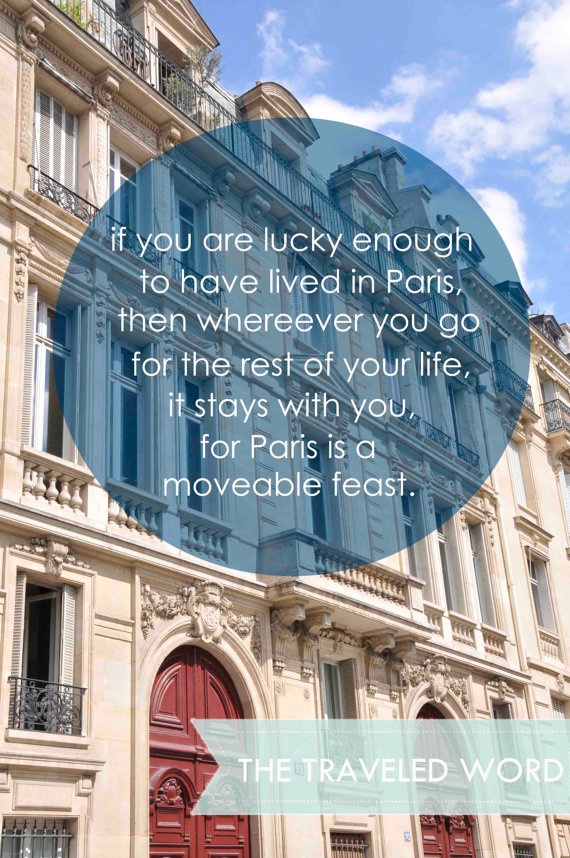
Paris wasn’t just a place for Hemingway; it was a state of mind. Even years after leaving the city, its spirit remained with him, shaping his writing and his identity. In A Moveable Feast, he captures the essence of Paris in a way that makes it feel eternal. The city’s magic isn’t just in its landmarks or its history—it’s in the way it changes you, the way it becomes a part of you. Hemingway’s memoir is a love letter to Paris, a reminder that some places leave an indelible mark on the soul.
Writing for the Sake of Writing: The Purest Motivation
Hemingway often wrote for the love of writing itself, not for fame or fortune. In A Moveable Feast, he reflects on the purity of creating art for its own sake. This mindset freed him from the pressures of success and failure, allowing him to focus on what truly mattered: the act of writing. His words are a reminder that the best art comes from a place of passion, not obligation. Whether you’re a seasoned writer or just starting out, Hemingway’s advice is clear: write because you love it, not because you expect anything in return.
