Apologies are powerful—not just for the person receiving them, but for the one offering them. Yet, waiting for an apology can feel like standing in a storm, arms outstretched, hoping for shelter that never comes. What if the real shift isn’t in waiting for someone else to change, but in reclaiming your own peace? These ten quotes aren’t just words; they’re invitations to let go, to move forward, and to recognize that your strength isn’t tied to someone else’s remorse. They challenge the idea that closure must come from an external source, and instead, point toward the quiet power of self-liberation.
Never Apologize for Showing Feeling
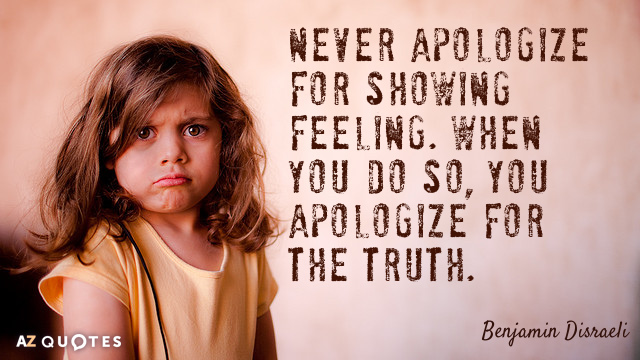
Emotions aren’t weaknesses—they’re signals. Benjamin Disraeli’s words remind us that authenticity isn’t something to hide or regret. Waiting for an apology often means suppressing your own truth in the hope of receiving validation from someone else. But what if your feelings are already valid, regardless of their response? This quote flips the script: instead of seeking an apology, it encourages you to honor your emotions first. The freedom comes when you stop measuring your worth by someone else’s willingness to acknowledge their mistakes.
It Isn’t Always About You

Apologies can feel like a mirror, reflecting back our own pain and making us question our worth. Byron Pulsifer’s insight reframes the narrative: sometimes, an apology isn’t about you at all. It’s about the other person’s inability to take responsibility, their fear, or their own unresolved issues. Recognizing this doesn’t excuse poor behavior, but it does shift the burden from your shoulders. When you realize that their failure to apologize isn’t a reflection of your value, you reclaim the power to define your own peace.
Generosity Starts with Self-Respect

Jacqueline A. Bussie’s words cut to the heart of the matter: true generosity begins with self-respect. Waiting for an apology can feel like an act of generosity—extending grace to someone who hasn’t earned it. But what if that generosity is misplaced? What if it comes at the cost of your own well-being? This quote challenges the idea that forgiveness requires self-sacrifice. Instead, it suggests that the most generous thing you can do is honor your own needs first. An apology, when it comes, will be a bonus—not a necessity for your happiness.
Mistakes Are Lessons in Disguise

Bruce Lee’s philosophy turns mistakes into teachers. Waiting for an apology can feel like an endless loop of replaying past wrongs, but what if those wrongs are simply lessons in disguise? This quote reframes failure as a stepping stone, not a life sentence. It suggests that the real growth happens when you stop fixating on the apology and start focusing on what you’ve learned. The person who wronged you may never change, but your ability to rise above their actions is entirely within your control.
Apologizing Isn’t Always the Answer

Mark Matthews’ words challenge the assumption that an apology is the ultimate resolution. Sometimes, it’s not. Sometimes, the healthiest response is to walk away, to set boundaries, or to simply accept that some people won’t change. This quote isn’t about giving up—it’s about recognizing when an apology is just a bandage over a deeper issue. It’s about understanding that your peace isn’t contingent on someone else’s remorse. The real strength lies in knowing when to prioritize your own well-being over the empty gesture of an apology.
The Freedom of Letting Go
Letting go of the need for an apology isn’t about condoning hurtful behavior—it’s about freeing yourself from its grip. When you release the expectation of remorse, you take back the power that was never theirs to hold. This isn’t resignation; it’s liberation. It’s the realization that your happiness isn’t hostage to someone else’s actions. The moment you stop waiting, you start living on your own terms. The apology, when it comes, will be a gift—not a necessity for your peace.
Your Worth Isn’t Up for Debate
Waiting for an apology often means bargaining with your own worth. What if you’re already enough? What if your value isn’t something that needs to be earned through someone else’s remorse? This quote is a reminder that your worth is inherent, not conditional. It’s a call to stop negotiating with people who refuse to meet you where you stand. The right people will recognize your value without you having to prove it—and those who don’t? Their lack of apology says more about them than it ever could about you.
Time Doesn’t Heal All Wounds—You Do
Time alone doesn’t heal wounds—your actions do. Waiting for an apology is like leaving a wound open, hoping it will close on its own. But healing requires intention. This quote shifts the focus from passive waiting to active recovery. It’s about taking the steps to mend what’s been broken, whether that’s through self-care, distance, or simply choosing to move forward. The apology may never come, but your ability to heal? That’s entirely in your hands.
Strength Isn’t Measured in Forgiveness
Society often equates strength with forgiveness, but true strength lies in knowing when to walk away. This quote challenges the narrative that you must always extend grace, even when it’s undeserved. It’s about recognizing that your resilience isn’t defined by your ability to overlook wrongs, but by your ability to rise above them. The apology may never come, but your strength? That’s something no one can take from you.
The Last Word Isn’t Yours to Give
Waiting for an apology often means handing over the last word to the person who hurt you. But the story isn’t theirs to control. This quote is a reminder that you hold the pen to your own narrative. You decide when to close the chapter, when to turn the page, and when to walk away entirely. The apology may never come, but your ability to reclaim your story? That’s the ultimate power.