Fritz Lang, the master of German Expressionism and film noir, left behind a legacy of cinematic brilliance that continues to haunt and inspire. His words, like his films, are steeped in darkness, vision, and an unrelenting exploration of human nature. Here are ten quotes that capture his unique blend of poetic dread and philosophical insight.
The Illusion of Control and the Machinery of Fate
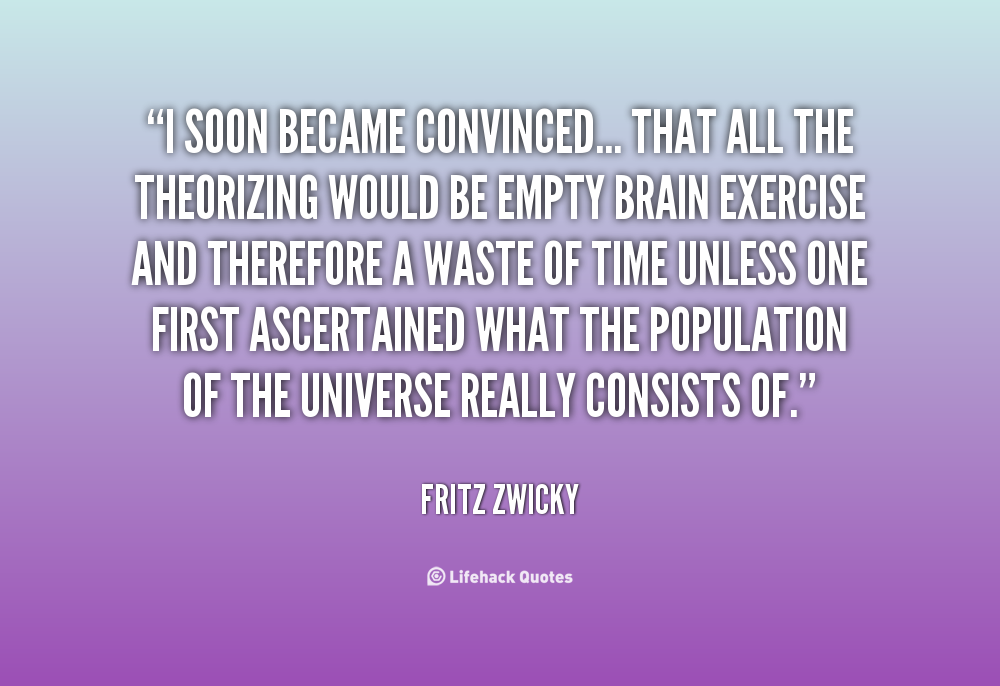
Lang often depicted humanity as a fragile construct, dwarfed by forces beyond its comprehension. This quote reflects his fascination with the unseen mechanisms that govern our lives—whether fate, technology, or the darker corners of the human psyche. The imagery of being “convinced” speaks to the slow, creeping realization that control is an illusion, a theme that permeates his films like *Metropolis* and *M*.
The Power of the Visual: When Words Fail, Images Speak
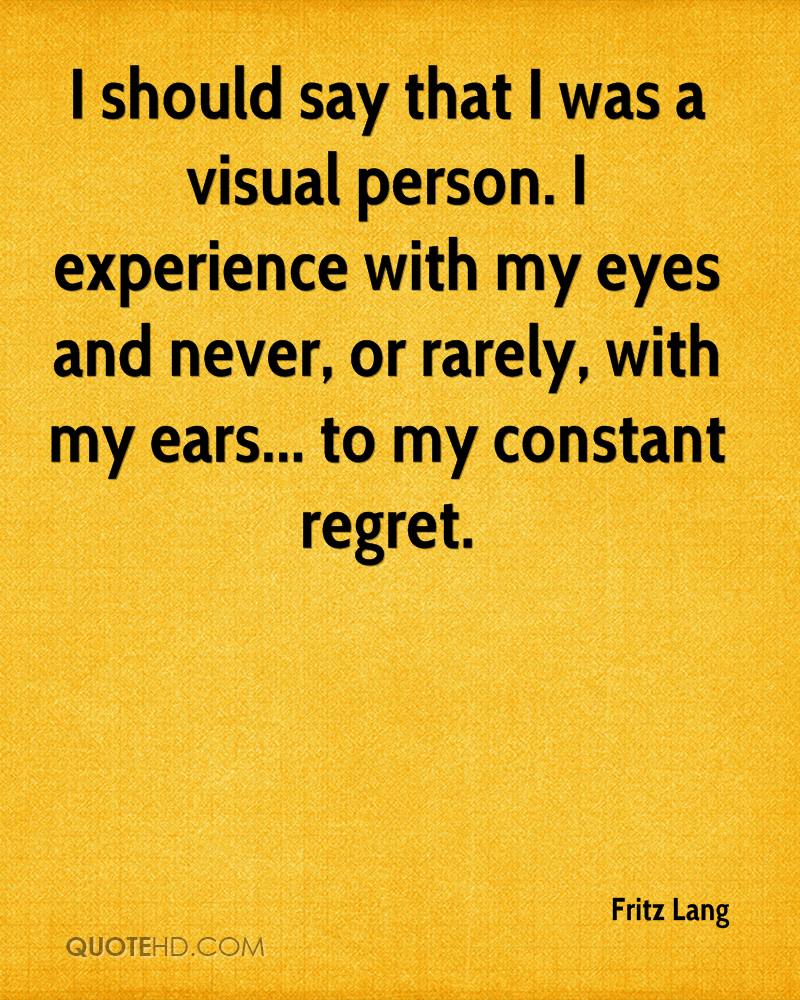
Lang’s genius lay in his ability to translate abstract emotions into stark, unforgettable visuals. This quote underscores his belief in the primacy of imagery over language—a philosophy that defined his filmmaking. For him, cinema was not just a medium but a language of its own, capable of conveying truths that words could never capture. The quote itself becomes a visual metaphor for the way he saw the world: fragmented, symbolic, and endlessly suggestive.
The City as a Living Nightmare
Lang’s urban landscapes were never just backdrops; they were characters in their own right—cold, oppressive, and teeming with unseen horrors. The city in his films is a place of alienation, where anonymity breeds both freedom and terror. This visual metaphor speaks to the way modernity strips away individuality, leaving only the hollow echoes of human existence. The city, in Lang’s eyes, is a machine that grinds its inhabitants into submission, a theme that resonates in *M* and *The Testament of Dr. Mabuse*.
The Criminal as a Mirror of Society

Lang’s films often blurred the line between law and lawlessness, suggesting that the criminal is not an aberration but a product of the society that creates them. This portrait of the director hints at his deep engagement with the psychology of deviance, a theme that reaches its apex in *M*, where the hunt for a child murderer becomes a dissection of collective guilt. For Lang, crime was less about morality and more about the fractures in the social fabric—cracks through which darkness seeps in.
The Machine as a Metaphor for Humanity’s Downfall
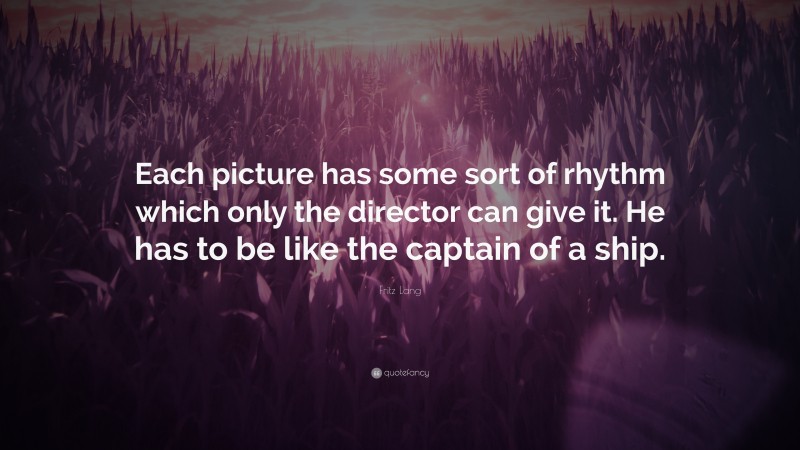
Lang’s obsession with machinery—whether in *Metropolis* or *Woman in the Moon*—was never just about technology. It was about the way machines reflect and amplify human flaws, turning progress into a force of dehumanization. This quote, with its emphasis on rhythm and inevitability, suggests a world governed by cycles beyond our control. The machine, in Lang’s vision, is both a tool and a tyrant, a paradox that lies at the heart of modernity.
The Mask of Respectability and the Rot Beneath
Beneath the veneer of civilization, Lang saw only chaos. His films peel back the layers of respectability to reveal the primal instincts lurking just beneath the surface. This quote, with its suggestion of hidden convictions, mirrors the way his characters often mask their true natures—until the mask slips, and the abyss stares back. The tension between order and anarchy is a constant in his work, a duality that makes his films as unsettling as they are compelling.
The Uncanny Power of the Unseen
Lang’s films are filled with moments where the unseen becomes terrifyingly real—a child’s voice in the dark, a shadow on the wall, a whisper in the crowd. This quote, with its focus on the visual and the experiential, hints at his belief in the power of the intangible. For Lang, the most haunting truths are those we cannot see but can feel—the dread of the unknown, the weight of fate, the inevitability of decay.
The Artist as a Prophet of Doom
Lang saw himself, and artists like him, as prophets of a coming darkness. His films were not just entertainment but warnings, predictions of a world hurtling toward self-destruction. This image of Lang captures the intensity of his gaze—a look that seems to pierce through the present into a future shrouded in shadow. His work is a testament to the artist’s role as a chronicler of human folly, a role he embraced with unflinching honesty.
The Eternal Dance of Light and Shadow
Light and shadow were not just visual techniques for Lang; they were moral forces. His films use chiaroscuro to highlight the duality of human nature—good and evil, order and chaos, truth and deception. This portrait of Lang, bathed in contrast, embodies the tension that defines his work. The interplay of light and dark is a metaphor for the struggle within us all, a struggle that Lang captured with unparalleled precision.
The Legacy of a Visionary
Lang’s words and films continue to resonate because they tap into something fundamental about the human condition: our fear of the unknown, our fascination with darkness, and our desperate need for meaning in a chaotic world. His vision was not just dark—it was prophetic, a mirror held up to society that reflected its deepest anxieties. To engage with Lang’s work is to confront the shadows within ourselves, and in doing so, to understand the power of cinema as a medium of truth.