


In the quiet hum of creativity, there exists an unspoken dialogue between geometry—the precise order of lines and angles—and imagination, the boundless land of “what could be.” This paradox has captivated thinkers, artists, and dreamers for centuries. Geometry, with its cold perfection of fractals and mandalas, seems a sharp contrast to the fluid, ever-shifting realms of the mind. Yet, within those rigid frameworks lie echoes of the infinite, a silent invitation to transcend the visible and explore the intangible. Here are ten profound observations that weave geometry’s structured rhythm into the tapestry of the imagination, revealing why the two feel destined to dance together.
—
A Canvas of Order in Chaos
Order doesn’t stifle imagination; it liberates it. Geometry provides the scaffolding that gives form to chaos, much like the first faint sketches that precede a masterpiece. Leonardo da Vinci observed that “art is never finished,” but geometry shows us that even in its imperfections, structure reveals beauty. The more rigid the lines, the more the mind seeks to fill their intersections with color, meaning, and life. These empty spaces become battlegrounds for the imagination to claim as its own, proving that constraints are not barriers but launchpads.
—
The Sacred Mandala: Where Forms Converse

Sacred geometry, with its sacred mandalas and golden ratios, isn’t just an artistic flourish—it’s a dialogue between two kinds of knowing: the rational and the mystical. A mandala’s perfect circles and fractals act as a mirror, reflecting back our desire to see meaning where there’s only shape. These designs don’t just decorate; they *resonate*. Placed on altars or in meditative spaces, they transform ordinary attention into a journey toward something greater. In them, imagination discovers a language where geometry whispers back, “The limits you perceive? They’re just the edges of your own perception.”
—
Geometry’s Archetype of Beauty

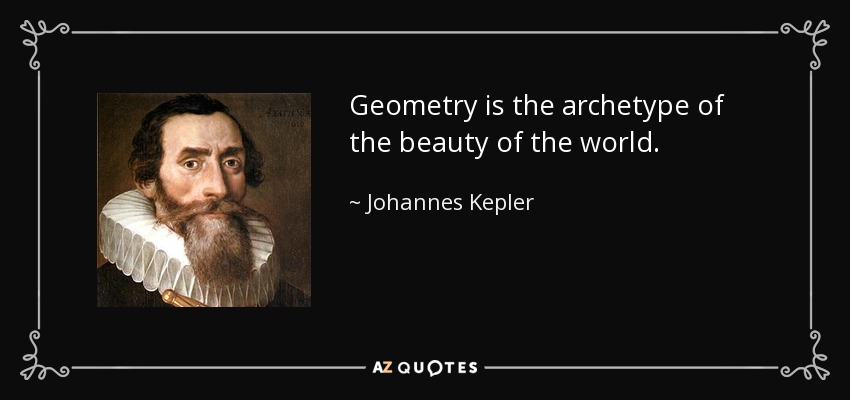
Johannes Kepler believed geometry was “the arithmetic of the visible world,” yet his words also feel like a love letter to imagination. Geometry doesn’t just *describe* beauty; it *reveals its secrets*. Observe how the sunflower’s seed patterns mirror the Fibonacci spiral or how seashells spiral toward their own center—these are rules hidden in nature, waiting for the mind to recognize the genius of their design. The artist or scientist who gazes upon them doesn’t merely see shapes; they glimpse a cosmic language that says, “The world is a shape you can understand if you stretch your mind beyond its limits.”
—
The Boundless World Beyond Limits
Rousseau’s famous declaration—that “the world of reality has its limits, but the world of imagination is boundless”—finds its truest ally in geometry. A single line can be a horizon or a gateway; a sphere can be an orb of light or a universe untraveled. Geometry asks us to begin with constraints and shows us that from them arises the extraordinary. The grid provides the “yes” to every new idea, ensuring that even visions of infinity can be anchored to something tangible. In this balance, creativity doesn’t flee into wild abstraction; it grows, nourished by the geometry that holds its dreams in steady equilibrium.
—
Imagination’s Golden Thread

Nikola Tesla’s vision was both a masterpiece of geometry and an act of defiance against the limits of perception. His drawings of Tesla coils and spirals weren’t merely technical; they were explorations of invisible currents, of forces that required imagination to even hypothesize. Every angle he carved into reality was an invitation to see beyond what the naked eye could handle. For Tesla, geometry wasn’t a tool—it was a portal. It taught the mind to visualize what couldn’t yet be touched, to feel the electric charge of ideas that hadn’t yet taken real form. In this interplay, imagination isn’t just a spectator; it’s a co-creator, using geometry as its compass to navigate unknown terrains.
The connection between geometry and imagination reminds us that some of life’s most profound explorations begin with something as simple as a straight line drawn with intent. What we call ‘imagination’ might only be the boldest act of geometry—to stretch beyond the given, to see the infinite in what was once finite.
