


Opening Lines
There are moments in life when the world narrows to a whisper—where words fail to echo kindness back into your soul. You stand in that vulnerable space between doubt and desire, wondering if words could ever capture the weight of the love that lingers even in the smallest, quietest corners of your existence. What happens when those you once trusted seem to fade into unrecognizable shadows? What if the very people meant closest turn cold, and the mirror reflects a face that feels unworthy of tenderness? Love, it turns out, doesn’t always scream its presence with grand gestures. Sometimes, it thrives in the silence of repeated patience, in the refusal to surrender despite the walls someone else erects.
In these still, uncertain places between self-doubt and self-acceptance, love might look like a decision—and nothing more. It might look like choosing, over and over again, to place your hand in yours despite the cracks. If you’ve ever felt unseen, overlooked, or flatly unloved, there is still power in the quiet act of loving *back*—even when it feels impossible. The journey doesn’t change from difficult to easy; but it can transform from a struggle against loneliness to a dance with possibility. Below are ten words woven to nudge perspective, to remind that love, both given and received, rarely walks in perfect lines. They’re not band-aids for years of hurt, but markers on a path that’s yours to travel.
How the Right Words Rewrite the Unwanted into Worth
Unlove isn’t a diagnosis—especially not one sealed by you. The first step to rewriting the story of a heart that seems perpetually unloved isn’t in grand declarations, but in the daily refusal to accept the role assigned to you in someone else’s narrative. Someone may leave a trail of sharp words behind like a path of broken promises, but words like “unlovable” are echoes meant only for the lonely. Here’s the secret they’ll never tell you: You’re not a burden waiting for compassion. You’re not a mistake to be discarded. You’re a soul asking, again and again, to be treated like a living story worth staying for.
Loving the Unlovable Plant in the Unseen Things

The soil, though never praised by human hands, sustains the flower. This is the kind of love that builds slowly, without spectacle, with roots that grow in the spaces others refuse to nurture. The world will tell you to judge the value of a love by its immediate fruitfulness—laughter after conflict, roses after drought. But some plants grow only in the cracks of broken promises. And you? You are the soil in this metaphor, though you’ve never been asked for your perspective. The act of loving the “unlovable” isn’t about fixing their flaws. It’s about planting your hands on the earth underneath and believing that even the smallest green shoots are answers in themselves.
The Art of Loving Without Erasing the Edge
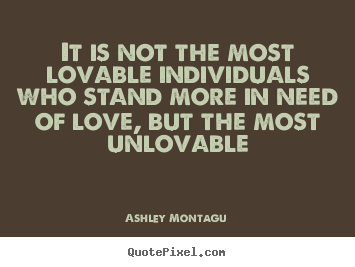
Here’s the paradox of loving those who make you feel unseen: the more you soften for them, the clearer it becomes that tenderness wasn’t requested. It was stolen. Loving the unlovable person isn’t about turning them into someone they aren’t; it’s about refusing to become what they’ve asked you to be—in silence. There’s no growth in bending your own edges to fit a gap they refuse to fill. Love, once you’ve been taught to measure it only by its echoes, learns to stand on its own—not waiting for applause, but flourishing anyway. You don’t change their definition of your worth. You simply declare your own existence in the language of the things they can’t give: time spent, doors opened, and spaces held for their arrival.
Walls Are Not the Wall You’re Against

The art of loving the unlovable begins with a crucial distinction: your work isn’t to convince them that walls are unnecessary. Their walls haven’t built themselves to keep others out—they were erected specifically to keep them out of yours. Some people live their lives as questions: Why should I give what was taken? Why should I risk what’s fragile? And your choice here, in those moments of quiet and doubt, is to say: you don’t get to decide what you’re permitted to heal. Loving them, as much as it feels like a gesture, is also a declaration of independence—you refuse to be their therapist, their therapist, or their last recourse. You’re choosing simply to exist, unapologetically, as more and less than their need for you.
The Unspoken Rules Don’t Have All the Words

How do you love someone who measures you in moments alone, in unreturned calls, in the absence of a word? The problem isn’t that they weren’t willing; it was that no unreturned question has ever received a satisfactory answer. Love, in this context, does not exist in perfect correspondence. It lives in the stubborn refusal to let silence decide your value. Some souls walk with you in shadows, not seeking light but refusing its absence. Your hands, your heart—these are weapons in a war you’ve never been called for, but neither can you retreat now. Love, in what seems like its most impossible form, is the quiet belief that you won’t grow weary before they do.
