


What if the very fatigue that tires us could secretly hold the key to something far greater? When life’s pace slows, the mind quiets—and in that stillness, gratitude doesn’t just find you; it rewires you. The following quotes aren’t just reminders to feel grateful. They’re invitations to unlock a hidden reserve of energy, one perspective at a time. For those on the verge of being exhausted by promises—or drained by the weight of what lies ahead—these words are lighthouses in the fog, signaling the possibility of transformation even while you’re flat out.
When the Burden Feels Immutable

What if what we call exhaustion isn’t the proof we’re overmatched but the raw material for something else? The truth is, there’s a quiet power in gratitude that doesn’t ask for extra strength—it reclaims it. This principle is precisely what Melody Beattie speaks to: the moment you surrender yourself to gratitude, what felt heavy becomes a pivot. You don’t need to push harder; you only need to adjust your focal point. Where you once saw depletion, you’ll begin to recognize the seeds of resilience. Those moments of weariness are exactly where transformation begins.
The Lightness of Saying What Is

Gratitude isn’t confined to grand gestures; it often hides in the most unassuming spaces. The day you stop demanding energy and simply *acknowledge* whatever’s here—even fatigue—is the day you start rewriting what your limitations are. This isn’t about forcing yourself to find joy where there isn’t any; it’s discovering appreciation in the very ordinary, the unchanging, and perhaps most of all, in the recognition that rest, like breath, is necessary. That small shift from ‘I can’t’ to ‘this is what I have now’ is where gratitude unlocks a door you never knew needed a key.
Finding the Strength in What’s Stuck
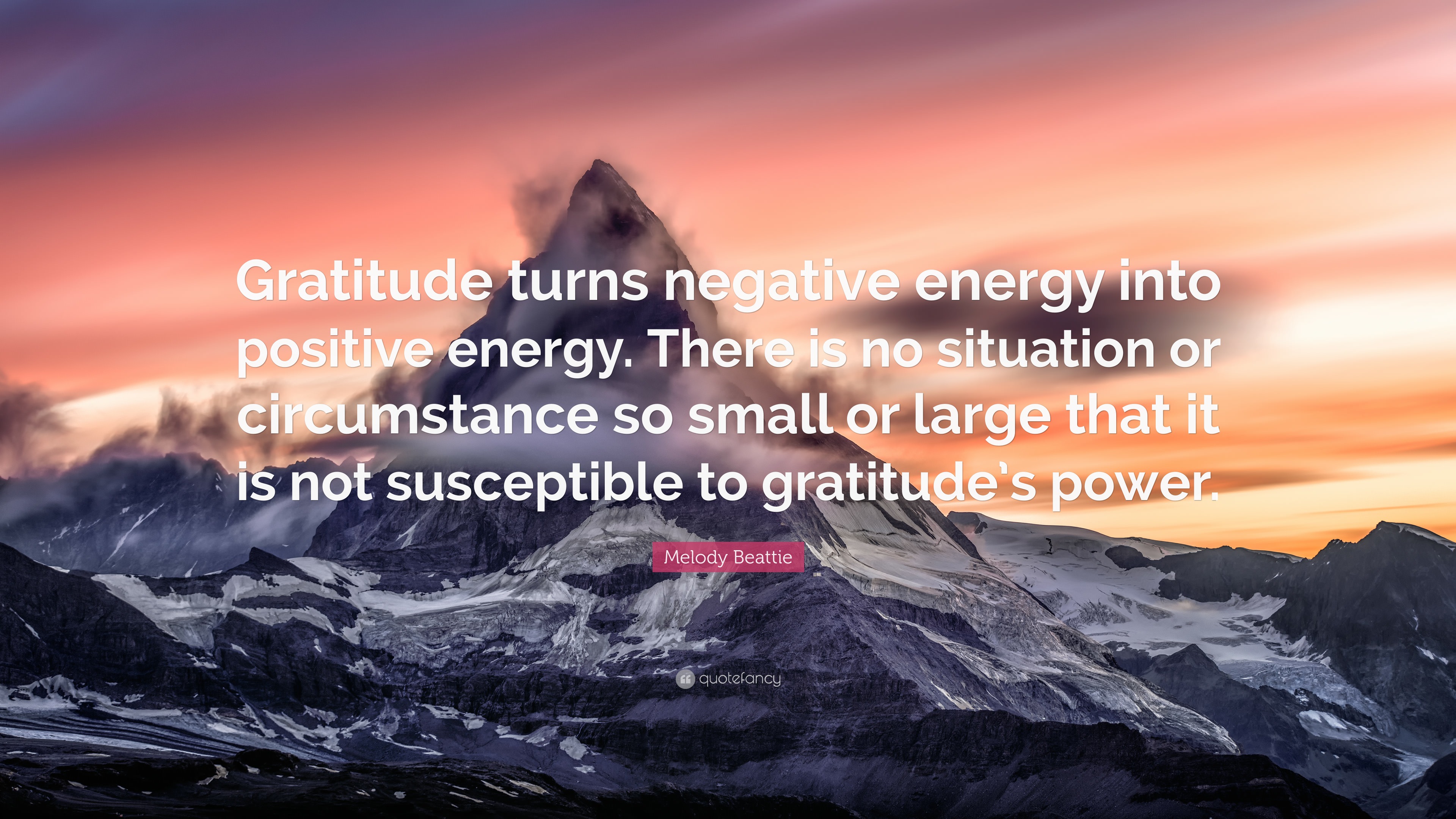
Energy is fluid. Stagnation is just the pause before flow. When you’re at your lowest, gratitude can function like a chemical reset button—turning weariness not into a permanent condition but into a compass. Start with small, fleeting moments: the taste of coffee, the warmth of light, the stillness of this exact spot you’re occupying. You don’t need to feel inspired or invigorated to practice gratitude; you just need to notice. There’s a vast difference between *knowing* you’re capable of rest and *leaning* into it. The former holds you; the latter allows you to bend without shattering.
Energy Lives Beyond What You Perceive

It’s easy to believe that exhaustion defines your capacity—but gratitude whispers that your perception is all you control. Instead of resenting the lack of energy, consider this: every time you direct gratitude toward the present, you’re drawing resources from an invisible well. These acts become the very fuel you’ve been searching for. Even saying, *‘I’m grateful to finally be pausing’* shifts the terrain from scarcity to sufficiency. You’re not trying to fix energy; rather, energy is adjusting within the framework of your gratitude. And in that adjustment, something unexpected happens: you realize the energy you’ve been missing might have been hiding in plain sight.
This Isn’t About What You Own, It’s About What You Notice

Invisibility is the enemy of gratitude. Fatigue, especially when chronic, has a way of erasing everything except its own force—and until you give gratitude permission to *enter* that space, it cannot do its work. Start with fragments: the way the floor feels beneath your foot, the air passing through an open window, the act of pausing the clock for a moment. Gratitude isn’t the antidote to energy scarcity; it is the medium through which you can reframe scarcity into discovery. By practicing this mindfulness—not in spite of exhaustion but right *because* of it—you gradually recalibrate what ‘having’ and ‘lacking’ mean. Suddenly, what felt like exhaustion becomes a portal, not a prison. And this moment, just like any other, is worth treasuring.
javascript
