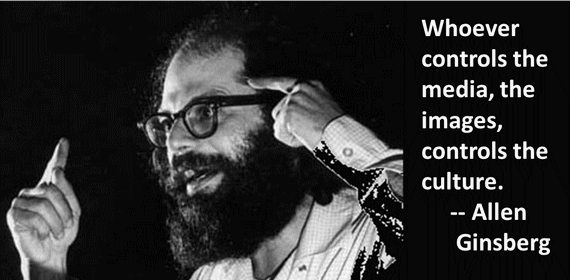
Allen Ginsberg’s *Howl* is more than a poem—it’s a seismic eruption of raw emotion, a howl that pierces the veil of societal silence. Written in 1955 and published in 1956, this masterpiece of the Beat Generation doesn’t just describe madness; it embodies it, dances with it, and ultimately transcends it. Ginsberg’s words are not mere lines on a page; they are incantations, spells cast to awaken the sleeping conscience of America. Here, we explore ten of his most haunting and hypnotic lines from *Howl*, each a window into the soul of a generation that refused to be silenced.
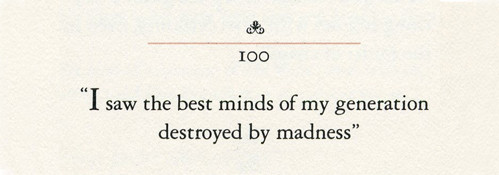
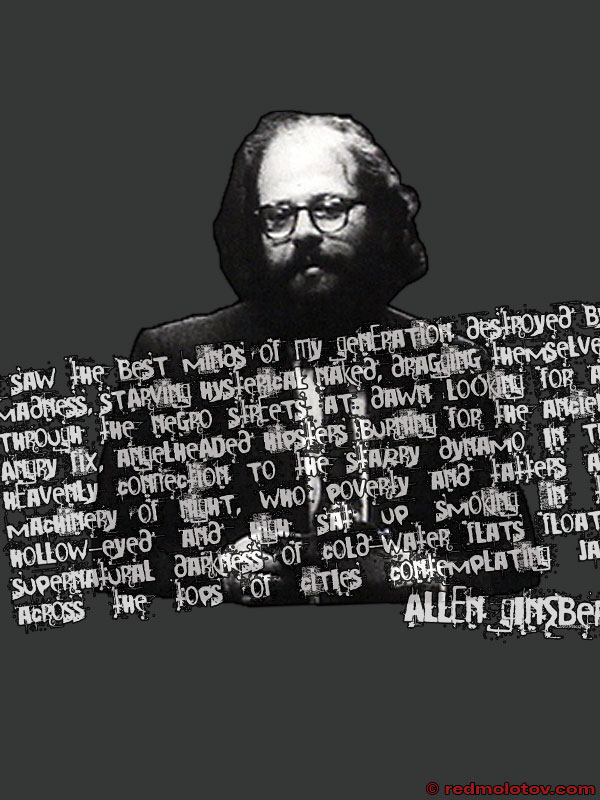
The Moloch of Conformity: “I saw the best minds of my generation destroyed by madness”
This opening line is a dagger to the heart of societal expectations. Ginsberg doesn’t just lament the loss of brilliance; he screams it into the void, as if the very act of creation is an act of rebellion. The “Moloch” he invokes—a biblical demon of child sacrifice—becomes a metaphor for the insatiable, devouring machine of conformity that grinds down the free-spirited into dust. It’s a howl of defiance against a world that demands uniformity over authenticity.
The Electric Body: “who poverty and tatters and hollow-eyed and high sat up smoking in the supernatural darkness of cold-water flats floating across the tops of cities”
Here, Ginsberg paints a portrait of the outcasts, the dreamers, the poets who haunt the margins of society. The image of bodies “floating across the tops of cities” suggests both transcendence and isolation—these are the souls who refuse to be tethered to the ground. The “supernatural darkness” of their surroundings is not a curse but a sanctuary, a place where the electric charge of their existence burns brighter than the sterile lights of mainstream life.
The Sacred Grotesque: “who cowered in unshaven rooms in underwear, burning their money in wastebaskets and listening to the Terror through the wall”
In this line, Ginsberg embraces the grotesque as a form of holiness. The act of burning money—symbolizing both waste and sacrifice—is a ritual of defiance against capitalism’s cold grip. The “Terror through the wall” could be the specter of conformity, the fear of being found out, or the crushing weight of societal judgment. Yet, in this squalor, there is a strange purity, a raw honesty that the polished world can never replicate.
The Visionary Madness: “who were expelled from the academies for crazy & publishing obscene odes on the windows of the skull”
Ginsberg doesn’t just challenge authority—he dismantles it with a sledgehammer made of words. The “windows of the skull” are the fragile barriers between sanity and vision, between the accepted and the forbidden. To be expelled for “crazy” poetry is to be crowned with the thorns of prophecy. These are the voices that see beyond the veil, the poets who write not for applause but for the sheer, electric thrill of truth.
The Alchemy of Suffering: “who howled on their knees in the subway toilet sobbing to the holy chiliad of the cosmos”

In the subway toilet—a place of filth and anonymity—Ginsberg finds a cathedral. The “holy chiliad” (a thousand-fold holiness) is not some distant deity but an intimate, almost claustrophobic presence, felt in the sobs of the broken. This is the alchemy of suffering: turning despair into divinity, turning the mundane into the sacred. The subway becomes a modern-day Gethsemane, where the lost and the broken kneel not in defeat but in ecstatic communion with the infinite.
The Molten Core of Desire: “who let themselves be fucked in the ass by saintly motorcyclists, and screamed with joy”
Ginsberg’s language here is unapologetically visceral, a howl that refuses to sanitize the raw edges of human experience. The “saintly motorcyclists” are the rebels, the outlaws, the ones who ride the line between salvation and damnation. To be “fucked in the ass” is not just a sexual act but a metaphor for surrender, for the ecstatic loss of control that comes with true freedom. The scream of joy is the sound of breaking chains, of embracing the chaos that lies beneath the surface of polite society.
The Cosmic Laughter: “who wandered around and around at midnight in the railroad yard contemplating jazz”
The railroad yard is a liminal space, a place where tracks converge and diverge, where journeys begin and end. Ginsberg’s wanderers are not lost—they are explorers of the in-between, the ones who find meaning in the spaces where others see only emptiness. Jazz, with its improvisational spirit, becomes the soundtrack of their existence. It’s a music of chaos and harmony, of freedom and structure, much like the poem itself. Here, even the midnight hour is not a time of fear but of revelation.
The Sacred Prostitution: “who were burned alive in their innocent flannel suits on Madison Avenue afternoon!”
Madison Avenue is the heart of consumer culture, where innocence is not a virtue but a commodity to be sold and burned. Ginsberg’s imagery is brutal, almost apocalyptic. The “innocent flannel suits” are the uniforms of conformity, the masks worn by those who have sold their souls for the illusion of success. To be “burned alive” is to be consumed by the very system that claims to elevate them. Yet, in this destruction, there is a strange liberation—a phoenix rising from the ashes of a hollow life.
The Eternal Return: “who were expelled from the academies for crazy & publishing obscene odes on the windows of the skull”
Repetition is a hallmark of Ginsberg’s incantatory style, and this line echoes the earlier one, reinforcing its power. The “windows of the skull” are not just barriers but portals—places where the mind’s eye can peer into the infinite. To publish “obscene odes” here is to defy not just the academy but the very concept of censorship. It’s a declaration that truth, no matter how uncomfortable, must be shouted into the void, over and over, until the echoes never fade.
The Final Howl: “who howled on their knees in the subway toilet sobbing to the holy chiliad of the cosmos”
The subway toilet, the midnight railroad yard, the burning flannel suits—these are not just images but rituals, acts of devotion to a world that has forgotten how to listen. Ginsberg’s howl is not a cry of despair but a summoning, a call to the lost and the broken to rise up and reclaim their place in the cosmos. It’s a poem that doesn’t just describe the human condition; it *is* the human condition, raw, unfiltered, and unapologetic. To read *Howl* is to hear the echo of that howl in your own chest, a reminder that sometimes, the only way to be heard is to scream.