What if the key to understanding human behavior isn’t hidden in the depths of the human psyche, but in the simple, observable actions we take every day? B.F. Skinner, the pioneering psychologist behind operant conditioning, spent his career unraveling the mysteries of behavior—proving that rewards and consequences shape who we are far more than we might realize. His ideas might just make you question whether free will is an illusion or a carefully constructed illusion. Dive into these 10 thought-provoking quotes from Skinner that challenge conventional wisdom and invite you to see behaviorism in a whole new light.
The Power of Reinforcement: Why Rewards Shape Our World

Skinner’s work revolves around the idea that behavior is driven by consequences. This quote underscores how reinforcement—whether positive or negative—acts as the invisible hand guiding our actions. Ever wonder why you keep checking your phone? Skinner would argue it’s because the dopamine hit from notifications acts as a powerful reinforcer. The next time you feel compelled to repeat a behavior, ask yourself: what’s really driving it?
Beyond Free Will: Is Behavior Really a Choice?

Skinner famously questioned the very notion of free will, suggesting that our actions are the result of environmental conditioning rather than conscious choice. This quote forces us to confront an uncomfortable truth: if our behaviors are shaped by external factors, how much control do we truly have over our lives? The next time you justify a decision by saying, “I chose this,” pause and consider Skinner’s perspective.
The Real Problem Isn’t Thinking—It’s Behavior
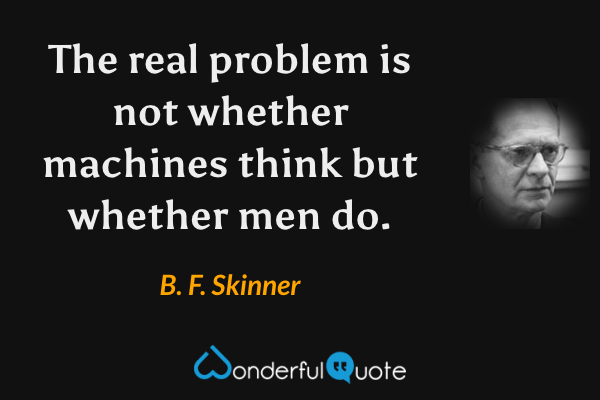
Skinner’s focus on behavior over internal processes like thinking or feeling might seem radical, but it’s a cornerstone of his theory. He argued that the obsession with whether machines or humans can “think” distracts from the more pressing question: what are we actually doing? If you’ve ever caught yourself overanalyzing a decision instead of taking action, Skinner would likely tell you to stop theorizing and start observing.
Education Through Reinforcement: How Rewards Shape Learning

Skinner’s principles extend far beyond psychology labs—they’ve revolutionized education. This quote hints at how rewards can mold learning, for better or worse. Ever crammed for a test just to get a good grade? That’s reinforcement in action. But Skinner would caution against over-relying on external rewards, which can sometimes undermine intrinsic motivation. The challenge? Finding the balance between encouragement and genuine engagement.
Behaviorism in Action: Why Punishment Often Backfires
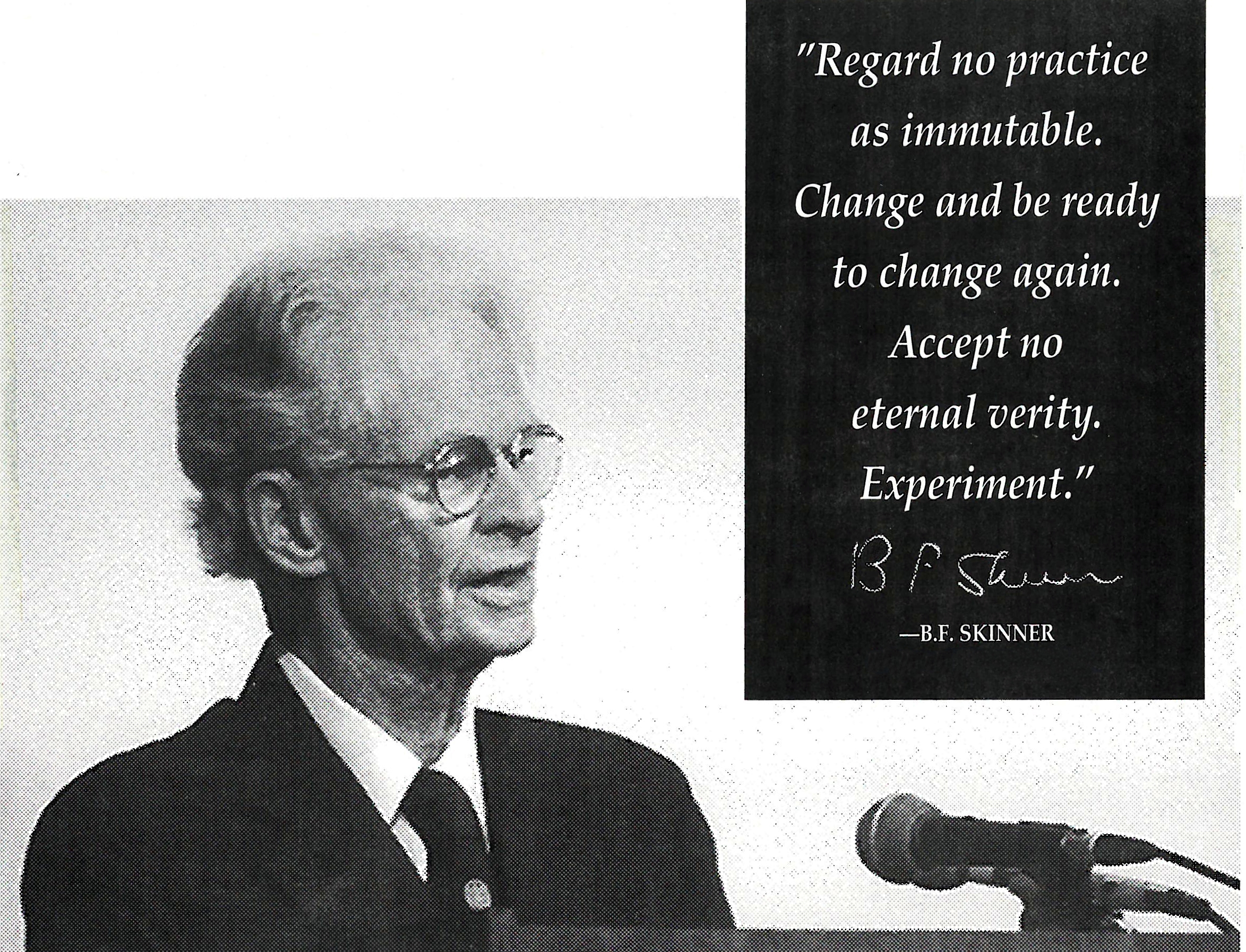
Skinner wasn’t a fan of punishment as a behavior modification tool. Why? Because it often fails to address the root cause of behavior and can even reinforce negative actions. Ever noticed how scolding a child for acting out sometimes makes the behavior worse? Skinner would argue that punishment rarely teaches—it just suppresses temporarily. The real solution? Positive reinforcement that guides behavior toward desired outcomes.
The Illusion of Control: How Environment Dictates Behavior
If you’ve ever blamed yourself for failing to stick to a New Year’s resolution, Skinner would tell you to look at your environment instead. His work shows that our surroundings—from the people we spend time with to the spaces we occupy—play a massive role in shaping our actions. Want to change? Start by changing your environment, not just your mindset. The question is: are you ready to take responsibility for the invisible forces around you?
Why Habits Are the Building Blocks of Identity
Skinner’s theories suggest that habits aren’t just repetitive actions—they’re the very fabric of who we are. Every habit you’ve ever formed, from brushing your teeth to scrolling through social media, is a result of reinforcement. The challenge? Recognizing that you’re not just the sum of your habits, but the architect of them. What habits are you unknowingly reinforcing, and are they serving you—or controlling you?
The Danger of Overlooking Small Actions
Skinner’s work reminds us that change doesn’t happen overnight. It’s the small, consistent actions—the ones we barely notice—that accumulate into lasting behavioral patterns. Ever wondered why breaking a bad habit feels impossible? Skinner would say it’s because those tiny actions have been reinforced over and over. The key to transformation? Start small, stay consistent, and let time do the rest.
Can We Ever Truly Escape Conditioning?
The final frontier of Skinner’s ideas: if our behaviors are products of conditioning, can we ever break free? Skinner would argue that awareness is the first step. By recognizing the patterns that govern our actions, we gain the power to reshape them. The challenge? It requires constant vigilance and a willingness to challenge the status quo. So, are you ready to question the invisible forces shaping your life—or will you let them dictate your future?