Blaise Pascal, the 17th-century French mathematician and philosopher, left behind a legacy that stretches far beyond equations and proofs. His thoughts on the infinite, the wager, and the human condition continue to resonate, blending razor-sharp logic with poetic insight. Like a cartographer mapping the uncharted territories of faith and reason, Pascal invites us to ponder the vastness of existence and the audacity of belief. His words are not mere statements—they are lanterns illuminating the shadows of doubt, the flickers of hope, and the eternal dance between certainty and surrender.
The Infinite: A Mirror of Human Smallness and Grandeur

Pascal saw the universe not as a cold void, but as a canvas where the finite and the infinite collide. “The eternal silence of these infinite spaces fills me with dread,” he wrote, capturing the awe and terror of confronting the boundless. It’s a sentiment that echoes through the ages—like standing at the edge of a cliff, where the wind whispers of eternity and the heart races with the weight of its own insignificance. Yet, in that dread lies a paradox: the very smallness of humanity becomes the stage for its greatest drama. The infinite does not diminish us; it magnifies the stakes of our choices.
Pascal’s Wager: A Gamble on the Divine

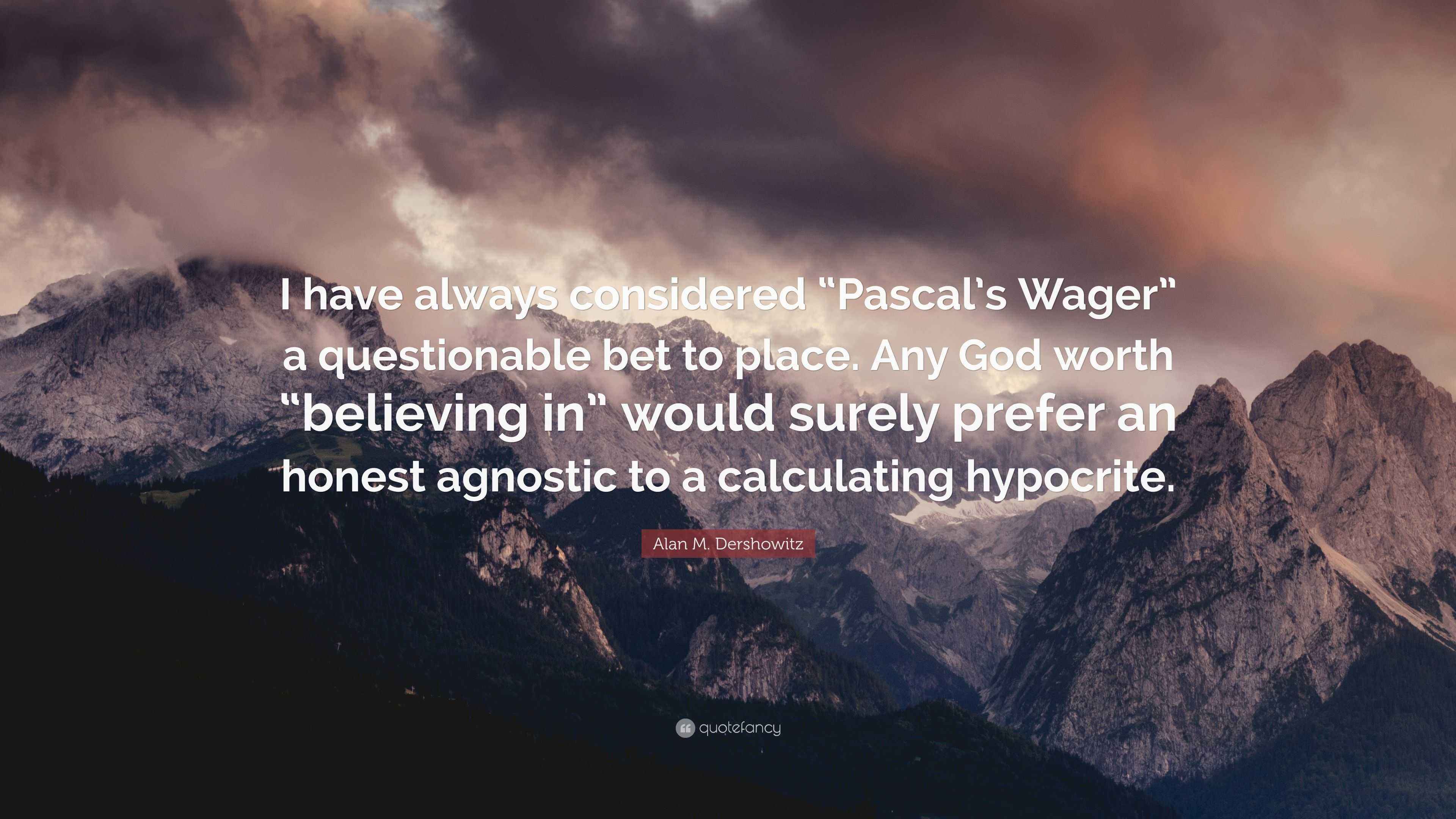
Few ideas in philosophy are as audacious—or as misunderstood—as Pascal’s Wager. “Let us weigh the gain and the loss in wagering that God is,” he urged, framing belief as a strategic wager rather than a leap of blind faith. The logic is deceptively simple: if God exists, the believer wins everything; if not, the stakes are negligible. But Pascal’s brilliance lies in his recognition that this wager is not just about heaven or hell—it’s about the transformation of the soul. To wager on God is to wager on a life infused with meaning, a gamble that reshapes how we see the world and ourselves. It’s a wager that dares us to ask: what do we have to lose, and what might we gain?
The Paradox of Human Existence: Between Reason and Faith
Pascal’s genius was to hold two truths in tension: the rational mind and the yearning heart. He knew that reason alone could not bridge the gap between the seen and the unseen, the temporal and the eternal. “The heart has its reasons which reason does not know,” he declared, acknowledging that the deepest truths are often felt before they are understood. This tension is the crucible of human experience—where doubt and devotion, logic and love, collide. Pascal’s words remind us that to live fully is to embrace this paradox, to dance on the razor’s edge between certainty and mystery.
The Wager of a Lifetime: Why Belief is a Choice Worth Making

To wager on God is not a one-time decision but a daily act of courage. Pascal understood that belief is not a static possession but a living, breathing choice—one that demands humility, curiosity, and a willingness to be transformed. “You must wager,” he insisted, “there is no middle ground.” This is not a call to blind obedience but an invitation to engage with the divine on the most personal level. The wager is a dare: to live as if the infinite matters, as if every moment is charged with eternal significance. It’s a wager that asks us to bet on love over fear, hope over despair, and the unseen over the seen.
The Infinite in the Finite: Finding Eternity in the Everyday

Pascal’s insights remind us that the infinite is not some distant abstraction but a presence woven into the fabric of our daily lives. Whether in the quiet of a morning prayer, the laughter of a child, or the stillness of a sunset, eternity whispers through the finite. “All of humanity’s problems stem from man’s inability to sit quietly in a room alone,” he observed, pointing to the restless heart that seeks meaning beyond itself. The infinite is not a destination but a lens—a way of seeing that turns the ordinary into the extraordinary. To live with Pascal’s wisdom is to find the eternal in the ephemeral, the divine in the dust of the everyday.