Edward Said’s Orientalism is a kaleidoscope—each fragment revealing the complex interplay of representation and power that has shaped the Western gaze upon the East. Through piercing quotes and insightful analysis, Said illuminates how knowledge becomes a vessel of dominance. Here, we explore 10 quotes laden with metaphors that capture the relentless dance between identity and imagination, colonizer and colonized, truth and mythology.
The Gaze As a Thousand-Eyed Sentinel
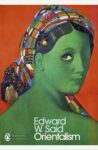
“The Orient was almost a European invention…” This quote likens the West’s view of the East to a sentinel’s unblinking gaze, crafting an image not from reality but from projection. Said suggests that the “Orient” exists more vividly in European minds than in any geographical or cultural truth, a mirage constructed to justify and sustain imperial desires.
Maps Drawn in Shadows and Myths

“Knowledge of the Orient, because generated out of strength, in a relation of power, was knowledge in the service of empire.” Said’s words reveal that Western understanding is less an innocent academic pursuit and more a cartographer’s hand coloring vast landscapes with shadows, myths, and dominion. The pen becomes a sword wielded across continents and cultures.
Words as Weaponized Mirrors

“Every empire, however, tells itself and the world that it is unlike all other empires, that its mission is not to plunder and control but to educate and liberate.” This paradoxical declaration frames imperial rhetoric as a mirror that simultaneously reflects a noble self-image and conceals the harsh truths of exploitation, turning language into a finely honed weapon.
Veils of Representation and Hidden Realities
“To reveal the Oriental as the Other, it is necessary to present him/her as an unchanging, timeless figure.” Here, Said identifies representation as a veil—thin yet impenetrable—that distorts dynamic human complexity into static caricature, freezing entire cultures into frozen tableaux that serve power’s narrative.
Empire’s Echo in the Archive

“Orientalism is a Western style for dominating, restructuring, and having authority over the Orient.” Said’s metaphor transforms Orientalism into an echo chamber where historical knowledge reverberates not with objective truth but with the repetitive rhythm of control and authority, a chorus composed by empire to narrate its own supremacy.