Benjamin Franklin, one of America’s most influential Founding Fathers, was not only a statesman and inventor but also a master printer whose words continue to inspire generations. His insights on the printing press and the virtues that shape society remain as relevant today as they were in the 18th century. Whether you’re a writer, a student, or simply someone who appreciates timeless wisdom, Franklin’s quotes offer a window into the mind of a man who understood the power of words and character. Below, we explore 10 of his most profound quotes about the printing press and virtue, each paired with a visual to bring his ideas to life.
The Printing Press: A Tool for Enlightenment and Freedom
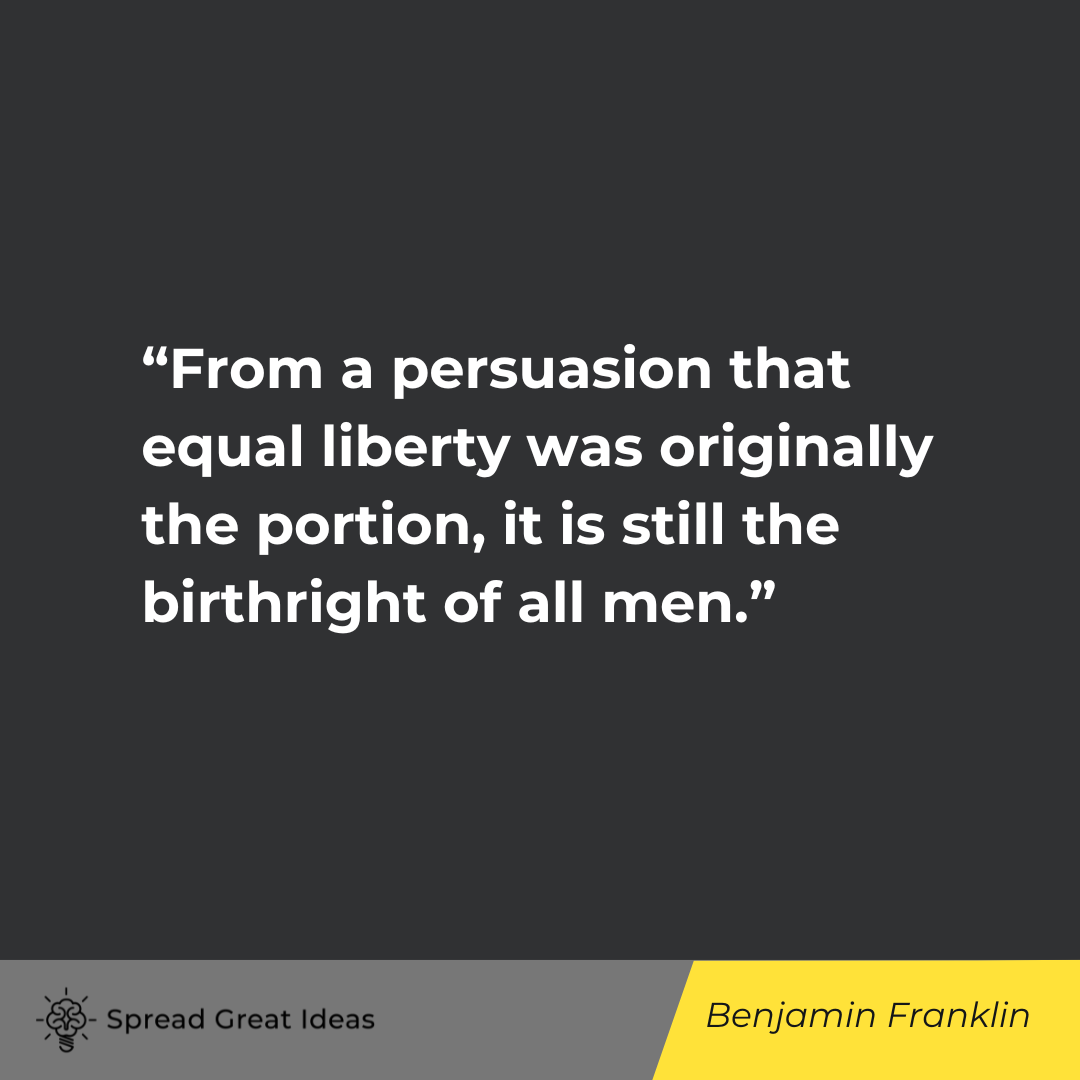
The printing press was more than just a machine to Benjamin Franklin—it was a revolutionary tool that democratized knowledge and challenged authority. His words remind us that the freedom to publish and read is the cornerstone of an informed society. One of his most famous quotes on the subject is, “Whoever would overthrow the liberty of a nation must begin by subduing the freeness of speech.” This sentiment underscores how the printing press became a symbol of resistance against oppression, allowing ideas to spread without censorship.
Virtue: The Foundation of a Just Society
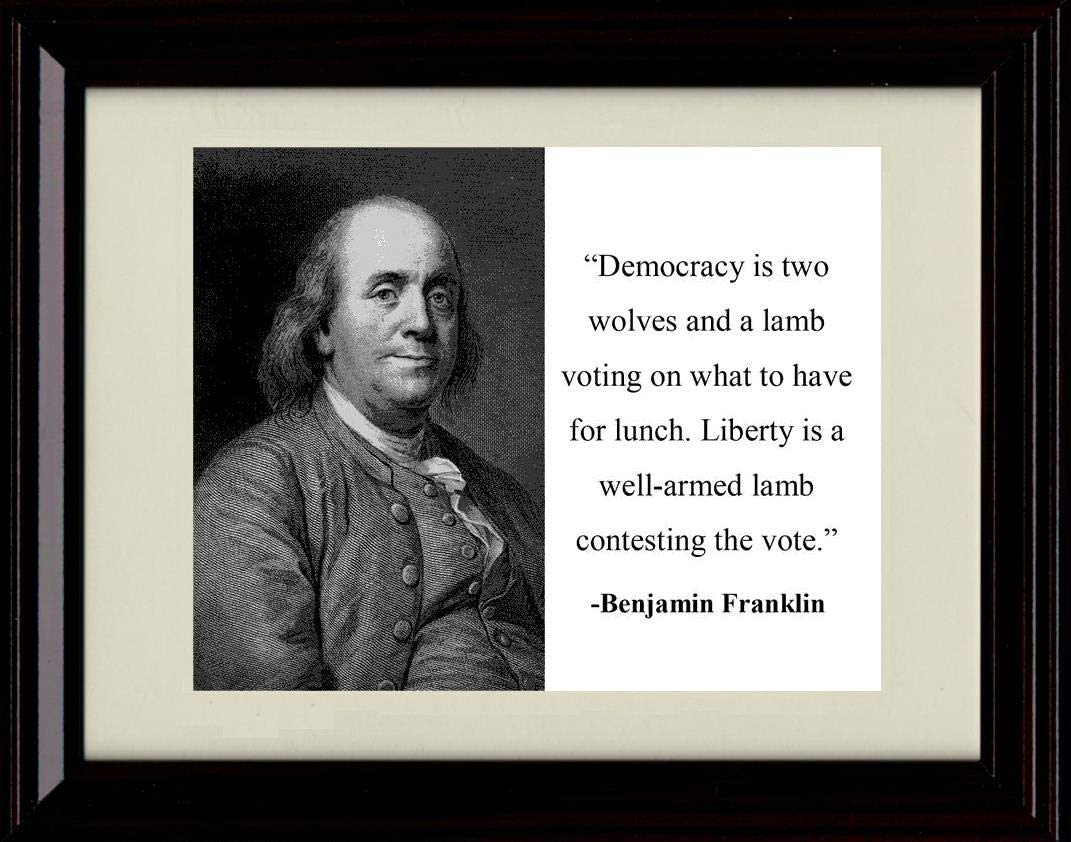
Franklin believed that personal virtue was the bedrock of a functioning society. His famous list of 13 virtues, which he diligently tracked in his personal journal, serves as a guide for ethical living. Among them, temperance, frugality, and industry stand out as principles that can transform not just individuals but entire communities. As he famously wrote, “Keep thy shop, and thy shop will keep thee.” This quote, often interpreted as a call to diligence and self-reliance, reflects his broader philosophy that virtue is not just a moral ideal but a practical necessity.
Education and the Power of Words
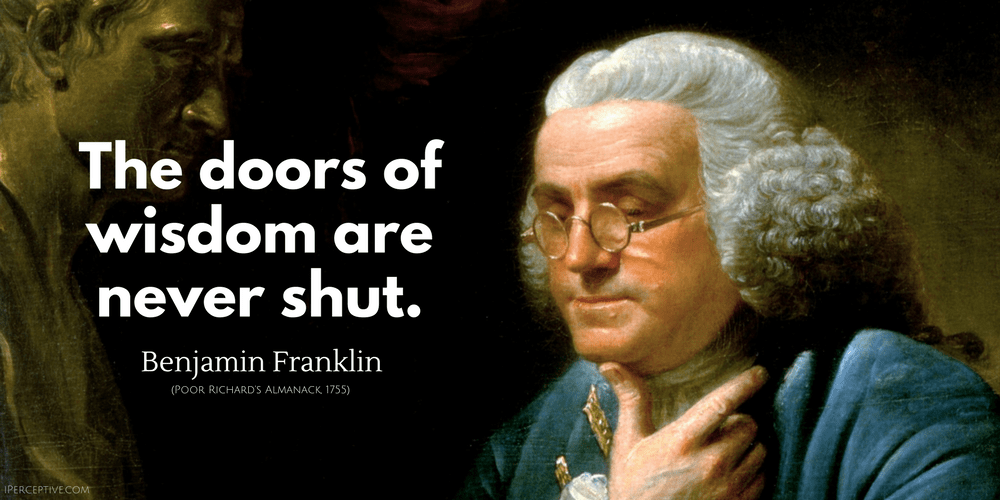
Franklin’s advocacy for education was deeply tied to his belief in the printing press as a vehicle for enlightenment. He understood that an educated populace was essential for a thriving democracy. His quote, “An investment in knowledge pays the best interest,” underscores the idea that learning is not just a personal benefit but a societal one. Through the printing press, he sought to make knowledge accessible to all, fostering a culture of continuous learning and intellectual curiosity.
Unity Through Shared Ideas

In a time of division, Franklin’s words on unity resonate more than ever. He recognized that the printing press could bridge divides by spreading ideas that united people under common values. His quote, “We must all hang together, or assuredly we shall all hang separately,” serves as a powerful reminder that collective action and shared purpose are essential for progress. The printing press, in his view, was a tool that could either divide or unite, depending on how it was used.
The Printer’s Responsibility
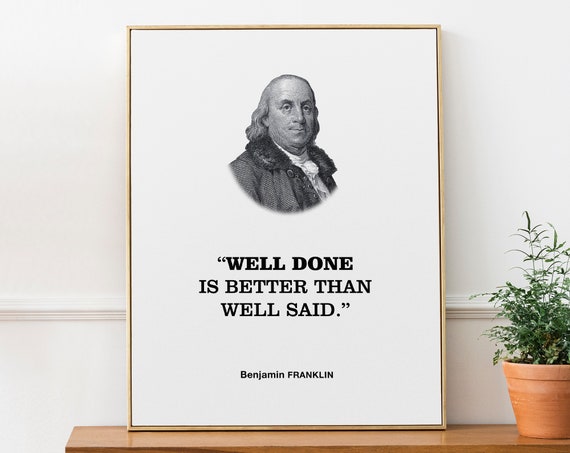
Franklin was acutely aware of the responsibility that came with the power of the printing press. As a printer himself, he understood that words could inspire, educate, or mislead. His quote, “Either write something worth reading or do something worth writing,” challenges printers and writers to use their craft for meaningful purposes. This ethos extends beyond the printing press to any form of communication, urging us to consider the impact of our words on society.
Freedom of the Press as a Pillar of Democracy
Franklin’s unwavering support for freedom of the press was rooted in his belief that an informed citizenry was the backbone of democracy. He famously said, “Freedom of speech is a principal pillar of a free government; when this support is taken away, the constitution of a free society is dissolved.” This quote serves as a timeless reminder that the right to publish and disseminate information is not just a privilege but a necessity for a functioning democracy.
Virtue in the Digital Age
While Franklin lived in a time long before the internet, his insights on virtue remain strikingly relevant in the digital age. The printing press has evolved into social media and online publishing, but the principles he espoused—honesty, diligence, and integrity—are just as crucial today. His quote, “A slip of the foot you may soon recover, but a slip of the tongue you may never get over,” is a cautionary tale for the age of instant communication, reminding us to choose our words wisely.
The Intersection of Technology and Ethics
Franklin’s life was a testament to the intersection of technology and ethics. As an inventor and printer, he constantly grappled with the moral implications of his work. His quote, “The way to see by faith is to shut the eye of reason,” can be interpreted as a call to balance innovation with ethical considerations. In today’s world, where technology often outpaces regulation, Franklin’s wisdom encourages us to ask tough questions about the impact of our creations on society.
A Legacy of Words and Wisdom
Benjamin Franklin’s legacy is a testament to the enduring power of words. Whether through his printing press or his writings, he left an indelible mark on history. His quotes on the printing press and virtue are not just historical artifacts but living guides that can inspire us to think critically, act ethically, and strive for a better society. As we navigate an era of rapid technological change, Franklin’s words remind us that the principles of integrity, freedom, and education remain as vital as ever.