Few moments in cinematic history have generated as much intrigue and debate as the enigmatic phrase “Play it again, Sam.” Though the line itself has become ingrained in popular culture, many argue it’s often misquoted, misunderstood, or mythologized beyond its original context. The character Sam, the pianist of Rick’s Café in Casablanca, embodies a subtlety and depth that invites us to reconsider what is really being said, and what meaning lies beneath the surface. Here are 10 quotes and reflections tied to Sam’s role and the immortal phrase, each offering a fresh perspective on this cinematic treasure.
The Myth of “Play It Again, Sam”

Contrary to popular belief, the exact phrase “Play it again, Sam” never actually appears in the film. This persistent misquotation reveals how cultural memory can shape and reshape narratives over time. The audience’s desire to crystallize moments into catchy lines sometimes obscures the genuine dialogue and emotion taking place on screen.
Sam’s Quiet Influence on Casablanca’s Story

Sam’s music transcends mere background ambiance. When Ilsa asks him to “play it, Sam,” she invokes a shared past, a memory of love and lost promises. His role is not just musical but emotional, serving as a bridge between characters and their histories, investing his melody with nostalgia and hope.
Reexamining Sam’s Quotes on Music and Memory

Sam’s sparse but pivotal lines reveal a world where music weaves people together. Rather than a simple command, his interactions suggest that playing a tune is an act steeped in remembrance and unspoken feelings—asking listeners to rediscover or confront something buried within.
When “You Better Hurry”: The Urgency Behind the Notes

Sam’s music encapsulates the tension of fleeting moments—the urgency of love, war, and destiny colliding. “You better hurry” echoes not just a temporal warning but the idea that opportunities in life and love are both precious and ephemeral, captured perfectly through his piano keys.
Always Verify Before You Quote Sam
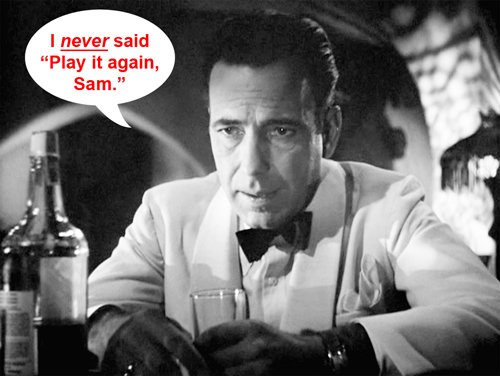
In an age saturated with misinformation, ensuring the accuracy of quotes is essential. While Sam’s music is unforgettable, so too should be the fidelity with which we recall his words. Misquotes cloud the film’s artistry, while verification enriches our appreciation of its nuanced dialogue and themes.
“Play it, Sam” — The Real Words Behind the Legend
The true line spoken by Ilsa to Sam is a simple “Play it, Sam.” This simplicity underscores the power of understatement. It shifts the focus from command to request, from demand to longing, inviting a contemplation of how language shapes emotional encounters.
Behind the Piano: Sam’s Role as Keeper of Memories
Sam’s piano is more than an instrument; it’s a vessel carrying the weight of the past. His music is a repository for memory, an emotional archive that chronicles the shifts and turns of the characters’ intertwined lives, urging viewers to listen not just with ears but with hearts.
Is Sam a Symbol of Hope or Nostalgia?
Sam’s tunes evoke the bittersweet dance between hope and nostalgia. They remind us that while the past cannot be reclaimed, it informs the present and future. His melody promises eventual reconciliation or understanding, even amid heartbreak and upheaval.
Misquoting Sam: How Culture Shapes Memory
The evolution of “Play it again, Sam” from misquote to cultural shorthand shows how stories adapt and mutate as they pass through generations. Each iteration reflects collective hopes or frustrations, demonstrating how cinema’s impact extends well beyond the initial frame.
Looking Beyond the Phrase: Sam’s Lasting Legacy
Ultimately, Sam’s legacy is not confined to any single line but resides in the emotional resonance he conjures. His music and presence invite audiences to explore deeper themes of memory, loss, and connection—prompting us to listen closely and perhaps, to play it again for ourselves.