Hayao Miyazaki, the legendary Japanese animator and co-founder of Studio Ghibli, has enchanted audiences worldwide with his poetic storytelling and profound insights into life, nature, and human nature. His words carry a unique blend of wisdom, whimsy, and wonder, often wrapped in metaphors that resonate deeply with the soul. Whether through his films or interviews, Miyazaki’s reflections invite us to see the world with fresh eyes—full of magic, imperfection, and boundless possibility. Below, we explore ten of his most magical and wise quotes, each a testament to his extraordinary vision.
The Beauty of Imperfection and the Art of Growth
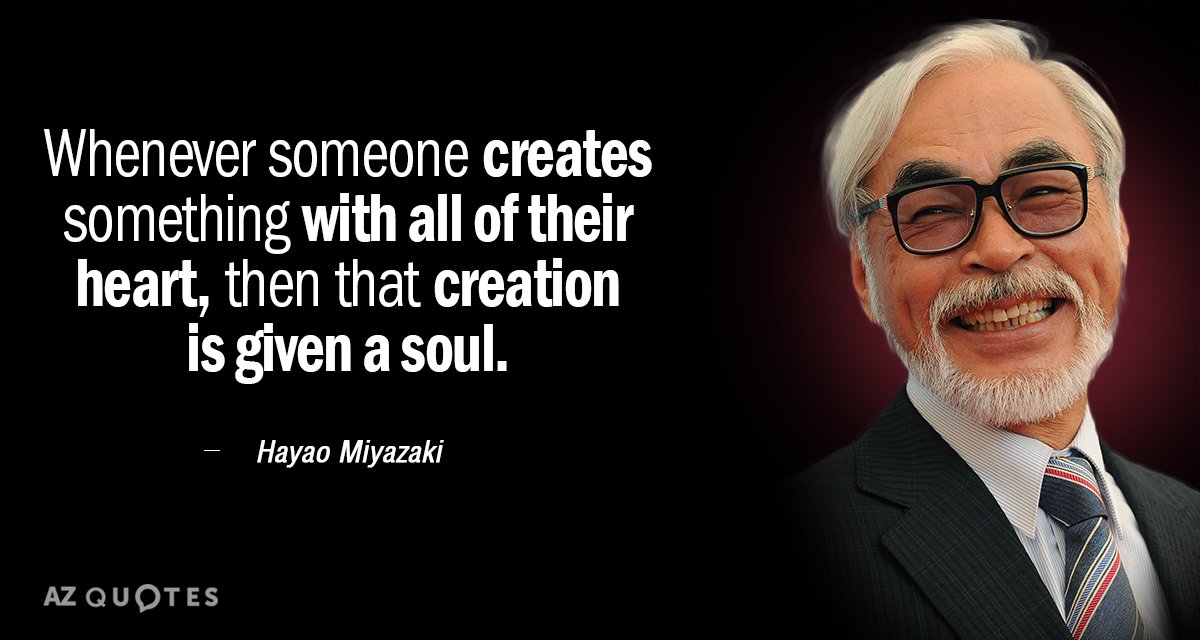
Miyazaki often reminds us that perfection is not the goal—rather, it’s the journey of creation itself that holds meaning. In one of his most poignant reflections, he speaks to the value of pouring one’s heart into something, even if the result is flawed. This idea mirrors the organic growth of his films, where characters evolve naturally, embracing their quirks and struggles. It’s a celebration of the messy, beautiful process of becoming, where every brushstroke, like every life experience, adds depth and character.
Nature as a Living, Breathing Canvas
Few creators have captured the essence of nature as vividly as Miyazaki. His films are alive with forests that whisper, rivers that sing, and skies that stretch endlessly—each element a character in its own right. In his words, nature isn’t just a backdrop; it’s a dynamic force that shapes stories and souls. His metaphors often liken life to the cycles of nature, where decay and renewal coexist, teaching us resilience and the quiet strength found in letting go.
Childhood: A World of Endless Wonder

Miyazaki’s love for childhood shines through in his stories, where young protagonists embark on adventures that blur the line between reality and fantasy. He often reflects on how children perceive the world with unfiltered curiosity, seeing magic in the ordinary—a leaf, a bug, or a gust of wind. His metaphors for childhood are not about naivety but about a profound connection to the unseen, where imagination fuels discovery and wonder is a compass for life.
The Courage to Dream and the Fear of Flying

Flying is a recurring motif in Miyazaki’s work, symbolizing freedom, aspiration, and the leap of faith required to pursue dreams. Yet, he also acknowledges the fear that comes with such heights—fear of failure, of falling, or of losing one’s way. His metaphors often frame fear not as a barrier but as a companion, a necessary shadow that makes the act of flying (or dreaming) all the more courageous. In his view, the greatest flights begin with trembling wings.
Time as a River: The Flow of Life and Memory
Time in Miyazaki’s universe is fluid, much like a river that carves its path through landscapes and lives. He often uses water imagery to describe memory—how moments ripple through time, shaping who we are. His metaphors suggest that we are both the river and the stone, shaped by the current yet also shaping it in return. This perspective invites us to embrace change, to see endings as beginnings, and to find beauty in the ebb and flow of existence.
The Strength Found in Softness
Miyazaki’s characters often defy traditional notions of strength. A frail old woman, a timid girl, or a gentle spirit might hold the key to saving the day—not through brute force, but through resilience, empathy, and quiet determination. His metaphors celebrate the power of softness: the way a gentle touch can heal, a kind word can inspire, or a humble act can change the world. In a culture that often glorifies toughness, Miyazaki reminds us that true strength lies in compassion and vulnerability.
The Magic of Everyday Objects
From soot sprites to flying machines made of scrap, Miyazaki finds wonder in the mundane. His metaphors often transform ordinary objects into vessels of magic, teaching us to see the extraordinary in the everyday. A simple teapot becomes a character, a bicycle ride turns into an odyssey, and a garden gate opens to another world. This perspective encourages us to slow down, observe, and rediscover the enchantment hidden in plain sight.
War and Peace: The Cost of Conflict
Miyazaki’s films frequently explore the devastation of war and the longing for peace, using stark contrasts to highlight the fragility of life. His metaphors for conflict are visceral—crumbling cities, scarred landscapes, and the silent screams of those left behind. Yet, he also offers hope, framing peace not as the absence of struggle but as the courage to choose understanding over destruction. His words serve as a poignant reminder of the human cost of conflict and the enduring power of reconciliation.
The Unseen Threads That Bind Us
In Miyazaki’s stories, invisible threads—whether of fate, love, or shared dreams—weave characters together in unexpected ways. His metaphors often describe these connections as delicate yet unbreakable, like spider silk glinting in the sunlight. He suggests that we are all part of a vast, interconnected tapestry, where even the smallest action can ripple outward, touching lives in ways we may never fully comprehend. This idea fosters a sense of humility and wonder, urging us to cherish the invisible bonds that shape our world.
Legacy: Creating Worlds That Endure
Miyazaki’s final reflections often circle back to the idea of legacy—not as monuments of stone, but as living, breathing worlds that continue to inspire long after their creators are gone. His metaphors for legacy are about the stories we leave behind, the dreams we nurture, and the seeds we plant in the hearts of others. He encourages us to create not for fame or fortune, but for the sheer joy of bringing something new into the world—a world that others can inhabit, explore, and make their own.