David Hume’s A Treatise of Human Nature remains one of the most influential works in Western philosophy, particularly in its exploration of human cognition, impressions, and the nature of causation. Hume’s ideas challenge traditional assumptions about knowledge, perception, and the connections we draw between events. His arguments about impressions—the immediate data of experience—and causation—the idea that one event necessarily follows another—have shaped centuries of philosophical thought. Below, we delve into 10 profound quotes from the Treatise that illuminate these concepts, offering insights into how Hume dismantles common metaphysical and epistemological beliefs.
Understanding Impressions: The Raw Data of Experience
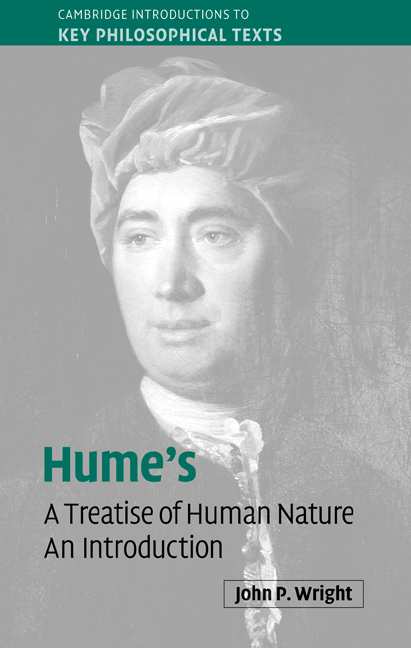
Hume distinguishes between impressions and ideas, arguing that impressions are the vivid, immediate sensations we experience, while ideas are faint copies of these impressions. This distinction is foundational to his empiricism. One of his most striking observations comes from Book I, Part I: “All our simple ideas in their first appearance are deriv’d from simple impressions, which are correspondent to them, and which they exactly represent.” This quote underscores Hume’s belief that all our knowledge ultimately stems from sensory experience, rejecting innate ideas or abstract concepts that aren’t grounded in perception.
The Limits of Human Understanding

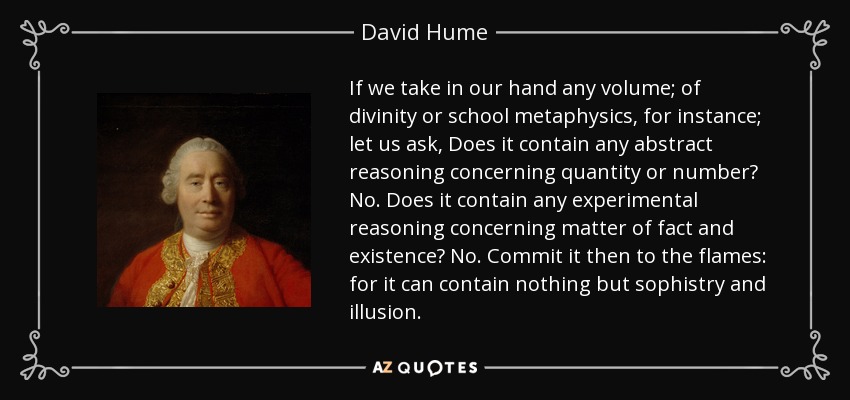
Hume’s skepticism about the scope of human understanding is evident in his critique of abstract reasoning. He writes, “When we run over libraries, persuaded of these principles, what havoc must we make?” This passage, found in Book I, Part IV, highlights his view that much of what passes for profound philosophical or theological knowledge is built on shaky foundations. Hume’s challenge to the reader is to question whether we can truly justify beliefs that extend beyond immediate experience, such as the existence of God or the immortality of the soul.
Causation: The Illusion of Necessary Connection

Perhaps Hume’s most radical contribution is his analysis of causation. He famously argues that our belief in causation is not based on reason but on habit and custom. “We may define a cause to be an object followed by another, and where all the objects, similar to the first, are followed by objects similar to the second.” This definition, from Book II, Part III, strips causation of its metaphysical necessity, reducing it to a psychological expectation. Hume’s insight forces us to confront the idea that our confidence in cause-and-effect relationships is more about our mental habits than any objective truth.
The Role of Habit in Shaping Belief
Habit, according to Hume, is the invisible thread that binds our experiences together. He explains, “Custom, then, is the great guide of human life.” This statement, from Book I, Part III, emphasizes that our reliance on causation is not a rational deduction but a product of repeated exposure to similar events. Without habit, Hume argues, we would be unable to navigate the world, as we would lack the predictive power to anticipate future events based on past ones. This idea not only critiques traditional notions of free will but also redefines how we understand human agency.
The Problem of Induction

Hume’s critique of induction is one of his most enduring legacies. He questions why we assume that the future will resemble the past, writing, “That the sun will not rise tomorrow is no less intelligible a proposition, and implies no more contradiction, than the affirmation, that it will rise.” This passage, from Book I, Part IV, exposes the circularity in inductive reasoning: we believe the future will mirror the past because it always has, but this belief itself relies on the very principle it seeks to justify. Hume’s challenge forces us to acknowledge the fragility of our most deeply held convictions about the natural world.
The Nature of the Self
Hume’s examination of the self is equally groundbreaking. He famously denies the existence of a unified, enduring self, arguing that what we call the “self” is merely a bundle of perceptions. “When I enter most intimately into what I call myself, I always stumble on some particular perception or other.” This quote, from Book I, Part IV, dismantles the Cartesian notion of a stable, immaterial soul. For Hume, the self is a collection of fleeting experiences rather than a continuous entity, a view that continues to influence modern psychology and philosophy.
The Skepticism of Miracles
Hume’s skepticism extends to religious claims, particularly the idea of miracles. He argues that no testimony can justify belief in a miracle because the laws of nature are so well-established that any violation would require overwhelming evidence. “A miracle is a violation of the laws of nature; and as a firm and unalterable experience has established these laws, the proof against a miracle, from the very nature of the fact, is as entire as any argument from experience can possibly be imagined.” This passage, from Book I, Part X, remains a cornerstone of arguments against supernatural claims, emphasizing the primacy of empirical evidence over faith.
The Limits of Moral Reasoning
Hume’s ideas about morality are equally revolutionary. He argues that reason alone cannot motivate moral action, as morality is rooted in sentiment rather than abstract principles. “Morality is not an object of reason. When you pronounce any action or character to be vicious, you mean nothing, but that from the constitution of your nature you have a feeling or sentiment of blame from the contemplation of it.” This quote, from Book III, Part I, shifts the focus from divine command theories to human emotions as the foundation of ethics. Hume’s view paves the way for later sentimentalist theories of morality.
The Fragility of Human Reason
Throughout the Treatise, Hume exposes the limitations of human reason, arguing that our cognitive faculties are far more prone to error than we care to admit. He writes, “Reason is, and ought only to be the slave of the passions, and can never pretend to any other office than to serve and obey them.” This provocative statement, from Book II, Part III, challenges the Enlightenment ideal of reason as the supreme arbiter of truth. For Hume, reason is a tool shaped by our desires and emotions, not an infallible guide to knowledge. This perspective invites us to reflect on the ways our biases and prejudices influence even our most rational pursuits.
Conclusion: Hume’s Enduring Legacy
Hume’s A Treatise of Human Nature remains a cornerstone of philosophical inquiry, offering a radical rethinking of human cognition, causation, and morality. His emphasis on impressions, habit, and skepticism continues to resonate in contemporary debates about knowledge, science, and ethics. By challenging the foundations of traditional metaphysics and epistemology, Hume invites us to question the assumptions that underpin our understanding of the world. Whether you’re a philosopher, a scientist, or simply a curious reader, Hume’s insights provide a humbling reminder of the limits of human reason—and the enduring power of curiosity.