Labyrinths have intrigued humanity for centuries, symbolizing complexity, mystery, and the pursuit of understanding. Jorge Luis Borges, a master of weaving intricate ideas with poetic precision, often used the labyrinth as a metaphor to explore the intricacies of life, identity, and knowledge. His reflections delve beyond the mere physical maze, touching on the psychological and philosophical labyrinths that shape our existence. Here are 10 memorable quotes from Borges about labyrinths that reveal why these enigmatic structures hold a deep fascination.
The Straight Line as a Labyrinth
Borges intriguingly suggests, “There is a labyrinth which is a straight line.” This paradox captures the idea that sometimes our paths, seeming linear and straightforward, conceal complexities that trap us. The simplicity of a straight line can become a restrictive maze, where every choice leads inevitably forward, leaving no room for escape or deviation.
The Worst Labyrinth: Not Always Intricate
Borges points out that the most confounding labyrinth is not necessarily an elaborate maze but can be “a single and precise straight line.” This insight brings forward the unsettling realization that sometimes, our biggest entrapments are the simplest, the paths we follow with determination but from which there is no true escape.
The Minotaur’s Existence Justified
In referencing the Minotaur, Borges underscores the symbolism underlying labyrinths—the monstrous unknown residing within. The Minotaur “more than justifies the existence” of the labyrinth, embodying the fears, challenges, and mysteries concealed inside any complex maze, whether literal or metaphorical.
A Labyrinth of Labyrinths
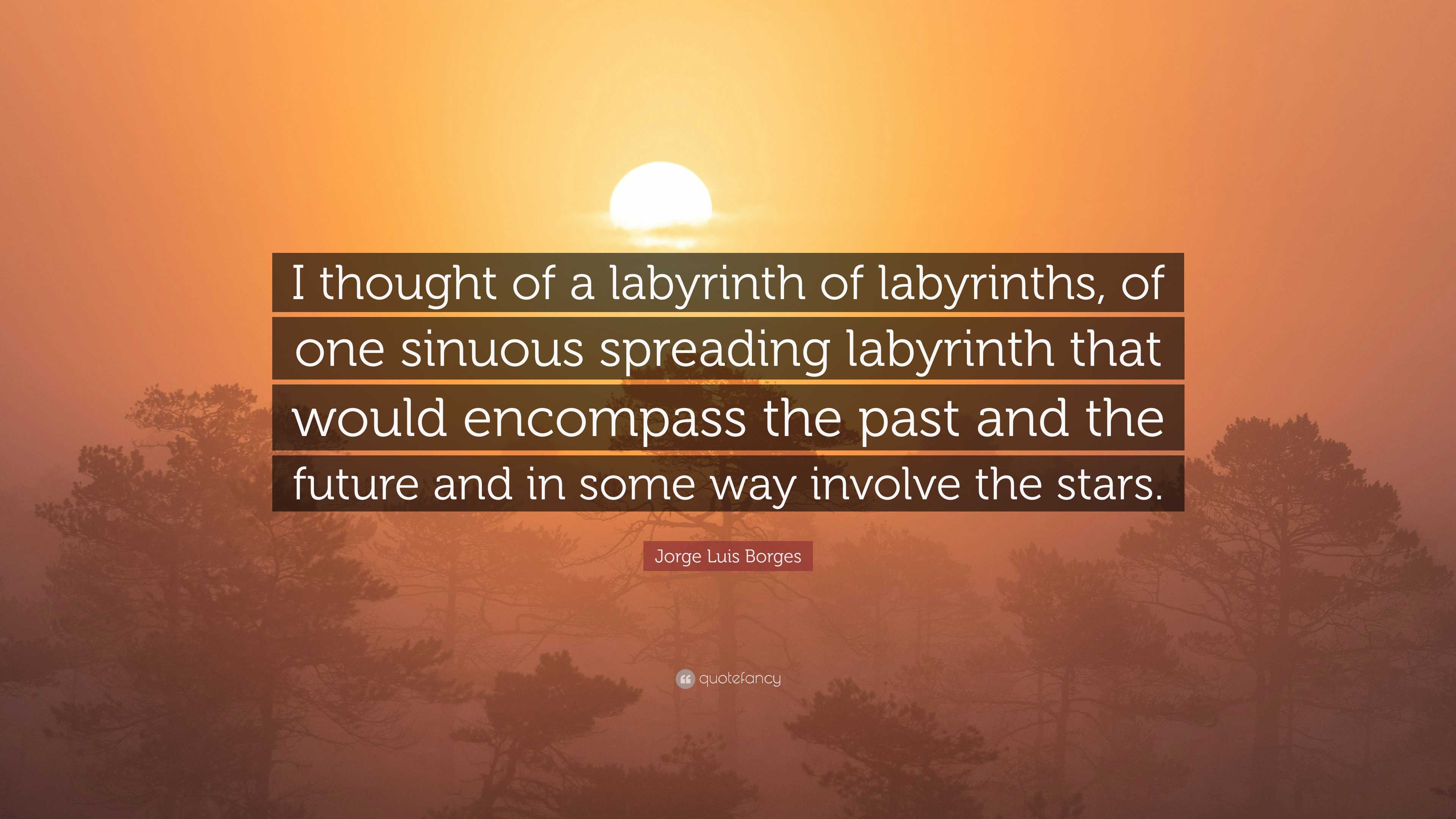
Borges imagines “a labyrinth of labyrinths,” a nested complexity where no single puzzle exists in isolation. This concept eloquently captures the layers of human experience, where trying to understand one mystery leads to another, endlessly deep and sinuous.
Loneliness Within the Maze
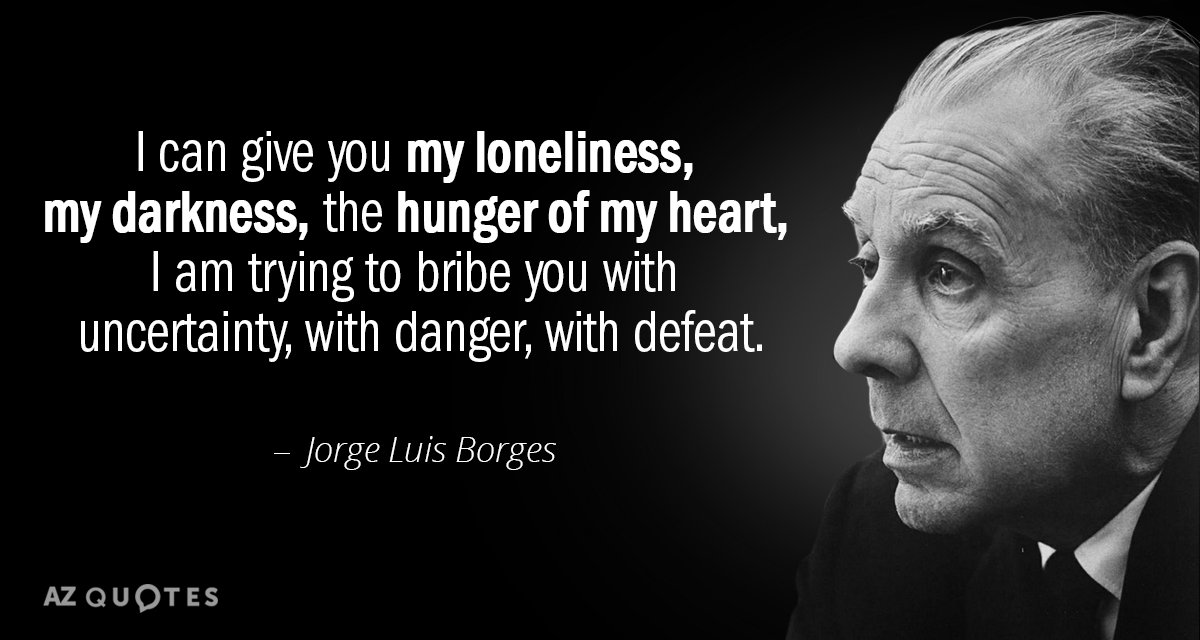
Borges invites us to feel “my loneliness, my darkness, the hunger”—emotions evoked by the inner labyrinth we carry. This personal maze of isolation and desire highlights how labyrinths are metaphors for the human condition, reflecting our deepest emotional and existential journeys.
The Eternal Puzzle of Paths
The labyrinth represents the eternal puzzle of paths—a symbol of choices and consequences. Borges suggests that labyrinths mirror the complexity of decision-making, where each turn taken is laden with unknown outcomes, much like the labyrinths of life itself.
The Labyrinth as a Reflection of the Mind
Borges viewed the labyrinth as an inside reflection, a manifestation of the mind’s complexity. Each winding corridor parallels the twists of thought, memory, and consciousness, suggesting that to navigate the labyrinth is to navigate one’s inner world.
The Infinite Labyrinth and Time
For Borges, labyrinths were often infinite, mirroring temporal concepts. Life’s passage can feel like an endless maze, a continuum without clear beginnings or ends, drawing us to ponder our place amid the infinite loops of time.
Labyrinths as Stories
Every labyrinth tells a story, Borges contended. The design, the pathways, the center or lack thereof symbolize narratives we write, unknowingly entangled in our own complex plots and twists, each story a labyrinth of meaning.
Fascination with the Enigma
Ultimately, Borges’ fascination with labyrinths lies in their enigma—an eternal allure to explore, get lost, and perhaps find something unexpected within. They captivate us because, like life, they are full of mysteries that challenge our understanding and urge us to delve deeper.